A harness earns its place in the van on a specific, fairly narrow set of jobs: a flat roof that needs a close look and can only be reached from a podium or a scaffold tower, a chimney stack inspection where the client’s builder has already got scaffold up, or a retrofit assessment where the insulation being checked is above what a stepladder can safely reach. It is worth being clear from the start about which of two different jobs a harness is being bought for, because they call for genuinely different kit. Work restraint means the lanyard is set short enough that the edge or opening physically cannot be reached — the harness prevents the fall from being possible at all. Fall arrest means getting close to the edge is allowed, and the harness, lanyard and shock absorber catch and limit the fall if it happens. For almost all survey work, restraint is the right category. A genuine fall-arrest scenario near an open roof edge is a situation to avoid being in at all during a routine inspection, not one to plan a rescue from.
The other driver, alongside the physical risk, is what turning up without one actually costs. The Work at Height Regulations put the duty on whoever’s doing the work to assess it properly, and that increasingly shows up before a survey even starts — a scaffold hire firm with a “no harness, no access” policy, an insurer’s expectation that a method statement covers it, or simply not wanting to be the surveyor stood on a flat roof edge with nothing on. None of that means every job needs one. It means the ones that do need it sorted before the van leaves, not improvised on the doorstep.
None of the seven below has been worn on an actual survey — this is drawn from manufacturers’ specifications and the pattern in published owner feedback, filtered through what a domestic survey or retrofit assessment actually needs rather than a full construction-site loadout. First, the one I’d buy.
The one I’d buy
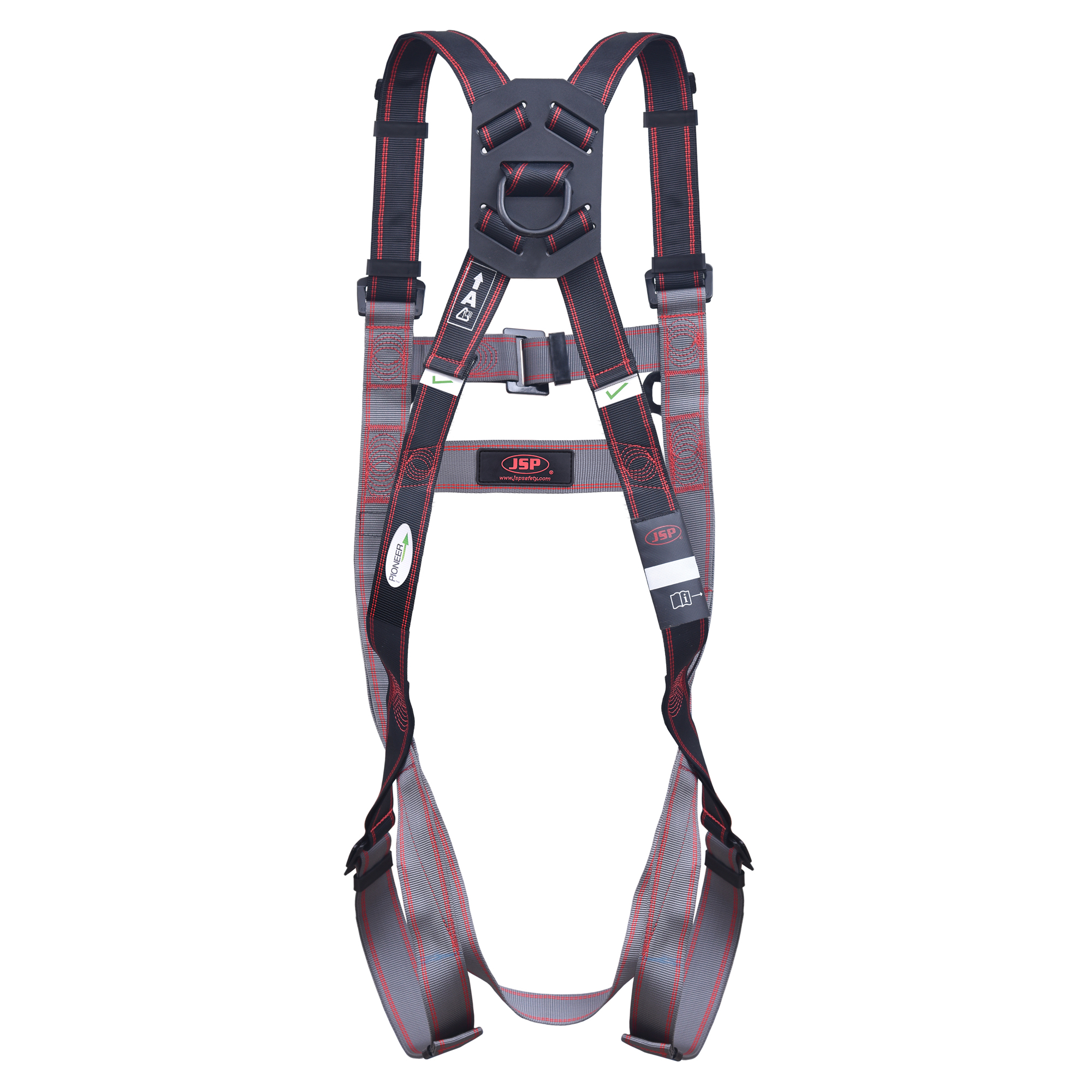
JSP Pioneer 2-Point Harness
The Pioneer covers both jobs a survey harness actually gets asked to do — a rear dorsal D-ring for straightforward fall arrest, and a front sternal point that opens up restraint lanyards, ladder-climbing systems or a rescue connection if the situation calls for it. Fully adjustable chest, shoulder and leg straps take it up to 136kg, and the padded shoulder section is a genuine step up from the unpadded webbing on the cheaper harnesses in this guide. No lanyard included, so budget for one separately, or pair it with an existing kit.
Typically £50–£70
Check price on AmazonHow I judge a safety harness
Attachment points — one for fall arrest, two for anything more flexible. A single rear D-ring is the minimum for fall arrest and nothing else. A second, front-mounted sternal point adds positioning, ladder-climbing systems or a rescue connection — worth having if the same harness needs to cover more than one situation.
Buckles — quick-release against traditional pass-through. A quick-release buckle earns its keep when a harness goes on and off several times in a day; for something that comes out once a week, a traditional pass-through buckle costs less and does the same job once it’s adjusted.
Fit range across a working week of different people. Universal sizing with a wide adjustment range matters more than a precise fit for one body type, particularly if more than one person in the practice might end up wearing it.
What’s actually in the box. A harness alone needs a compatible lanyard and karabiners bought separately and checked against its instructions; a full kit removes that decision at the cost of a higher price and less flexibility if the lanyard needs replacing on its own.
EN361 conformity and the paperwork that comes with it. Every harness worth buying carries EN361 and CE or UKCA marking — that’s the baseline, not a differentiator. What’s worth checking is the inspection record card or digital log, because that’s what an insurer or a principal contractor actually asks to see.
The comparison
| Model | Points | Kit included | Typical price | Best for | |
|---|---|---|---|---|---|
| JSP Pioneer 2-Point Harness | 2 | No | ~£50–£70 | Best overall | View |
| Honeywell Miller Titan Fall Arrest Kit | 1 | Yes — lanyard & karabiners | ~£70–£110 | Premium/professional pick | View |
| 3M Protecta E200 Standard Vest-Style | 1 | No | ~£75–£105 | Fastest, most foolproof donning | View |
| Kratos FA1010300 2-Point Harness | 2 | No | ~£30–£45 | Best mid-range value | View |
| Delta Plus ELARA130V2 Restraint Kit | 1 (restraint) | Yes — integral lanyard | ~£30–£50 | Best dedicated restraint kit | View |
| Portwest FP11 1-Point Comfort Harness | 1 | No | ~£20–£35 | Best value | View |
| Silverline 250482 Fall Arrest Harness | 2 | No | ~£18–£32 | Cheapest | View |
The picks in detail
JSP Pioneer 2-Point Harness
Best overall — covers fall arrest and restraint from one harness
The Pioneer’s second, sternal attachment point is what earns it the top spot — a rear D-ring handles straightforward fall arrest, and the front point opens up restraint lanyards or a ladder-climbing system without needing a second harness for a different job. Chest, shoulder and leg straps adjust fully and take it up to 136kg, and the padded shoulder section is noticeably better than the unpadded webbing on the budget harnesses further down this list. Sold as a harness alone, so a lanyard and karabiners need buying separately and checking for compatibility.
For
- Two attachment points cover fall arrest and restraint
- Padded shoulders, comfortable for repeat use
- Adjustable across a wide size range, up to 136kg
Against
- No lanyard or karabiners included
- Traditional pass-through buckles, not quick-release
Typically £50–£70
Check price on AmazonHoneywell Miller Titan Fall Arrest Kit
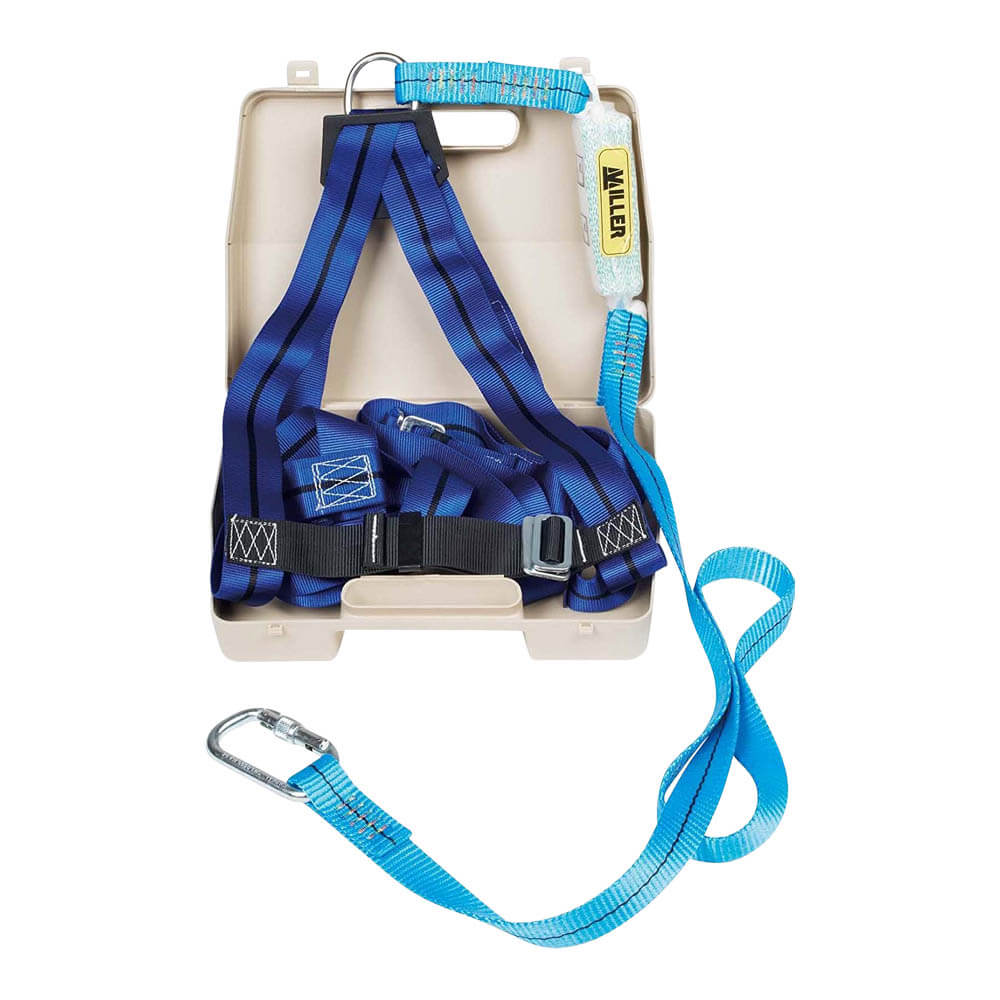
Premium/professional pick — harness, lanyard and karabiners in one case
The Titan kit removes the guesswork around lanyard compatibility by supplying a tested combination in one box: a 1-point harness, a 2-metre shock-absorbing lanyard, two screwgate karabiners and a hard carry case that doubles as van storage. A black line printed into the webbing shows at a glance whether the harness is correctly fitted, and the Miller name carries weight with insurers who ask what’s being worn. Arrest-only — no sternal option for restraint or ladder-climbing work.
For
- Everything needed in one kit, no separate lanyard purchase
- Hard case doubles as protected van storage
- Fit-check line built into the webbing
Against
- Most expensive option in this guide
- 1-point only, no sternal attachment
Typically £70–£110
Check price on Amazon3M Protecta E200 Standard Vest-Style Harness
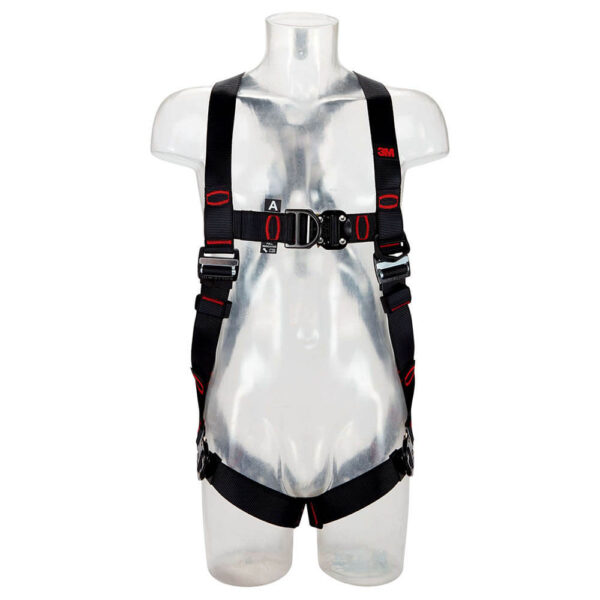
Fastest, most foolproof donning — pulls on like a vest rather than stepping through loops
Most harnesses in this guide are stepped into leg loop by leg loop and pulled up; the Protecta’s vest-style construction goes on more like a gilet, which matters when there’s nobody around to check the fit before a climb. Auto-resetting lanyard keepers stop straps flapping loose, and the webbing resists water and staining — worth having in kit that lives in a van through a UK winter. Harness only, and the premium over the Kratos or Portwest below buys convenience rather than a functional upgrade.
For
- Vest-style donning, harder to get wrong solo
- Water and stain-resistant webbing
- Auto-resetting keepers stop loose strap ends
Against
- No lanyard included
- 1-point only, priced above 2-point alternatives
Typically £75–£105
Check price on AmazonKratos FA1010300 2-Point Body Harness
Best mid-range value — 2-point flexibility without the premium price
The Kratos sits between the budget single-point harnesses and the padded premium options — a genuine 2-point harness with 45mm polyester webbing, plate buckle adjustment and a 140kg rating, at close to half the price of the JSP or 3M above. It won’t feel as refined under close inspection — the webbing and stitching are functional rather than padded — but the EN361 compliance and the front-plus-rear attachment points are the same specification a much more expensive harness is charging for.
For
- 2-point attachment at a mid-range price
- 140kg rating, EN361 compliant
- Straightforward plate buckle adjustment
Against
- Basic webbing, no significant padding
- No lanyard included
Typically £30–£45
Check price on AmazonDelta Plus ELARA130V2 Fall Restraint Kit
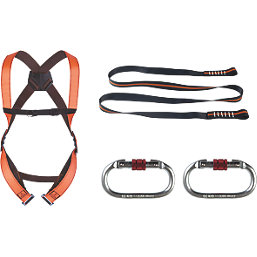
Best dedicated restraint kit — built for the job most surveys actually need
Where the other kits in this guide are built for fall arrest, the ELARA130V2 is built specifically for work restraint — the category that fits most survey work near an open edge. A non-removable 1.5m rope lanyard is integral to the harness rather than a separate item that could be mismatched or left in the case. It is not rated for fall arrest and shouldn’t be treated as one — the wrong kit if there’s any real chance of reaching an unprotected edge.
For
- Purpose-built for restraint, not adapted from fall arrest
- Integral lanyard removes a common mismatch
- Reasonable price for a complete kit
Against
- Restraint only — not a fall-arrest substitute
- Fixed 1.5m lanyard length, no adjustment
Typically £30–£50
Check price on AmazonPortwest FP11 1-Point Comfort Harness
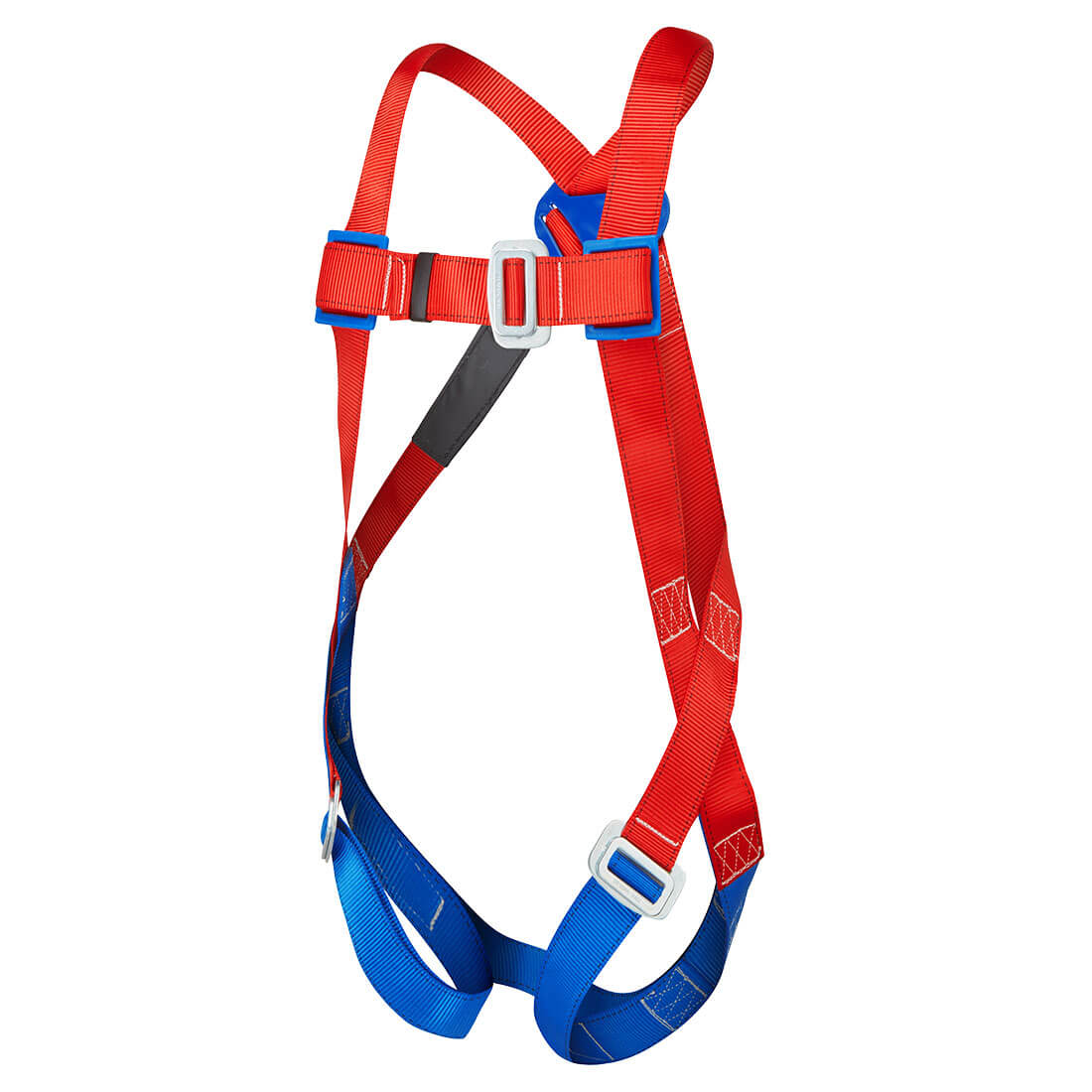
Best value — the cheapest genuinely padded harness here
Portwest’s entry-level harness undercuts the premium picks by a wide margin while still offering comfort padding most budget harnesses skip. Contrasting webbing colours make a pre-use visual check quicker — cuts or fraying show up against the colour change rather than blending into a single-tone strap. It’s a 1-point harness with no sternal option and no lanyard, so it suits a straightforward fall-arrest setup rather than restraint or positioning work.
For
- Genuinely padded for the price
- Contrasting webbing speeds up a visual check
- Cheapest way into a comfort harness
Against
- 1-point only, no restraint or positioning option
- No lanyard included
Typically £20–£35
Check price on AmazonSilverline 250482 Fall Arrest Harness 2-Point
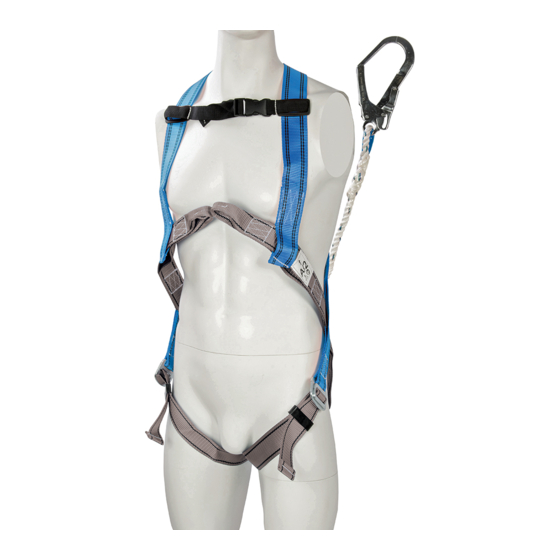
Cheapest — fine for occasional restraint use, not a trade harness
The cheapest harness in this guide by some margin, and honest about what it is — polyester webbing, a dorsal D-ring plus front attachment loops, a sit strap for comfort on a longer wear, and a storage bag included. It conforms to EN361 and covers the basics of 2-point attachment, but the webbing and buckles feel noticeably less refined than the JSP or Kratos above. Reasonable as a spare kept in the van for occasional use, not daily site work.
For
- Cheapest 2-point harness in this guide
- Storage bag included
- EN361 compliant
Against
- Minimal padding
- Buckles and stitching feel budget under close inspection
Typically £18–£32
Check price on AmazonWhat actually matters — and what doesn’t
Fall arrest and restraint are not the same job — check which one is actually needed. A restraint lanyard set short enough that the edge can’t physically be reached is the right tool for a roof inspection. A fall-arrest lanyard that allows getting close to the edge and catches a fall if it happens is a different risk category entirely, and not one worth being in for a routine visual check.
A quick-release buckle earns its cost only if the harness goes on and off more than once a day. For a harness that lives in the van and comes out for one job in a week, the saving over a traditional pass-through buckle is marginal, and the traditional buckle is usually the cheaper, more common option.
The lanyard matters as much as the harness — check what’s actually in the box. A harness-only purchase needs a compatible lanyard and karabiners bought separately and checked together. A kit removes that decision but usually costs more and offers less flexibility if one component wears out before the other.
EN361 marking is the baseline, not a selling point. Every harness in this guide carries it. What’s worth checking is the inspection record — a printed card or a QR-linked digital log — because that’s what an insurer or a principal contractor actually asks to see, not the CE mark itself.
Comfort matters less than it does for a scaffolder wearing one all day. None of the padding differences here will be felt on a ten-minute climb up a scaffold tower — they matter far more on the rare job that keeps someone in a harness for hours.
Questions I get asked
Do I need a harness for a building survey?
For most building surveys, no — a stepladder and a straightforward loft hatch don’t call for one. It becomes necessary when a flat roof or a chimney stack needs inspecting via podium steps or a scaffold tower, or when accessing a client’s existing scaffold put up for other trades. On any job where a harness is the right call, it should be part of the method statement decided before the visit, not worked out on the doorstep when the access turns out to be more than expected.
What’s the difference between fall arrest and work restraint?
Restraint means the lanyard is set short enough that the wearer physically cannot reach an edge or opening — the harness prevents the fall from being possible at all. Fall arrest means the wearer can get close to an edge, and the harness, lanyard and shock absorber catch and limit the fall if it happens. For a domestic survey, restraint is almost always the right category — a genuine fall-arrest scenario near a roof edge is a situation to avoid being in at all, not one to plan a rescue from.
Can any harness be used with any lanyard?
Only if the attachment points and karabiner gate size match what the lanyard is rated for, and the combination has been checked together rather than assumed. A harness bought separately from its lanyard needs both sets of instructions checked for compatibility. A kit like the Miller Titan or the Delta Plus ELARA130V2 above removes that guesswork by supplying a combination already tested and rated together.
How often does a safety harness need replacing or inspecting?
A visual check before every use — webbing for cuts, fraying or chemical damage, buckles and D-rings for cracking or corrosion — plus a formal inspection at least every twelve months by a competent person. Most manufacturers also give a harness a shelf life regardless of visible wear, typically around ten years from the date of manufacture printed inside it. Anything that’s sat in a van through several UK summers and winters is worth checking against that date rather than assumed fine because it looks fine.
A safety harness only earns its place in the van on the surveys where a podium, scaffold tower or existing scaffold means going where a stepladder can’t reach — building surveys with a flat roof to check, or a PAS 2035 retrofit assessment where the insulation’s being inspected from height. On the jobs where a drone pass answers the same question from the ground, it stays in the case — get in touch if a job needs discussing before deciding which. Or browse the rest of the field-kit guides, including the podium steps and scaffold towers a harness usually gets used alongside, and the roof ladders that are the simpler alternative when the access doesn’t call for one.
Small print. This guide is general information, not a substitute for a proper risk assessment of what a specific job requires. Prices are indicative, move constantly and were checked at the time of writing; the linked page always shows the current price. As an Amazon Associate I earn from qualifying purchases.