Most roof coverings get assessed from the ground — binoculars, a long lens, a drone pass on anything two-storey, steep or awkward. But every so often a job genuinely calls for a closer look: a suspected slipped ridge tile that photographs ambiguously from the ground, a flashing detail at a chimney stack, a valley gutter that needs checking for debris and splits rather than guessed at. On a single-storey extension roof, in decent weather, with someone available to foot the ladder, getting up there properly beats squinting through a lens. That is a roof ladder’s job, and it is a genuinely different tool to the telescopic and step ladders that handle the rest of a survey — different failure modes, different certification questions, and a two-person job rather than a one-person one.
The category splits cleanly into two. Dedicated roof ladders are a single purpose-built unit with the ridge hook and running wheels integrated into the ladder itself — no guesswork about whether it fits what you own, but a large, heavy, expensive thing that needs somewhere to live. Roof hook & wheel kits are the pragmatic alternative: a hook-and-wheel assembly that clamps onto the top rungs of an extension ladder you already carry, turning it into a roof ladder in a couple of minutes and packing away small when the job is done. For occasional use, the hook kit is usually the right answer; the dedicated ladder earns its considerably higher price when the roof itself is the regular job rather than the occasional one.
Whichever route you take, this is not solo kit. Getting a roof ladder into position and keeping it there needs someone footing the base while the other person climbs, in line with what the Work at Height Regulations 2005 actually expect of access equipment used properly. If there is nobody free to do that, the honest answer is not a better roof ladder — it is binoculars from the ground or a drone pass instead. First, the one I’d buy.
The one I’d buy
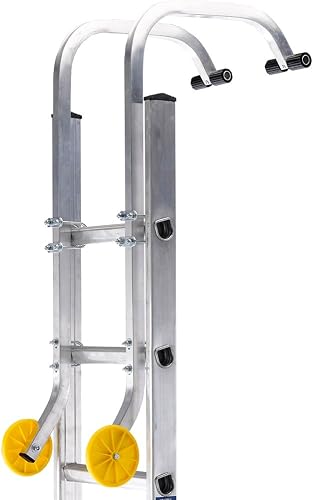
TB Davies Universal Roof Hook
Fourteen-gauge aluminium, made in Britain, and built to clamp onto a single or extension ladder in a couple of minutes without tools — this is the sensible default for a roof ladder that spends most of its life in the van doing nothing. The integrated wheels roll it up the slope under control rather than dragging a bare hook over the tiles, and TB Davies is the same trade name that turns up as the professional pick in the step ladder guide, for the same reason: it is built for daily use, not an occasional DIY job.
Typically £35–£45
Check price on AmazonHow I judge a roof ladder
The hook actually fits the rungs you’ve got. “Universal” on a listing means it is designed to fit the round or box-section rungs used by the mainstream UK ladder brands — it is not a guarantee for every ladder in every van. Check the rung profile against the kit’s stated compatibility before assuming it will clamp on.
Wheels, not just a bare hook. The wheels are what let you roll the ladder up the slope under control and lift it clear of the tiles rather than dragging a hook across them. On the older clay tiles and slate common on the housing stock I survey, that difference is the whole point of buying a proper kit rather than improvising.
The ladder underneath is rated for the job. A hook kit is only as good as the extension ladder it is clamped to. That means EN131 Professional class — the same standard covered in the telescopic ladder guide — not a domestic ladder pressed into roof duty because it happened to be in the shed.
Roof pitch within the manufacturer’s stated limit. Most of the kit in this guide is rated to somewhere around 45–55 degrees, which covers the great majority of ordinary UK pitched roofs. That figure is set per model, not a general rule of thumb, and steeper pitches are a different job entirely — scaffolding or a tower, not a heavier hook.
Genuinely a two-person tool. Footing the base while someone else climbs is not optional extra caution, it is how this equipment is designed to be used. If that is not available, the roof ladder is the wrong tool for that day, whatever is in the van.
The comparison
| Model | Type | Compatibility / length | Typical price | Best for | |
|---|---|---|---|---|---|
| TB Davies Universal Roof Hook | Hook & wheel kit | Single & extension ladders | ~£35–£45 | Best overall | View |
| Lyte ARH Universal Roof Hook Kit | Hook & wheel kit | Single & extension ladders | ~£38–£48 | Trade-brand alternative | View |
| Youngman 2 Section Roof Ladder 4.33m | Dedicated roof ladder | 4.33m, integrated hook & wheels | ~£350–£460 | Regular roof access, bigger jobs | View |
| Laddermat Roof Hook Kit | Hook & wheel kit | Youngman, Werner, Zarges, TB Davies, Lyte & more | ~£30–£40 | Mixed or unknown ladder brands | View |
| Youngman Group Roof Hook Kit | Hook & wheel kit | Single & extension ladders | ~£30–£38 | Youngman-brand pairing | View |
| Youngman Roof Hook Fits Most Ladders | Hook & wheel kit | Single, double & triple ladders | ~£28–£36 | Best on a budget | View |
The picks in detail
TB Davies Universal Roof Hook
Best overall — the sensible default for occasional roof access
This is the top pick above, and the case for it holds up on the basics: fourteen-gauge aluminium construction, made in Britain, and a clamp-on fit that needs no tools and takes a couple of minutes. The wheels are the detail that matters most in practice — they let you roll the ladder up the slope rather than drag a bare hook across the tiles, which on older clay or slate coverings is the difference between a controlled approach and a cracked tile. It packs down small enough to live in the van without becoming the largest thing in it.
For
- Robust 14-gauge aluminium, made in the UK
- Fits without tools in a couple of minutes
- Wheels protect tiles on the way up
Against
- Only as good as the extension ladder it is clamped to
- Still a two-person job to use safely
Typically £35–£45
Check price on AmazonLyte ARH Universal Roof Hook Kit
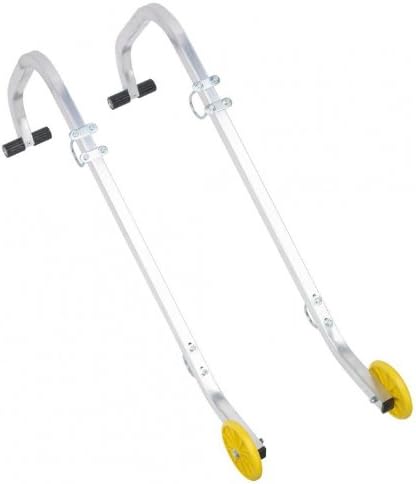
Best trade-brand alternative
Lyte is one of the longer-established UK ladder manufacturers, and this kit follows the same formula as the TB Davies pick — aluminium hook and integrated wheels, designed to turn a single or extension ladder into a roof ladder without needing a second unit in storage. The listing is explicit that it is suitable for a wide range of domestic roofs rather than a narrow one, which is the right way round for a kit meant to cover most jobs rather than a specific edge case. Functionally it sits alongside the top pick rather than clearly ahead or behind it — the choice between the two is mostly which trade name you already trust.
For
- Established UK ladder brand
- Aluminium hook and wheels, quick to fit
- Suitable for a wide range of domestic roof types
Against
- Marginally pricier than the TB Davies kit
- No meaningful functional difference from the top pick
Typically £38–£48
Check price on AmazonYoungman 2 Section Roof Ladder 4.33m

A dedicated roof ladder, for when the roof is the regular job
The alternative to a hook kit entirely: a purpose-built two-section roof ladder with the ridge hook and running wheels engineered into the unit from the start, rather than clamped onto something else. That removes any question of rung compatibility or whether the underlying ladder is rated for the extra duty, and at 4.33m it covers bigger roofs than most hook-and-extension-ladder combinations comfortably reach. It is also a specific, considered purchase — several times the price of a hook kit, a genuinely large thing to store, and more ladder than an occasional close-up look at a ridge tile actually needs. Worth it when roof access is a routine part of the work rather than the exception.
For
- No compatibility guesswork — hook and wheels are built in
- 4.33m reach covers larger roofs
- One unit, not a ladder-plus-accessory combination
Against
- Considerably more expensive than a hook kit
- Large and heavy to store and transport
- Overkill for occasional, close-up inspection work
Typically £350–£460
Check price on AmazonLaddermat Roof Hook Kit for Single Ladder and Extension Ladders

Best for mixed or unknown ladder brands
Where the other kits here lean on a single manufacturer’s own compatibility, Laddermat’s listing explicitly names cross-brand fit — Youngman, Werner, Zarges, TB Davies, Lyte and others — which is genuinely useful if the extension ladder in the van is not from the same maker as the hook kit going on it. The hook clamps over the ridge for anti-slip positioning and the wheels roll it into place with less risk to tiles or shingles than dragging it up. It is the newest listing of the group, so it has less of a track record than the established trade names, but the specification reads the same as the rest.
For
- Explicit cross-brand compatibility with major UK ladder makers
- Ridge-clamping hook plus wheels, same formula as the top picks
- Competitively priced
Against
- Newer to market, less of a track record than Youngman or Lyte
- Listing describes the build as steel or aluminium rather than confirming one
Typically £30–£40
Check price on AmazonYoungman Group Roof Hook Kit for Adapting Extension Ladders

Straightforward Youngman-brand pairing
Youngman’s loft ladders and step ladders already turn up regularly in the houses I survey, and this hook kit is the same trade credibility applied to roof access — a straightforward hook-and-wheel unit for adapting an existing single or extension ladder. There is nothing here that leapfrogs the top two picks on features; the case for it is mainly brand consistency, if the extension ladder already in the van is a Youngman and matching hardware from the same maker removes any doubt about fit.
For
- Trusted, widely stocked trade brand
- Straightforward hook-and-wheel design
- Competitive pricing among the hook kits here
Against
- No functional advantage over the TB Davies or Lyte kits
- Fewer published spec details on the listing itself
Typically £30–£38
Check price on AmazonYoungman Roof Hook Fits Most Ladders

Best on a budget
The cheapest of the hook kits here by a small margin, and it does not cut the obvious corners to get there — lightweight aluminium, wheels to help locate it into position, and a listing that specifically states it fits single, double and triple-section ladders rather than leaving compatibility vague. The saving over the other hook kits is modest rather than dramatic; the honest comparison to draw on price is dedicated ladder versus hook kit, not which hook kit, since the kits themselves cluster tightly in cost regardless of brand.
For
- Lowest price among the hook kits compared here
- Explicitly rated for single, double and triple ladders
- Lightweight aluminium, made in the UK
Against
- Saving over the other kits is small, not dramatic
- Fewer independent reviews than the more established listings
Typically £28–£36
Check price on AmazonWhat actually matters — and what doesn’t
The real decision is dedicated ladder versus hook kit — not which hook kit. Every hook-and-wheel kit in this guide sits in roughly the same £28–£48 band regardless of brand, doing essentially the same job in essentially the same way. The decision that actually changes what you are buying is whether roof access is regular enough in your work to justify several hundred pounds on a dedicated unit, not which trade name is stamped on a £35 hook.
Wheels exist to protect the roof, not just to help you climb. Rolling a wheeled hook up the slope under control, rather than dragging a bare hook across the surface, matters most on the older clay tiles and slate that turn up constantly on the housing stock I survey. A cracked tile caused by the access equipment is not a good look on a survey visit.
The extension ladder underneath is doing half the work. A hook kit does not upgrade a domestic ladder into trade-rated equipment; it is only as good as what it is clamped to. EN131 Professional class on the ladder itself is the baseline, covered in more detail in the telescopic ladder guide.
Roof pitch is a genuine limit, not marketing small print. Most kit here is rated to somewhere around 45–55 degrees. That is a manufacturer figure for that specific model, and steeper pitches change the job to scaffolding or a tower rather than a beefier hook.
Things the listings push that you can ignore: “universal fit” presented as a guarantee rather than a starting point — check it against your own rungs regardless. “Heavy-duty” without a stated weight rating attached to it. And vague “suitable for all roofs” claims that conveniently avoid naming a maximum pitch, which is the one figure that actually determines whether a kit is right for a given job.
Know when the answer is not to get on the roof at all. Steep pitches, wet or frosted tiles, fragile or unknown coverings, or simply nobody available to foot the ladder — any of those is the point at which binoculars from the ground or a drone pass is the better call than pushing a roof ladder into a job it was never suited to.
Questions I get asked
Do I need a dedicated roof ladder or will a hook kit do?
For occasional use on a domestic pitched roof with a decent extension ladder already in the van, a hook-and-wheel kit is the pragmatic answer — it clamps on in a couple of minutes and packs away small when the job is done. A dedicated roof ladder earns its far higher price when the roof itself is the regular job rather than the exception, or when the extension ladder underneath genuinely is not up to also carrying a hook kit. For the odd close-up look at a ridge tile or a flashing detail, that is more ladder, and more spend, than the job usually needs.
What roof pitch can a roof ladder be used on?
Most of the hook-and-wheel kits and dedicated roof ladders in this guide are rated to somewhere around 45–55 degrees, which covers the great majority of ordinary UK pitched roofs, but the exact figure is set by the manufacturer for that specific model and is worth checking rather than assuming. Steeper pitches, and anything with loose, fragile or wet coverings, move the job into scaffolding or tower-hire territory rather than a heavier roof ladder.
Can I use a roof ladder on my own?
Not safely, and not in line with what the Work at Height Regulations 2005 actually expect of access equipment used properly. Getting a roof ladder into position and footing the base while someone else climbs is a two-person task by design. If nobody is available to foot the ladder, that is the point at which binoculars from the ground, or a drone pass, becomes the sensible way to look at a roof rather than a compromise.
Will a roof hook kit fit any extension ladder I already own?
Most kits are marketed as universal and will clamp onto the standard round or box-section rungs used by the mainstream UK ladder brands, but “universal” on a listing is a claim worth checking against your actual ladder before relying on it, not a guarantee. Cross-reference the rung profile and width against the kit’s stated compatibility, and if in doubt, a kit from the same manufacturer as the ladder underneath removes the guesswork entirely.
A roof ladder covers the occasional close-up look; most roof-covering assessment on a domestic building survey still happens from the ground, with binoculars or a drone pass doing the routine work. Between the three, most pitched roofs get covered without anyone needing scaffolding. If you need a survey or a drone roof inspection anywhere in Sussex, Kent or Surrey, get in touch — or browse the rest of the field-kit guides, including the telescopic ladder and step ladder guides this one completes.
Disclaimer. This guide is general information, not a substitute for the manufacturer’s instructions or a proper work-at-height risk assessment for your circumstances. Prices are indicative, move constantly and were checked at the time of writing; the linked page always shows the current price. As an Amazon Associate I earn from qualifying purchases.