A UV torch isn’t something most surveyors reach for on every visit, but it earns its place for one specific job: making an invisible repair visible. Paint, filler, plaster, mastic and adhesive all fluoresce slightly differently under UV depending on age and formulation, even when a patch has been colour-matched perfectly to the eye. A ceiling skimmed over a crack, a window reveal with fresh mastic run round it, a section of render made good — a UV torch across the surface in a darkened room turns a five-second check into either “nothing to see here” or “worth asking the vendor about.”
The second job is pest and damp evidence in voids — lofts, under-stair cupboards, suspended timber floors. Rodent urine trails and old droppings fluoresce under UV far more readily than they show up under a head torch alone, and it’s a two-minute addition to a loft hatch check that a borescope can’t replicate from a single inspection hole. Some historic leak staining reacts to UV too, adding a second data point alongside a damp meter reading rather than replacing one.
None of the torches below have been run over an actual survey — the notes are built from manufacturers’ specifications and recurring owner feedback, filtered through what a two-minute loft or void check actually needs. First, the one I’d buy.
The one I’d buy
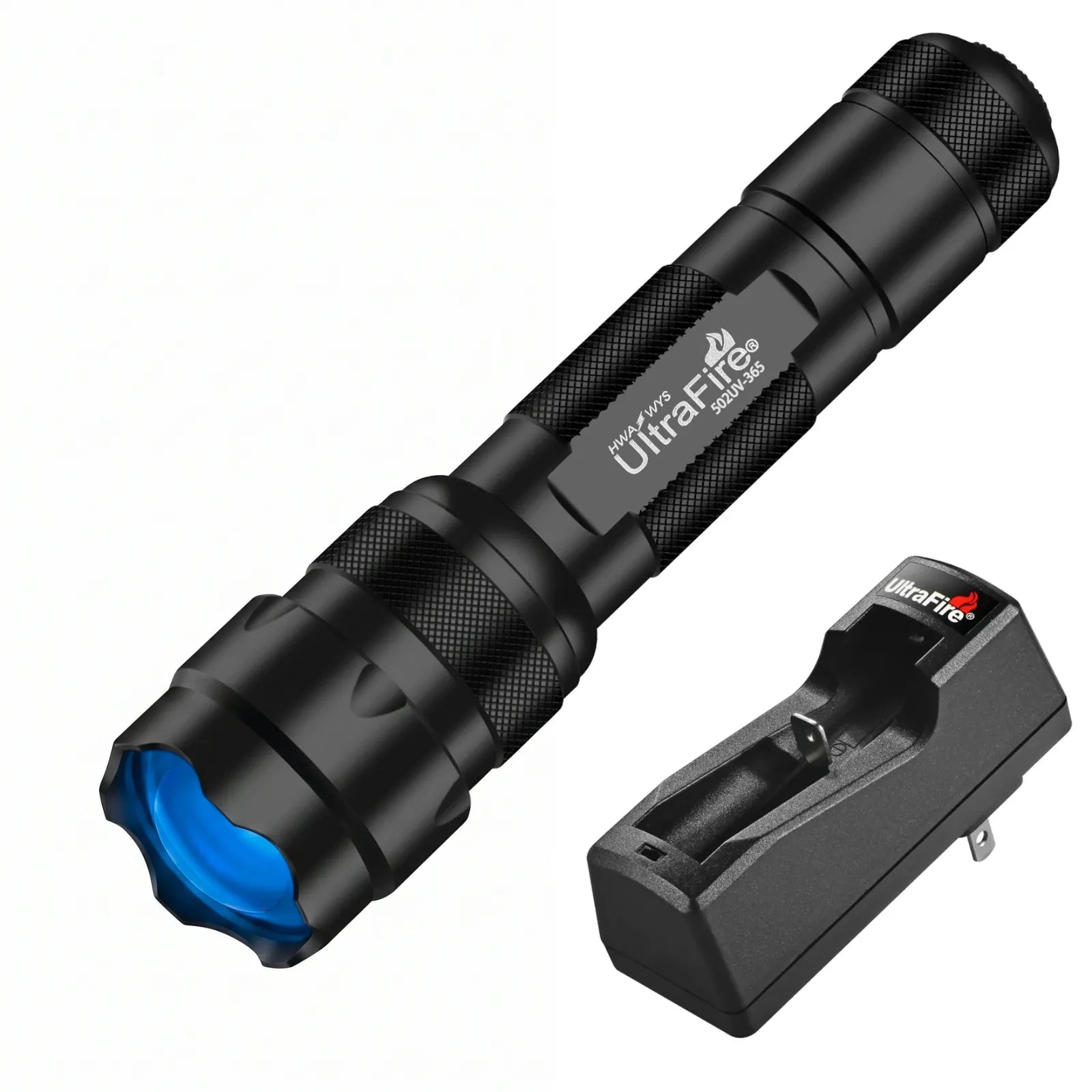
UltraFire 502UV-365
UltraFire’s 502UV-365 sits at the wavelength most UV-reliant trades treat as the real standard rather than a compromise — 365nm, which gives a noticeably stronger fluorescent response on repair materials and pest evidence than the cheaper 395–405nm torches that dominate the budget end of this category. The zoomable head is the detail that earns it the top spot: twisted to flood it sweeps a ceiling evenly, twisted to throw it reaches across a loft or garden without walking the whole area.
Typically £22–£32
Check price on AmazonHow I judge a UV torch
A genuine UV wavelength, not a violet LED wearing the label. 365nm is nearer the standard used for serious fluorescence work; a lot of torches sold as “UV” actually sit at 395–405nm, which is really the edge of visible violet light. They still make some things glow, but the fluorescence is weaker and harder to distinguish from the torch’s own visible-light spill — the single biggest quality difference in this category, and the one most listings bury in the small print.
Flood versus throw. A wide, even flood beam is what’s needed for sweeping a ceiling or a run of skirting for repair evidence. A tighter, further-reaching beam matters more for scanning a full loft depth or a garden boundary from one spot rather than walking the whole area. A zoomable head that does both is worth the extra cost over a fixed one.
Output and battery life that survives being forgotten about. This is an occasional-use tool, which cuts both ways: a torch that’s flat when it’s finally needed is worse than useless, but a rechargeable cell that’s topped up before every job is no trouble at all. AA-powered torches never leave a surveyor stuck if there’s a spare battery in the van bag; rechargeable ones are more convenient day to day if the habit of charging them sticks.
Size, and whether it actually lives in a pocket. A torch that’s carried every day gets used for the quick checks it’s good for; one that lives in a case at the bottom of the van bag only comes out once it’s already a known issue, by which point a lot of the value of a five-second check has already been lost.
The comparison
| Model | Wavelength | Power | Typical price | Best for | |
|---|---|---|---|---|---|
| UltraFire 502UV-365 | 365nm | 18650 rechargeable, zoomable | ~£22–£32 | Best overall | View |
| Coast PX100 | 400nm | 1x AA, fixed beam | ~£30–£42 | Premium/professional pick | View |
| Lepro 51 LED UV Torch | 395nm | 3x AA, fixed flood | ~£10–£16 | Best on a budget | View |
| uvBeast V3 365nm | 365nm, filtered | 18650 rechargeable | ~£55–£70 | Best for long range & large areas | View |
| Streamlight Stylus Pro USB UV | 400nm | USB rechargeable | ~£45–£60 | Best compact professional penlight | View |
| Nitecore Tiki UV | 365nm | Built-in USB-C rechargeable | ~£22–£32 | Best keychain & EDC | View |
The picks in detail
UltraFire 502UV-365
Best overall — genuine 365nm output with a beam that adjusts to the job
UltraFire’s 502UV-365 sits at the wavelength most UV-reliant trades treat as the real standard rather than a compromise — 365nm gives a noticeably stronger fluorescent response on typical repair materials and rodent evidence than the cheaper 395–405nm torches that dominate the budget end of this category. The zoomable head is the detail that earns it the top spot: twisted to flood it sweeps a ceiling or a run of skirting evenly, twisted to throw it reaches across a loft space or garden without walking the whole area. It runs on a rechargeable 18650 cell with a supplied charger, which is fine for a torch that comes out for two minutes a handful of times a week. Owner feedback consistently rates the build as solid for the price — aircraft-grade aluminium rather than the thin bodies some budget UV torches ship with.
For
- Genuine 365nm output, stronger fluorescence than 395–405nm rivals
- Zoomable flood-to-throw beam covers close inspection and distance work
- Rechargeable 18650 cell and charger included
Against
- Needs charging ahead of use, no disposable-battery backup
- Costs more than the simplest fixed-beam budget torches
Typically £22–£32
Check price on AmazonCoast PX100
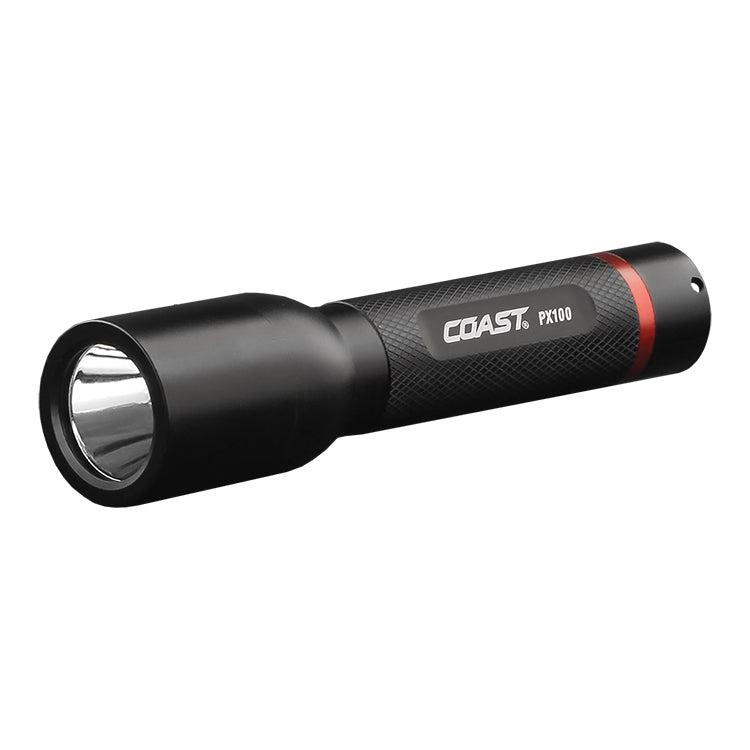
Premium/professional pick — a single trade-grade LED from a brand already in most tool bags
Coast is a name most surveyors already trust from its inspection penlights and headlamps, and the PX100 applies the same approach to UV — one properly specified 400nm LED, aircraft-grade aluminium, IPX4 water resistance and testing to the ANSI/FL1 flashlight standard that most budget UV torches don’t bother with. It runs on a single AA rather than a proprietary rechargeable cell, which matters more than it sounds for a tool that might sit unused for weeks between call-outs; a spare AA from the van bag brings it straight back to life rather than a dead lithium cell. It’s a fixed-beam torch rather than a zoomable one, so it doesn’t have the UltraFire’s reach across a large loft, but the five-year warranty and ANSI-tested output are what earn it the professional-pick spot over torches with better-sounding specs on paper.
For
- Single trade-grade 400nm LED, ANSI/FL1 tested output
- Runs on a standard AA, no dead-battery risk after weeks unused
- Five-year warranty, IPX4 rated
Against
- Fixed beam only, no zoom for reaching across a large space
- Costs more than the Lepro for a single-LED design
Typically £30–£42
Check price on AmazonLepro 51 LED UV Torch

Best on a budget — enough LEDs to flood a ceiling for under £16
Fifty-one LEDs spread across the head give the Lepro a wide, even flood that’s better suited to sweeping a ceiling or a length of skirting for repair evidence than a single-LED torch’s narrow hotspot, and at this price it’s cheap enough to leave permanently in the van bag rather than budgeting for it as a dedicated purchase. It sits at 395nm rather than a true 365nm, so the fluorescent response on faint or old evidence is noticeably weaker than the UltraFire or uvBeast above, and it runs on three AA batteries rather than a rechargeable cell. Aluminium alloy construction and an IPX4 rating cover the basics for occasional site use, and owner feedback is consistent that it’s a capable stain-and-pest-evidence torch for the money rather than a compromise dressed up as one.
For
- Wide, even flood from 51 LEDs, good for sweeping large areas
- Cheap enough to treat as permanent van-bag kit
- Runs on standard AA batteries
Against
- 395nm output is noticeably weaker than a true 365nm torch on faint evidence
- No zoom, flood only
Typically £10–£16
Check price on AmazonuvBeast V3 365nm
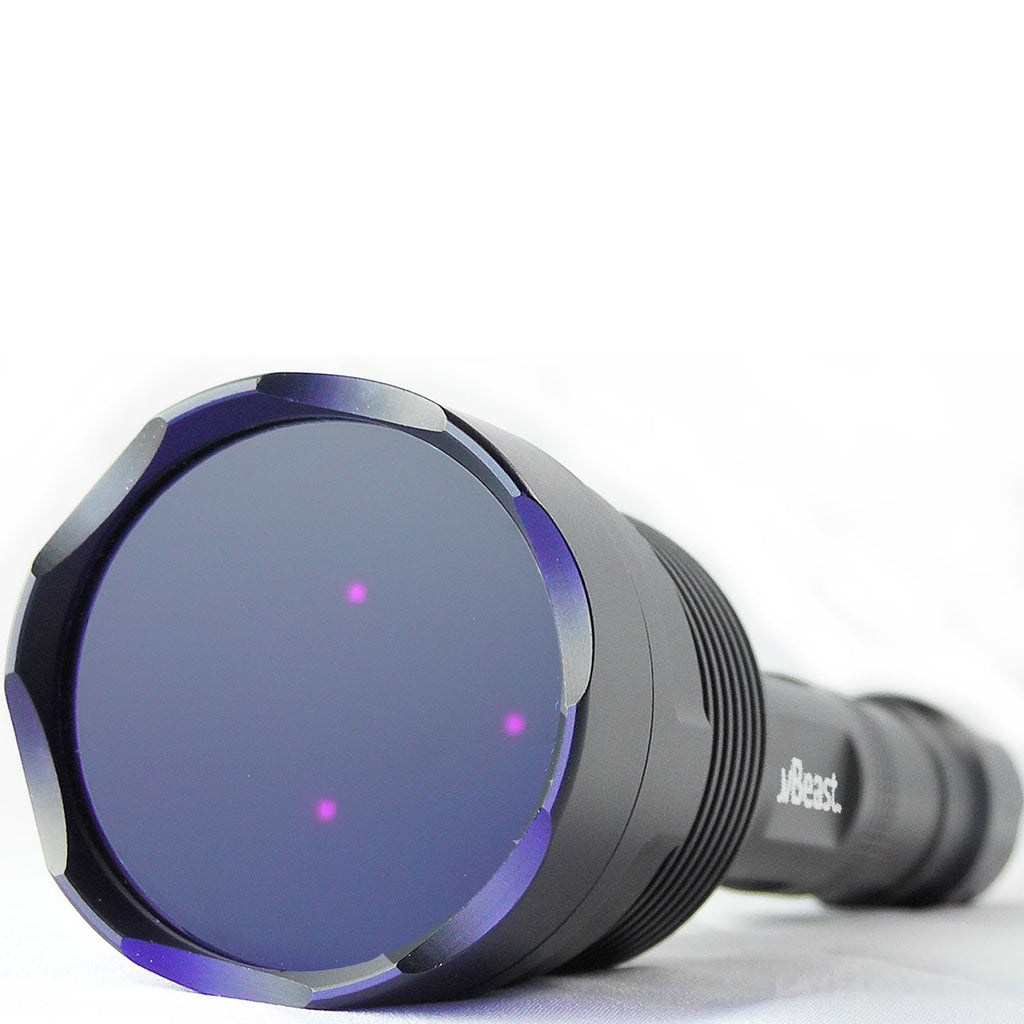
Best for long range and large areas — the torch for a big loft or a garden sweep
uvBeast builds specifically for trades that need UV to reach, rather than just glow — NDT inspectors, leak detection engineers, aviation and manufacturing checks — and the V3’s filtered 365nm beam is rated to fluoresce evidence out to over 60 feet, considerably further than the flood-pattern budget torches above. That range is the entire point for a loft that runs the full depth of a semi-detached roof, or a garden sweep checking a boundary from one spot rather than walking the whole area. It’s priced and built like the specialist tool it is, rechargeable 18650 cell included, and it’s more torch than most two-minute loft checks actually need — which is exactly why it’s not the overall pick despite the strongest output here.
For
- Filtered 365nm beam with genuine long-range throw
- Built for professional inspection trades, aircraft-grade construction
- Rechargeable 18650 cell included
Against
- Most expensive torch in this guide
- More range than a typical loft or void check needs
Typically £55–£70
Check price on AmazonStreamlight Stylus Pro USB UV
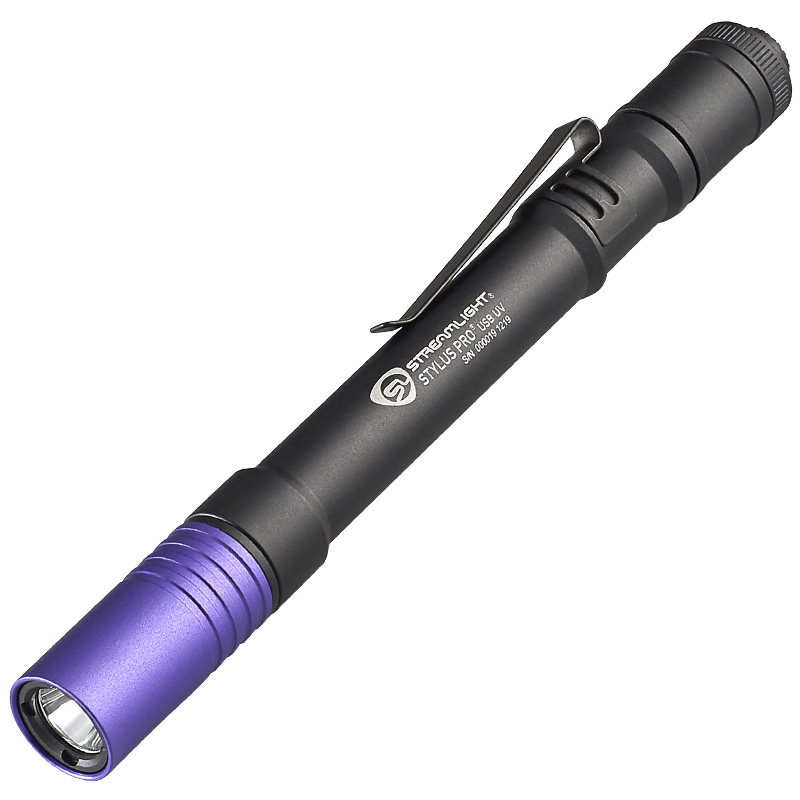
Best compact professional penlight — the one that lives in a top pocket
Streamlight built its reputation on penlights that trade professionals carry every day, and the Stylus Pro USB UV is the UV version of that same compact, pocket-clip format rather than a flashlight redesigned to be smaller. Its 400nm LED and USB-rechargeable body suit close-up detail work — reading a fluorescent leak-detection dye, checking a small repair patch — rather than sweeping a whole ceiling or loft. It’s the torch that’s actually in a pocket for the two-minute checks precisely because it’s penlight-sized, and the trade-off is an output too narrow and low-power for anything beyond close, deliberate inspection.
For
- Genuine trade-brand build quality in a pocket-clip penlight format
- USB rechargeable, compact enough to carry daily
- Good for close, deliberate detail work
Against
- Narrow beam and lower power than the dedicated torches above
- Not suited to sweeping a large area
Typically £45–£60
Check price on AmazonNitecore Tiki UV
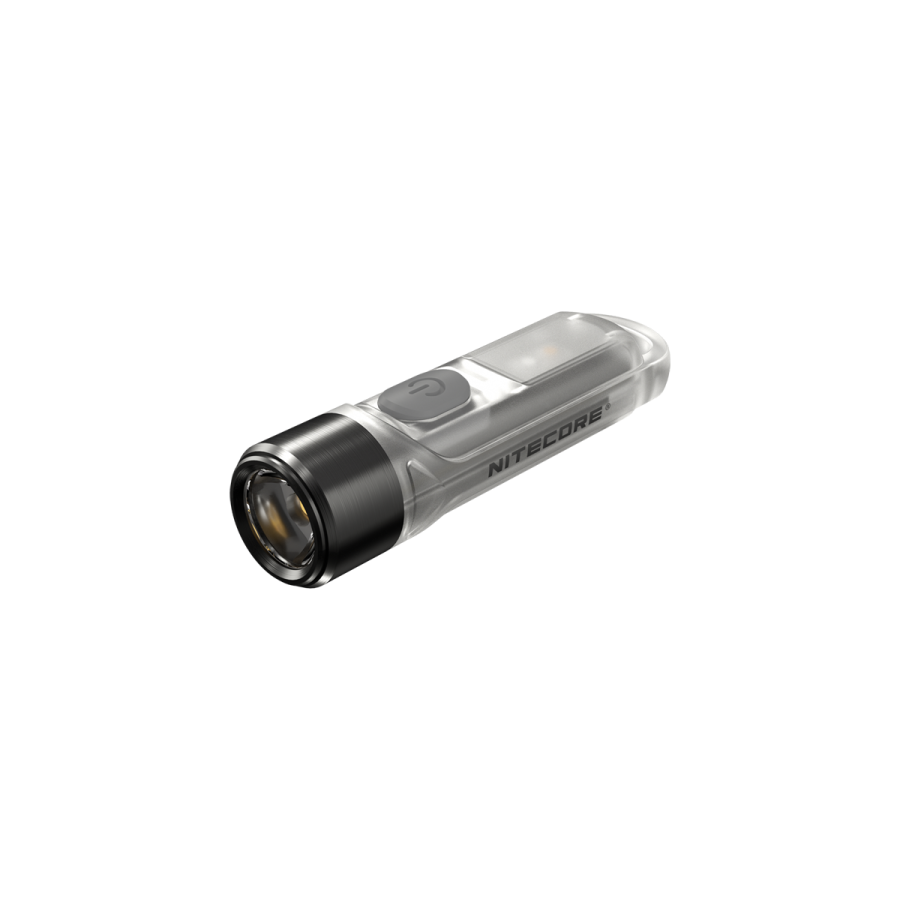
Best keychain and EDC — a genuine 365nm LED small enough to never leave at home
The Tiki UV is built around the same SST-10-UV LED used in Nitecore’s dedicated inspection lights, shrunk into a keychain-sized body with a built-in rechargeable cell and USB-C charging, no separate charger to lose in the van. It’s genuinely 365nm rather than the diluted 395–405nm wavelength most keychain-sized UV lights use, and it keeps a real fluorescent response despite the size. Around two hours of runtime per charge is thin for anything beyond a quick check, and the tiny lens covers a small area only, so it’s the torch for the surveyor who wants UV always on the keys rather than the one reached for on a dedicated loft inspection.
For
- Genuine 365nm LED despite the keychain size
- Built-in USB-C rechargeable, no separate charger
- Small enough to carry permanently, no reason to leave it behind
Against
- Around two hours of runtime per charge
- Small lens covers only a limited area at a time
Typically £22–£32
Check price on AmazonWhat actually matters — and what doesn’t
365nm versus 395nm is the single biggest factor, more than LED count or claimed lumens. A torch with fifty LEDs at 395nm is still a 395nm torch — more LEDs makes a wider, brighter version of the same weaker fluorescence, not a genuine UV upgrade. Listings rarely make the wavelength obvious unless it’s in the product name, so it’s worth checking before LED count or brightness claims.
Darkness matters more than the torch. Even a genuine 365nm beam struggles to show faint fluorescence in daylight or a bright hallway. The best results come from checking a loft, void or room with the lights off and any daylight blocked, not from buying a stronger torch to compensate for a bright room.
A UV torch is a lead, not proof. A repair, a stain or a trail that fluoresces tells a surveyor where to look closer — with a borescope, a damp meter, or simply better light — not what the material actually is or how old it is. It’s a pointer, the same as a stud finder or a cable detector, not a diagnosis in itself.
Battery type is a genuine trade-off, not just a spec line. Rechargeable is convenient until it’s flat on the one day it’s needed. AA or AAA power is old-fashioned but never leaves a surveyor without a working torch if there’s a spare battery in the van bag — worth weighing against how reliably a rechargeable one actually gets put on charge.
Questions I get asked
What does a UV torch actually show a surveyor that a normal torch doesn’t?
Materials and repairs that fluoresce differently under UV even when they’re colour-matched to the eye — mastic, filler, some paints and adhesives, which can flag a recent patch repair before a sale. It also picks up rodent urine trails and old droppings in lofts and voids far more readily than normal light, and some historic leak staining reacts under UV too. None of it is visible under a standard torch or head torch.
Is 365nm or 395nm better for finding stains and repairs?
365nm is nearer the wavelength genuinely used for fluorescence work, and it produces a noticeably stronger glow on faint or old evidence. 395–405nm torches are cheaper and still show up obvious, fresh staining well enough, but they struggle with anything faint, old or subtle — exactly the cases where a UV torch is actually earning its keep over the naked eye.
Can a UV torch replace a damp meter or a borescope?
No — it’s a lead-generation tool, not a measurement one. A damp meter gives a reading, a borescope gives a view inside a void or cavity; a UV torch just flags where on a surface or in a space to look closer with one of those tools, or with better lighting and a longer look.
Are UV torches safe to use indoors, in front of a client?
The UV-A output on handheld torches like these is low power and brief exposure isn’t a real hazard for a quick sweep of a ceiling or a loft — no PPE is needed. The only sensible precaution is the obvious one: don’t shine any torch directly into someone’s eyes at close range, UV or otherwise.
A UV torch is a small, cheap addition to a survey bag that answers a question no other tool quite covers. If a hidden repair or a void is the actual question on your own property, the practice carries out building surveys and retrofit assessments across Sussex, Kent and Surrey — get in touch. Or browse the rest of the field-kit guides, including the borescopes and inspection mirrors guides this one sits alongside.
Small print. This guide is general information, not a diagnosis of any specific property; a fluorescent reading under UV is a lead to investigate further, not proof of damp, pest activity or a defective repair. Prices are indicative, move constantly and were checked at the time of writing; the linked page always shows the current price. As an Amazon Associate I earn from qualifying purchases.