A thermostatic radiator valve has always done one job — close off a radiator once its own local sensor reaches the set temperature. A smart version adds a motor, a battery and an app on top of that same mechanism, trading a dial you turn by hand for a schedule, a geofence, and a reading of what each room is actually doing. In a house with one thermostat running every radiator at once, that's real money: a spare room heated to living-room temperature all day, because there's no other way to turn it down.
It's a heating-cost and comfort product, not a damp or ventilation one, and I'd be wary of buying it expecting the second thing. A smart TRV can stop a room going stone cold when it's empty, which helps condensation risk at the margin, but it does nothing about moisture generated elsewhere in the house or a cold bridge in the fabric. That's a ventilation and insulation question, covered in my PIV units guide and dehumidifiers guide, not a heating-controls one.
The other honest caveat, and the one most affiliate roundups skip: on a heat pump, several smart TRVs closing at once can do more harm than good. More on that below, after the seven valves I'd actually look at.
The one I’d buy
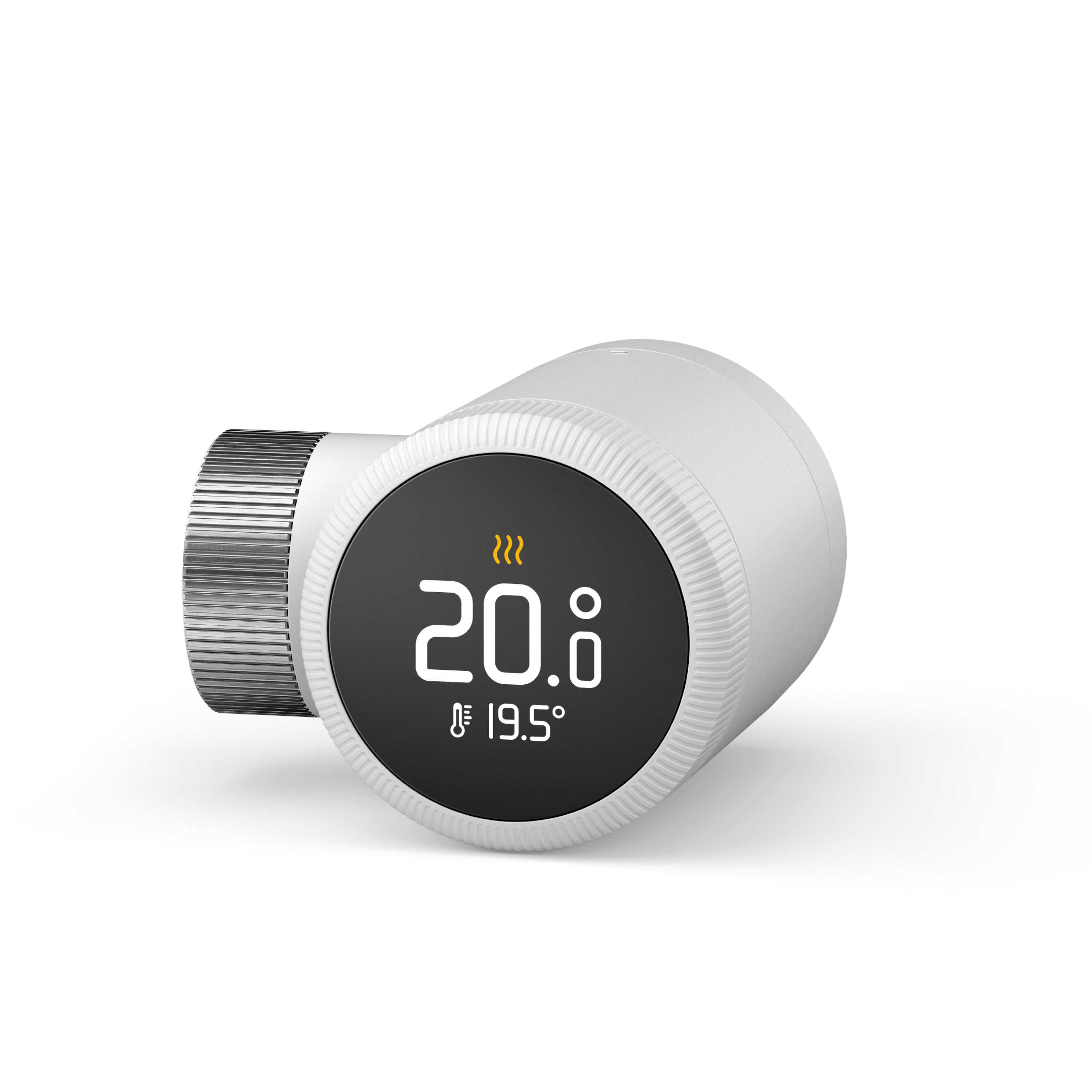
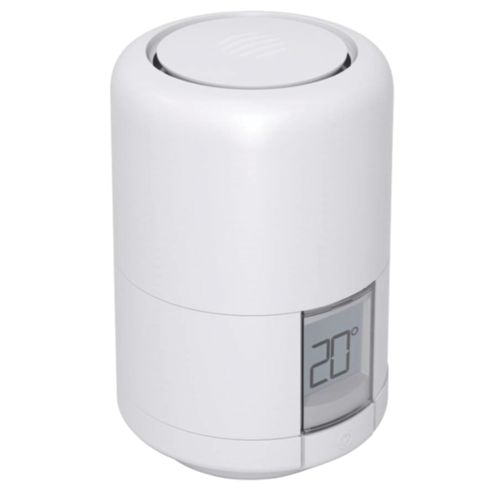
Tado Smart Radiator Thermostat X
Tado's X generation is Thread and Matter certified, so it can run hub-free off a Thread border router you may already own (a HomePod mini or recent Echo, for instance) rather than forcing a proprietary hub on you from day one. It charges over USB-C roughly once a year instead of eating AA batteries, geofencing and open-window detection are both automatic rather than alert-only, and Tado publishes the clearest heat pump compatibility list of any brand here — genuinely useful given the caveat further down this page.
Typically £60–£80 per valve
Check price on AmazonHow I judge a smart radiator valve
Hub-free or genuinely hub-locked. A Thread or Matter valve can run through a border router you may already own; several others flatly won't function without their own proprietary hub, which is an extra £30–£90 that rarely gets mentioned in the headline price.
Geofencing that actually adjusts the temperature. Some apps only alert you that you've left the heating on; genuine automatic geofencing turns it down itself. Worth checking which behaviour you're getting before assuming the feature exists.
What valve body it actually fits. Almost everything here is built around the M30x1.5mm thread standard, but a large share of UK radiators — especially anything fitted with Danfoss RA, RAV or RAVL valves — needs an adapter. Some brands ship a full adapter set in the box; others officially support M30x1.5 only and leave you sourcing your own.
Heat pump readiness, not just a compatibility badge. A brand stating it "works with heat pumps" isn't the same as a system designed so it won't restrict flow when several valves close together. Ask specifically how it handles that, not whether it pairs with the app.
Battery type and realistic life. Rechargeable USB-C cells save a yearly trip round every radiator with a screwdriver and a battery pack; plain AA cells are cheaper to replace but that trip still has to happen, typically once a year.
The comparison
| Model | Hub | Connectivity | Typical price | Best for | |
|---|---|---|---|---|---|
| Tado Smart Radiator Thermostat X | Optional | Thread/Matter | ~£60–£80 | Best all-round pick | View |
| Eve Thermo (Matter) | Optional | Thread/Matter | ~£50–£80 | Hub-free, no subscription | View |
| Bosch Smart Home Radiator Thermostat II | Optional (Matter version) | Zigbee or Matter/Thread | ~£55–£70 | Flexible ecosystem fit | View |
| Drayton Wiser Smart Radiator Thermostat | Required | Zigbee | ~£38–£57 | Granular room-by-room zoning | View |
| Aqara Radiator Thermostat E1 | Required | Zigbee 3.0 | ~£44–£56 | Cheapest per valve | View |
| Hive Radiator Valve | Required | Zigbee | ~£35–£59 | Already on Hive Active Heating | View |
| Honeywell Home evohome (HR92) | Required (Colour Controller) | Proprietary RF | ~£75–£85/valve | Whole-house professional zoning | View |
The picks in detail
Tado Smart Radiator Thermostat X
Best all-round — Thread/Matter, rechargeable, best-documented heat pump support
This is the current-generation Tado, not the older screw-in "V3+" model still sold alongside it — check the exact listing, since the two ranges aren't cross-compatible. Thread/Matter lets it join an existing smart-home mesh without Tado's own Bridge X hub if you already own a HomePod mini or similar, and the rechargeable cell removes the annual AA run. Geofencing and open-window detection are both automatic out of the box, and Tado is the only brand here naming specific heat pump compatibility (Vaillant, Daikin, Panasonic and others) rather than a generic "works with most systems" line.
For
- Hub-free if you already have a Thread border router
- Rechargeable via USB-C, no AA batteries
- Clearest published heat pump compatibility list
Against
- Not compatible with the older Tado V3+ range
- Full scheduling still wants the Tado app and account
Typically £60–£80 per valve
Check price on AmazonEve Thermo (Matter)
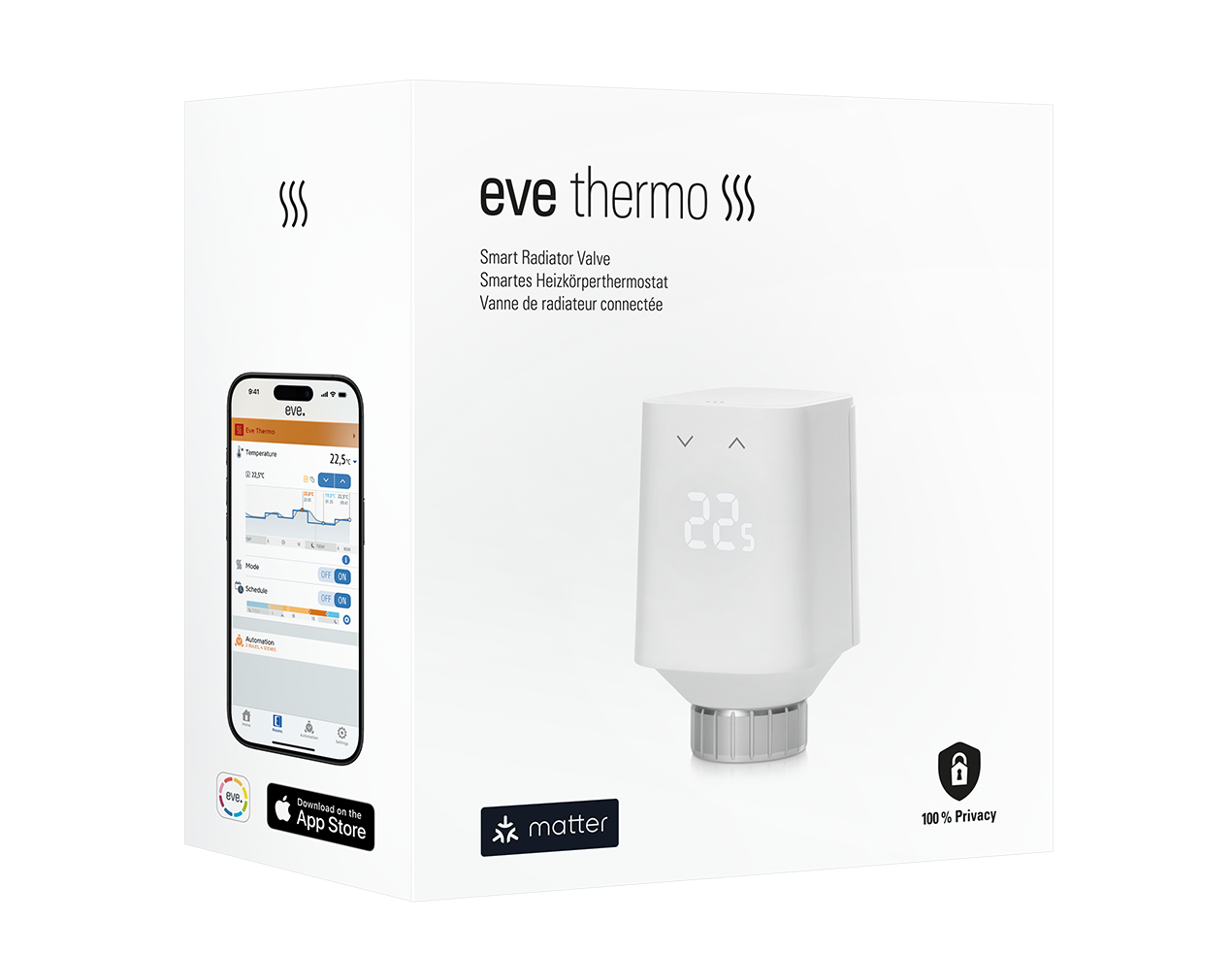
Best hub-free — no proprietary hub, no subscription, works with whatever you already run
Eve built its radiator-valve line around Thread early, and the current Matter generation is genuinely hub-free: any Thread border router you already own (Apple TV, HomePod mini, a recent Echo or Nest Hub) is enough, with no Eve-branded hub and no subscription fee. That makes it the most platform-agnostic valve here — Apple Home, Google Home, Alexa and Home Assistant are all first-class. It ships with Danfoss RA, RAV and RAVL adapters included, the broadest set of any brand here.
For
- No hub or subscription required
- Widest set of included valve adapters
- Works equally well across Apple, Google and Alexa
Against
- Price moves around a lot between promotions
- Plain AA batteries rather than rechargeable
Typically £50–£80 per valve
Check price on AmazonBosch Smart Home Radiator Thermostat II

Best flexible fit — the same design sold with or without a hub requirement
Bosch sells two closely related versions of this valve, so check which one you're buying: the standard model needs a Bosch Smart Home Controller II over Zigbee, while the newer "[+M]" variant adds Matter over Thread and can run standalone in any Thread ecosystem without Bosch's own hub. Danfoss RA and RAVL adapters come in the box, and build quality has a good reputation. On price it sits mid-pack rather than at the premium end — don't expect this to be the most expensive option here, because it isn't.
For
- Matter variant genuinely works without Bosch's own hub
- Danfoss adapters included
- Solid build-quality reputation
Against
- Two similar-looking listings — check which SKU you're buying
- Full zone logic wants the Bosch app on the standard version
Typically £55–£70 per valve
Check price on AmazonDrayton Wiser Smart Radiator Thermostat
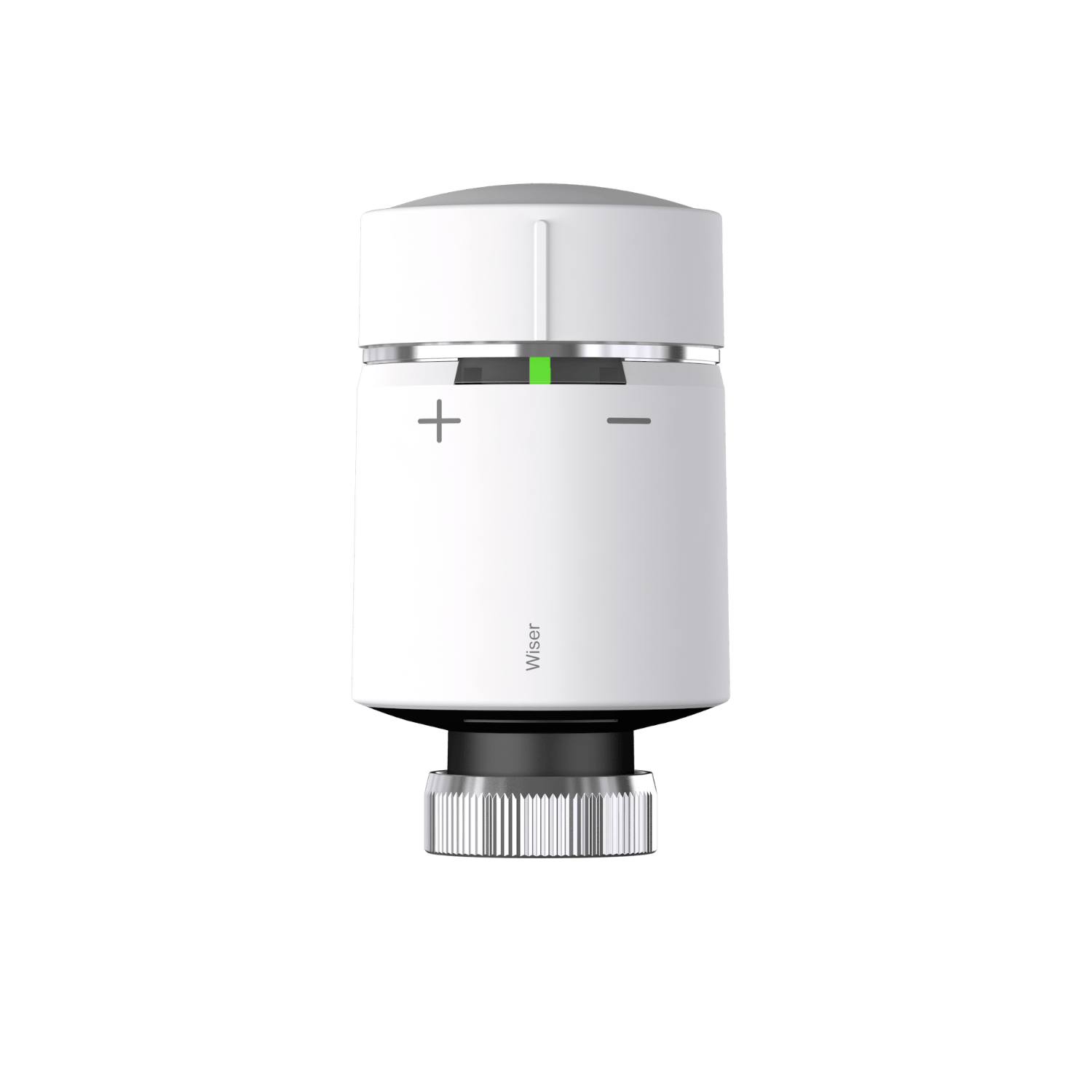
Best for granular zoning — but check your existing valve body first
Wiser's app is arguably the strongest here for fine-grained per-room scheduling, and it's a name UK installers already know and stock. The catch is valve compatibility: Drayton's documentation only fully supports the M30x1.5mm thread, without the broad adapter set Eve or Tado ship, so older Danfoss RA or RAV valves may need a separately sourced adapter checked before committing a whole house to them. Requires the separate Wiser Hub, commonly bundled into multi-valve starter kits.
For
- Strong, granular room-by-room scheduling
- Widely known and stocked by UK installers
Against
- No official adapter for non-M30x1.5 valves
- Requires the separate Wiser Hub to function
Typically £38–£57 per valve
Check price on AmazonAqara Radiator Thermostat E1
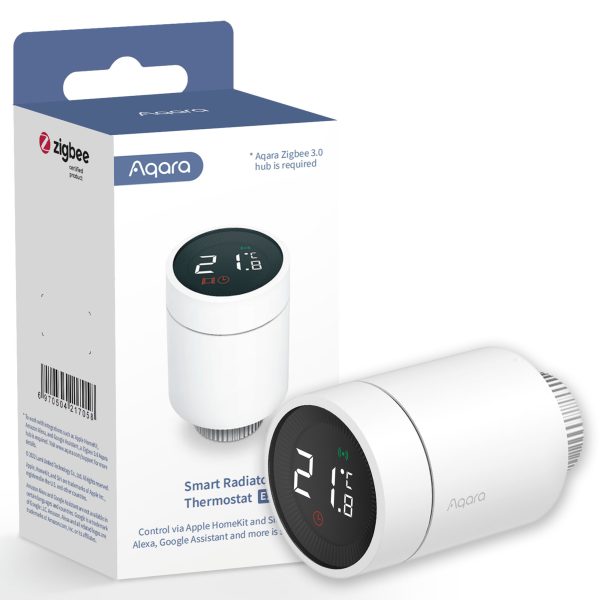
Best on a budget — the cheapest valve here, on top of a hub you may not yet own
Aqara's E1 is the cheapest single valve here, with a genuinely good colour LCD display and Apple HomeKit support unusual this far down the price scale. The catch is it's entirely hub-dependent — no Bluetooth or Matter fallback — so it won't function at all without an Aqara Zigbee 3.0 hub, adding roughly £30–£40 to a first purchase. Good value once that hub's already in place, or bought alongside other Aqara kit.
For
- Cheapest per-valve price on this list
- Colour display and HomeKit support at a low price point
Against
- Will not work at all without Aqara's own hub
- No confirmed Matter support at time of writing
Typically £44–£56 per valve
Check price on AmazonHive Radiator Valve
Best if you're already on Hive — familiar app, one more device on a hub you likely own
For UK households already running Hive Active Heating, adding Hive radiator valves onto the existing hub is the path of least resistance rather than starting a second smart-home ecosystem from scratch. Geofencing needs a specific caveat: Hive's default "Geolocation" only alerts you the heating's been left on, and only adjusts temperature automatically once you also switch on the separate "Away Mode" — an extra step the fully automatic geofencing elsewhere here doesn't need. Works on water-based radiators only, not electric.
For
- Straightforward add-on if you already have a Hive hub
- Familiar, well-supported app
Against
- Geofencing needs a separate setting switched on to auto-adjust
- No native Apple HomeKit support
Typically £35–£59 per valve
Check price on AmazonHoneywell Home evohome (HR92 Radiator Controller)

Best for whole-house professional zoning — the system heating engineers actually specify
evohome is a different category of product to the other six: a wall-mounted colour touchscreen controller runs up to twelve HR92 radiator heads over a proprietary two-way radio link, rather than a phone app being the primary interface. It's the system I associate with a proper multi-zone retrofit rather than a single-room DIY fit, and it's priced accordingly — a boxed starter system with the controller runs from around £230 before adding further heads. The one genuine gap against everything else here: evohome has no geofencing at all. Resideo also lists the generic HR92 range as discontinued globally even though the UK-specific HR92UK SKU is still stocked new, worth a quick stock check first.
For
- Up to twelve zones — more than any other system here
- Dedicated touchscreen controller, not phone-app-only
Against
- No geofencing whatsoever
- By far the most expensive way onto this list
- Signs the platform is being wound down outside the UK
Typically £75–£85 per valve; a starter system from £230
Check price on AmazonWhat actually matters — and what doesn’t
On a heat pump, more zoning isn't automatically better. A boiler blasts short bursts of high-temperature water, so a few closed TRVs barely register. A heat pump runs continuously at a low flow temperature through a large water volume; several smart valves closing at once restricts that flow, which can force the flow temperature up against the efficiency the heat pump exists for, or cause pipe noise as it pushes water through mostly-shut valves. Trustworthy installers generally recommend a buffer tank sized to the heat pump's output, or leaving roughly a quarter of the radiators permanently unrestricted. If you're weighing a heat pump alongside smart controls, that sizing question belongs in the same conversation — see what an air source heat pump costs.
They're a heating-cost fix, not a damp fix. Keeping a spare room from going stone cold helps at the margin, but a smart TRV does nothing about moisture generated by cooking, showers or drying laundry indoors, and nothing about a genuinely cold-bridged wall or window. If that's the actual complaint, it needs a ventilation or fabric answer, not a heating-controls one.
Treat the manufacturer savings percentage with real scepticism. Headline figures around 20–25% are common in this category's marketing, calculated against a household that currently heats empty rooms and leaves the heating running when out. A household that already uses a decent programmer and turns radiators down by hand is realistically looking at something more modest, and sometimes much less.
Check the valve body before ordering, not after. Most UK TRVs are the M30x1.5mm standard, but a lot of older housing stock — particularly 1980s to 2000s builds — runs Danfoss RA, RAV or RAVL valves needing a specific adapter. Some brands ship a full set in the box; Wiser notably doesn't guarantee support beyond M30x1.5. Unscrew the existing head and check the fitting before you buy.
A new boiler with OpenTherm does more for genuine efficiency than the valves alone. Weather compensation — a boiler modulating its own flow temperature against outdoor conditions — and room-by-room zoning are solving different problems, and the biggest efficiency gains tend to come from getting the boiler side right first. See what a new boiler costs if that's the piece still missing.
What the marketing pushes that matters less than it sounds. A vendor's own "AI learning" claim is a headline feature, not a measured one. A colour display is genuinely nice to have but doesn't change how well the valve heats a room. None of it substitutes for hub cost, valve-adapter compatibility and whether the geofencing is actually automatic.
Questions I get asked
Will smart radiator valves fix the condensation in my bedroom? Not directly. They can stop a room being left stone cold, which reduces one condensation risk factor at the margin, but the moisture itself comes from cooking, showering, drying laundry and everyday breathing, and needs proper ventilation to get out. If that's the actual problem, look at extract ventilation or a PIV unit rather than heating controls.
Do smart TRVs work with a heat pump? They can, but "compatible" isn't the same as "won't cause a problem." The risk is several valves closing together and restricting system flow. Ask specifically how a system handles that — a buffer tank, a set of permanently unrestricted radiators, or software that manages it — rather than trusting a general compatibility badge.
Will I really save 20–25% on heating, like the adverts say? Only if your starting point is heating empty rooms and leaving the heating on when you're out. If you already use a decent programmer and turn radiators down by hand, expect a more modest saving, and budget the hub cost most brands don't put in the headline price.
Do I need a hub, and will one fit my existing radiators? Wiser, Aqara and Hive won't function at all without their own hub, adding to the real cost; Tado, Eve and the Matter version of Bosch can run hub-free through a Thread border router you may already own. Separately, check your radiator's existing valve body: most are M30x1.5mm, but Danfoss RA/RAV/RAVL valves need a specific adapter not every brand includes.
I don’t specify heating controls as part of a survey, but they show up on an EPC as a standard low-cost recommendation, and heat pump readiness is exactly what a PAS 2035 retrofit assessment is built to answer before money goes on either the valves or the heat pump. If condensation rather than a heating bill brought you here, that's a different fix — see PIV units and dehumidifiers instead. Get in touch for a second opinion, and there are more field-kit guides if you're building out the rest of the list.
Small print. This guide is general information, not a recommendation on whether your specific heating system suits zoned control — get that checked against your boiler or heat pump before fitting a whole house of valves. Prices are indicative, move constantly and are checked at the time of writing; the linked page always shows the current price. As an Amazon Associate I earn from qualifying purchases.