Most condensation is simple physics rather than a building defect: daily living generates a surprising amount of moisture — cooking, showering, drying washing, breathing overnight — and it meets a cold surface somewhere in the house and gives itself up as water. Draught-proofing, secondary glazing and loft insulation make a house cheaper to heat, but they also close off the background ventilation older houses relied on to shift that moisture out. A PIV unit puts some of that ventilation back.
The principle dates to the early 1970s and hasn’t changed much: a loft-mounted unit draws in outside air, filters it, and on heated models tempers it slightly, then a low-wattage fan pushes it down a short duct to a diffuser in the landing ceiling. That gently pressurises the house — not enough to feel like a draught, properly installed — and the drier air displaces moisture-laden air out through the gaps, trickle vents and extractor fans a house already has. It's dilution, not extraction, which is why it suits whole-house condensation rather than a single damp patch.
That also marks its limits. It needs a loft to draw from, so it doesn’t suit a flat or a house with none. It needs somewhere for the pressurised air to escape, so a very airtight, recently retrofitted house is better served by mechanical ventilation with heat recovery (MVHR) instead. And it only addresses airborne moisture — rising and penetrating damp are different problems, and a PIV unit does nothing for either. More on all three below. First, the seven units.
The one I’d buy
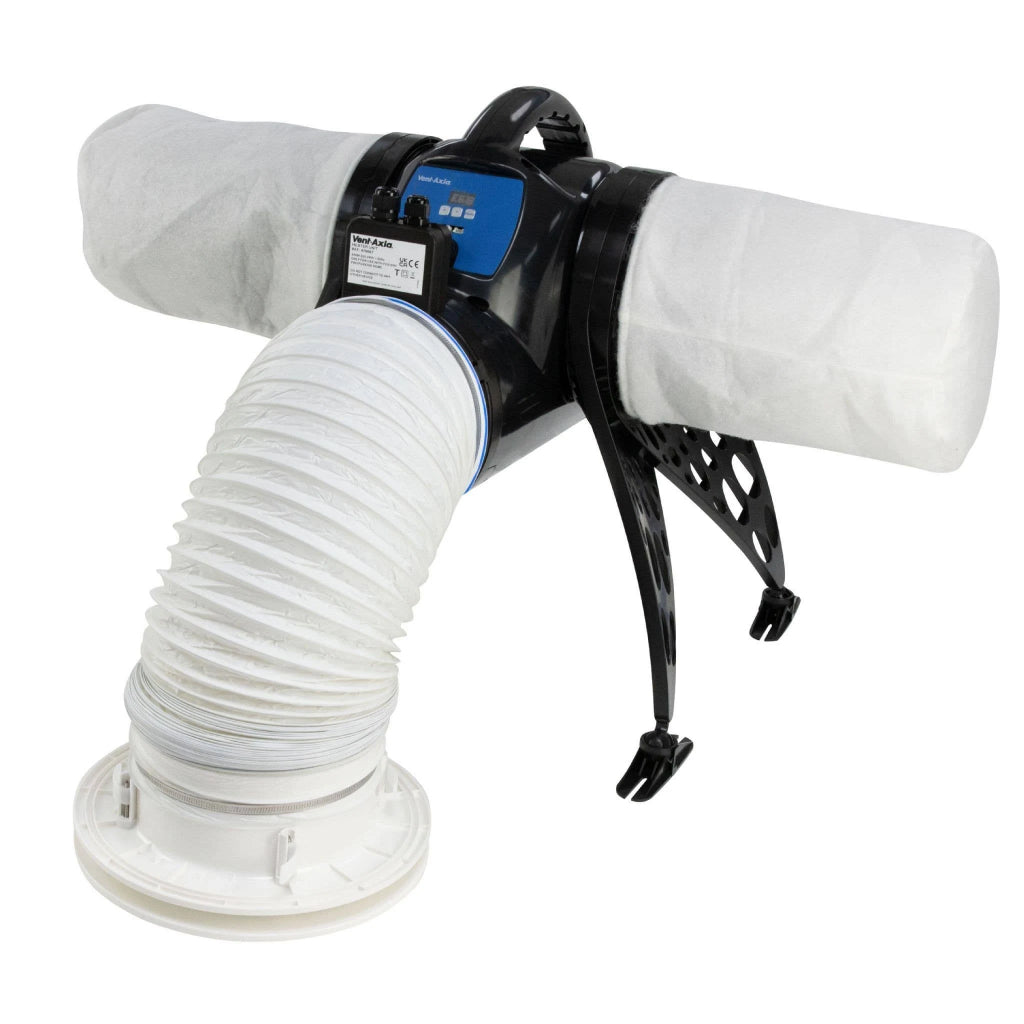
Vent-Axia Lo-Carbon PoziDry Pro with Heater (476311)
This is the unit I’d point most houses towards first. Airflow is adjustable across 11–49 l/s to suit anything up to a 150m² floor area rather than one fixed rate for every house, the manufacturer’s own figure of 9 dB(A) at the lowest setting is genuinely quiet for a landing diffuser, and the integral heater takes the edge off incoming loft air — the biggest source of the “PIV makes my house draughty” complaints owner feedback raises about unheated units in winter. The standard G4 filter is upgradeable to an F7/PM2.5-rated one lasting up to five years.
Typically £380–£460
Check price on AmazonHow I judge a PIV unit
Heated versus unheated. A heater tempers incoming loft air before it reaches the diffuser, which matters most over winter; an unheated unit is cheaper to buy and run, and is the sensible choice in a smaller or better-insulated loft where the temperature drop is less noticeable.
Airflow that can be turned down, not just up. A unit fixed at one rate sized for a large house will over-ventilate a small cottage; an adjustable range lets the flow be matched to the actual floor area.
Filter grade and what replacing it costs. A basic G4 filter suits general condensation control; an upgrade to F7 or ePM2.5 catches finer particulates and is worth it for a hay-fever or asthma household, but budget the replacement interval — typically two to five years, at roughly £20–£30 a filter.
A genuinely quiet diffuser, not just a quiet fan. The part a household actually notices is the ceiling diffuser on the landing. A manufacturer that publishes a clear dB(A) figure at the lowest setting is telling you something useful; one that doesn’t is itself informative.
A loft worth ventilating from. If the loft is under-insulated, damp, or barely accessible, that's the job to sort first — a PIV unit draws its air from that space and can't fix a problem that lives there.
Warranty and certification. A BBA certificate is the paperwork trail that satisfies building control if the installation is ever queried; a longer warranty (five to seven years here) is a reasonable proxy for confidence in the motor and electronics.
The comparison
| Model | Heated | Adjustable airflow | Typical price | Best for | |
|---|---|---|---|---|---|
| Vent-Axia PoziDry Pro with Heater | Yes | 40–176 m³/h | ~£380–£460 | Best all-round pick | View |
| Vortice Vort PIV Quadro | Optional kit | 47–266 m³/h | ~£500–£650 | Widest adjustability, digital display | View |
| Nuaire Drimaster-Eco Heat HC | Yes | Up to 216 m³/h | ~£525–£675 | BBA-approved, longest warranty | View |
| Vent-Axia PoziDry Pro | No | 40–176 m³/h | ~£280–£340 | The top pick without the heater cost | View |
| Nuaire Drimaster-Eco HC | No | Up to 216 m³/h | ~£310–£345 | Nuaire’s warranty, unheated price | View |
| Elta PIV ONE Plus+ | Yes | Up to 162 m³/h | ~£440–£530 | Double-stage filtration | View |
| Nuaire HomeDry PIV | No | Not published | ~£270–£320 | Cheapest genuine loft PIV unit | View |
The picks in detail
Vent-Axia Lo-Carbon PoziDry Pro with Heater (476311)
Best all-round — the widest adjustable range with the heater already included
Vent-Axia’s Pro range earns the top spot on breadth: 11–49 l/s of adjustable airflow covers a genuine range of house sizes, the 9 dB(A) low-setting noise figure is properly quiet for a landing diffuser, and the integral heater removes the most common complaint about unheated units. A five-year filter option and five-year warranty round it out. It costs more than the unheated version below, and the F7 upgrade is extra — but for most whole-house condensation jobs, it's the one I’d default to.
For
- Adjustable across a genuinely wide airflow range
- Quiet published figure, not just a marketing claim
- Heater addresses the main unheated-unit complaint
Against
- A real step up in price over the unheated version
- Filter upgrade is a separate cost
Typically £380–£460
Check price on AmazonVortice Vort PIV Quadro (10919)
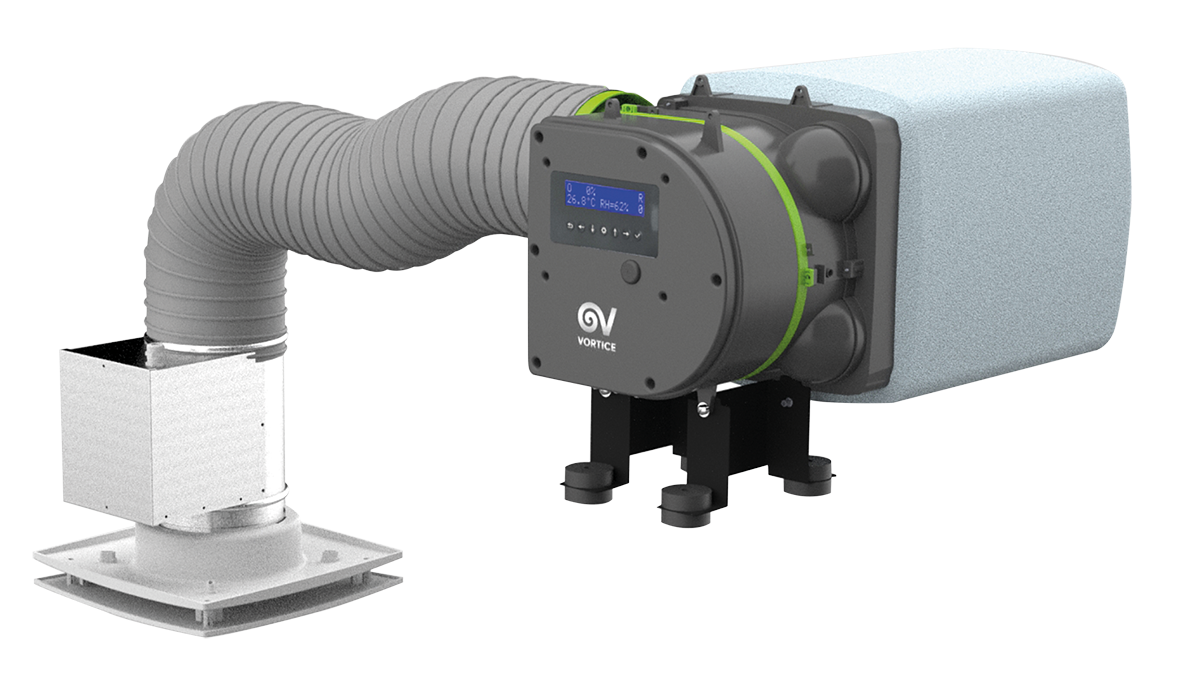
Best for widest adjustability — a digital control panel with a genuinely broad flow range
Vortice's unit stands out for a built-in digital display showing temperature and humidity alongside the fan setting, and seven speed steps spanning 13–74 l/s — the widest range here. The base unit ships unheated; a heater kit is an accessory rather than built in, which is why the price spread across retailers is wide. Vortice's own seven-year warranty puts it in the premium bracket alongside Nuaire below.
For
- Widest adjustable airflow range on this list
- Digital humidity/temperature display built in
- Seven-year manufacturer warranty
Against
- Heater is a separate accessory, not standard
- Priced at the top of this list once fitted out
Typically £500–£650
Check price on AmazonNuaire Drimaster-Eco Heat HC
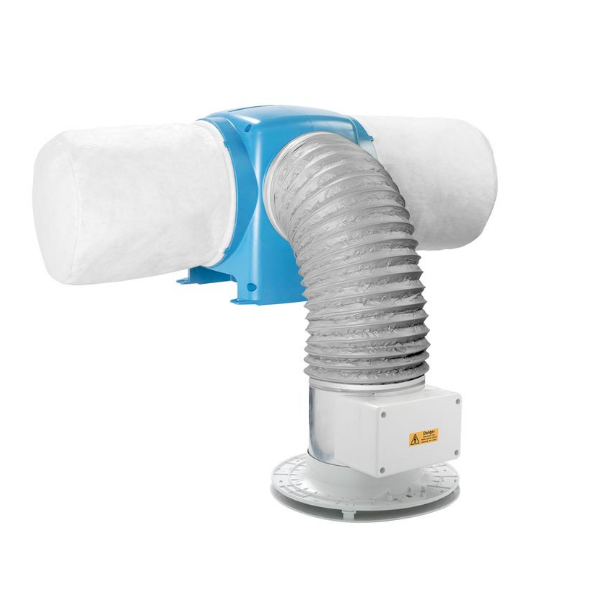
Best-known brand — BBA-approved, with the longest warranty here
Nuaire effectively invented PIV in the 1970s, and Drimaster-Eco is the range most installers reach for by default. This heated version carries BBA approval — useful paperwork if building control ever asks how Part F compliance was demonstrated — and a seven-year warranty (one year parts and labour, six years parts), the longest here. Published noise figures are inconsistent across retailer listings rather than stated clearly on Nuaire's own datasheet, so I wouldn't lean on a specific dB claim. It costs more than the PoziDry Pro above for a similar job.
For
- BBA-approved — useful Part F paperwork trail
- Longest warranty on this list, at seven years
- The brand most installers already know
Against
- Priced above the Vent-Axia equivalent
- No clearly published noise figure to compare against
Typically £525–£675
Check price on AmazonVent-Axia Lo-Carbon PoziDry Pro (476310)
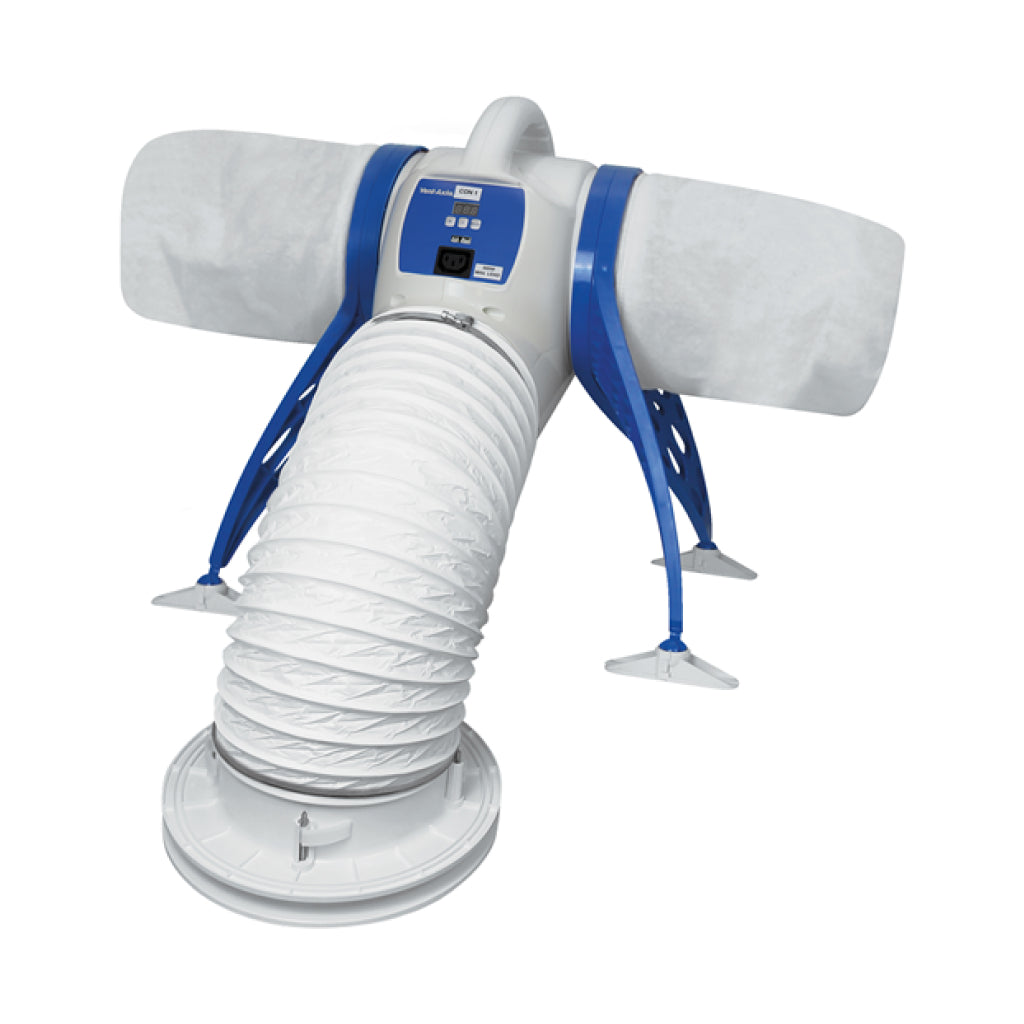
Best if the loft doesn’t need a heater — the top pick's range at a lower price
This is the unheated sibling of the top pick, sharing the same 11–49 l/s adjustable range, 150m² coverage and filter options, minus the integral heater. It suits a smaller or better-insulated loft where incoming air is less likely to feel like a cold draught, and it's a sensible way to get the same brand's build quality and five-year warranty without paying for a feature the house doesn't need. Where the loft is genuinely cold through winter, the heated version above earns its extra cost back in fewer complaints.
For
- Same adjustable range as the heated version
- Meaningfully cheaper without the heater
- Same five-year warranty and filter options
Against
- Cold loft air can feel draughty at the diffuser
- Less suited to a loft that runs cold in winter
Typically £280–£340
Check price on AmazonNuaire Drimaster-Eco HC
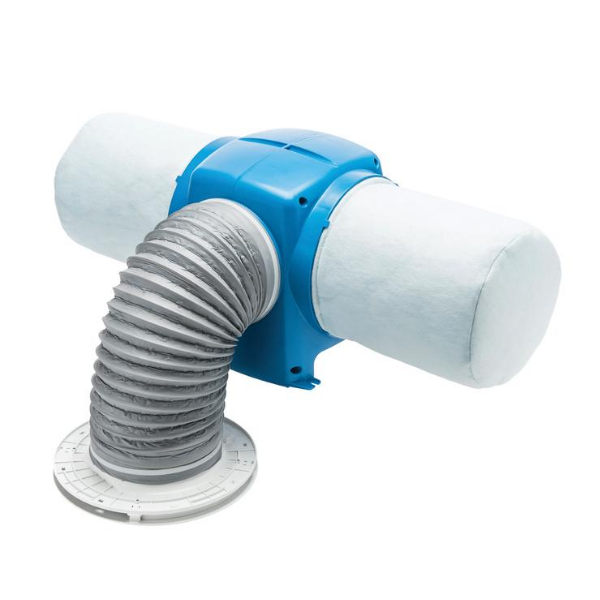
Best Nuaire without the heated price — the same warranty and certification, unheated
The unheated Drimaster-Eco carries the same BBA approval and seven-year warranty as the heated version above, priced close to the Vent-Axia equivalent rather than the premium the heated Nuaire commands. It suits a household that already trusts the Nuaire name, or an installer who stocks Nuaire parts as standard and where brand continuity matters more than shaving a further £20 off. As with any unheated unit, it's a better fit for a loft that doesn't run particularly cold.
For
- BBA approval and seven-year warranty, unheated price
- Close in price to the Vent-Axia equivalent
- Widely stocked by installers already using Nuaire
Against
- No clearly published noise figure
- Not the cheapest unheated option on this list
Typically £310–£345
Check price on AmazonElta PIV ONE Plus+ with Heater
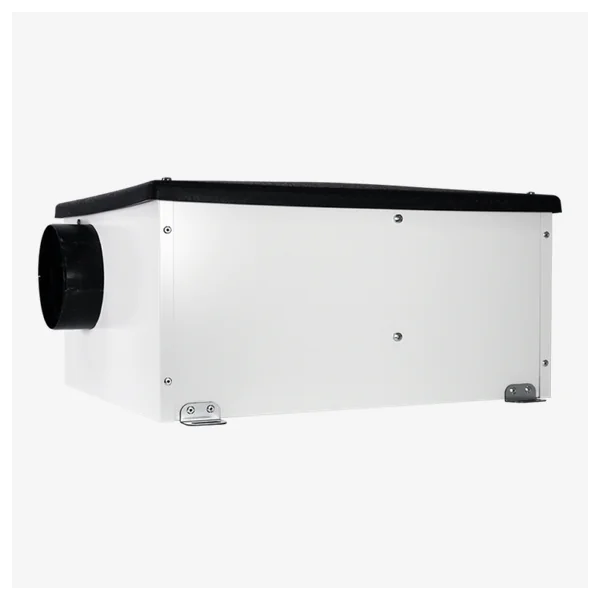
Best double filtration — a second filter stage for allergy-sensitive households
Elta's Plus+ pairs an external washable pre-filter with a second internal filter stage, upgradeable to an IAQ-rated filter targeting PM2.5 and diesel particulates rather than just general dust — a useful step up for a household managing hay fever or asthma alongside the condensation problem. The fan is rated at up to 162 m³/h, on the lower end of the adjustable units above but in line with other fixed-rate units in this market. It's a specialist pick: buy it for the filtration, not because it beats the others on raw airflow.
For
- Double filtration stage, upgradeable to IAQ-rated
- Integral heater tempers incoming air
- Galvanised steel casing
Against
- Lower rated airflow than the adjustable units above
- Less widely stocked than Vent-Axia or Nuaire
Typically £440–£530
Check price on AmazonNuaire HomeDry PIV Loft Unit

Best on a budget — the simplest genuine loft PIV unit worth buying
HomeDry is Nuaire's stripped-back entry point: a basic unheated loft unit without the digital controls, adjustable range or published flow-rate figures of the ranges above. What it offers is the Nuaire name at the lowest price here, for a straightforward condensation job in a small to medium house where fine airflow control isn't a priority. It's the right call when budget decides and the loft starts out warm and dry; for anything more demanding, the Drimaster-Eco or PoziDry Pro buys real, published performance data instead.
For
- Cheapest genuine loft PIV unit on this list
- Nuaire build quality at a basic-range price
- Simple to specify — no controls to configure
Against
- No published airflow figure to check against room size
- No adjustment for a house that's smaller or larger than average
Typically £270–£320
Check price on AmazonWhat actually matters — and what doesn’t
No loft, no PIV. The unit draws its supply air from the loft void, so a flat or a house without one isn't a candidate for any of the units above. Wall-mounted PIV units exist for that situation, but they're a different product category and aren't covered here.
A cold or poorly insulated loft is the job to fix first. An unheated unit pulling air from a loft near outside temperature all winter is where "PIV makes the house draughty" complaints come from. Either choose a heated model, or sort the loft's own insulation first.
An airtight, retrofitted house wants MVHR, not PIV. PIV works by pressurising the house slightly and relying on existing leakage paths — gaps, trickle vents, extractor fans — to let that air back out. Once a house has been through a proper PAS 2035 airtightness retrofit, those paths are deliberately closed, which is when balanced mechanical ventilation with heat recovery becomes the right whole-house answer instead. What MVHR installation costs covers that comparison.
Rising and penetrating damp aren't condensation, and no PIV unit touches either. A failed damp-proof course, or water getting in through the fabric itself, needs its own remedy, not ventilation. If the pattern on the wall doesn't fit classic condensation — worse in cold weather, disappearing in summer — get it looked at before spending on a fan. Rising damp treatment costs and damp-proofing costs cover the genuine fixes.
Building regulations compliance is a paperwork question, not a blanket rule. PIV isn't a named compliant strategy for new-build work under Approved Document F, but it's widely accepted as a remedial strategy in existing houses, generally evidenced by a manufacturer's BBA certificate rather than treated as notifiable building work. Ask whoever fits it how compliance is being demonstrated.
What the marketing pushes that matters less than it sounds. A wireless remote or app is a convenience feature, not a performance one. A stated heater temperature boost is a headline figure, not a guarantee at every setting. None of it substitutes for the airflow, filter grade and dB(A) figure actually fitting the house.
Questions I get asked
Will a PIV unit make my house colder? Running costs are genuinely low, typically £6–£20 a year in electricity, so the direct cost isn't the issue. The real trade-off is comfort: an unheated unit in a cold loft can feel like a draught in winter, which is where a heated model or a warmer loft makes the difference. Once the excess moisture is gone, most households report the house feels less clammy overall.
Do I need Building Regulations approval to fit one? There's no single blanket rule requiring notification, but Approved Document F expects ventilation compliance to be demonstrated somehow — which is what a manufacturer's BBA certificate is for. Ask the installer to confirm the paperwork trail rather than assuming either way.
Should I get a PIV unit or MVHR? PIV suits an existing house with the usual amount of natural leakage for the pressurised air to escape through. MVHR only works properly once a house has been made deliberately airtight, typically as part of a wider retrofit. If you're not sure which applies, that's exactly what a proper retrofit assessment answers before money is spent on either system.
How often does the filter need changing, and what does that cost? A basic G4 filter typically needs replacing every two to three years; an upgraded F7 or ePM2.5 filter can last up to five, depending on the manufacturer. Replacement filters generally run £20–£30 each — worth factoring in alongside the unit price.
I don’t install or commission PIV units myself, but if condensation is driving the search, a PAS 2035 retrofit assessment is where I’d start — working out whether the fabric or the ventilation is the actual cause. Once a unit’s in, a ventilation testing visit shows what it's delivering at the diffuser, alongside the installer’s own paperwork. If it's rising or penetrating damp rather than condensation, get that diagnosed instead — see rising damp treatment costs and damp-proofing costs. Get in touch for a second opinion, and there are more field-kit guides if you're building out the rest of the list.
Small print. This guide is general information, not a recommendation on whether your specific house needs mechanical ventilation — get that diagnosed properly first, and have any unit installed by a competent electrician given the loft access and electrical spur involved. Prices are indicative, move constantly and are checked at the time of writing; the linked page always shows the current price. As an Amazon Associate I earn from qualifying purchases.