A moisture trap comes up in roughly the same conversation every time: a client opens a wardrobe against an external wall, or a static caravan that’s stood empty since October, and there’s a faint smell and a film of grey fuzz on a shoe. Nobody’s asking for a survey at that point — they want to know if the pot of white crystals from the supermarket actually does anything, or if it’s just an expensive way to feel like you’re doing something about it.
What’s inside is calcium chloride, sometimes blended with other salts — a hygroscopic material that pulls water vapour out of the air around it and turns it into a saline liquid that drips or pools into a tank below. No electricity, no moving parts, nothing to plug in. It works, within a genuinely small volume: a wardrobe, a cupboard under the stairs, the cabin of a caravan sealed up for winter. Ask it to dry out a bedroom with people breathing and showering in it, and it loses that fight quietly, every time.
That’s the distinction worth making before you buy one. A moisture trap treats air that’s already trapped — it has nothing to say about rising damp, a leaking gutter, or a bedroom where the extract fan hasn’t worked in years; those need proper diagnosis, not a pot of crystals. What it earns its keep doing is the smaller, unglamorous jobs: keeping condensation off tools in an unheated shed, stopping a caravan smelling of a wet dog by Easter, or buying a wardrobe against a cold gable wall a few more months before proper insulation work sorts the actual cause. Here’s what’s on the market and which ones are worth the space they take up.
The one I’d buy

UniBond Aero 360
The device that turns up in more kitchen cupboards and caravan lockers than anything else here, and for good reason: a proper sealed tank rather than an open pot, a spill-prevention grille that survives being knocked over on a caravan floor, and a level window so you know when the tab’s spent rather than guessing. It’s not the cheapest per gram of crystal, but it’s the one that doesn’t leak brine into your shoes.
Typically £12–£20
Check price on AmazonHow I judge a moisture trap
Real capacity against the claim on the box. “Removes up to a litre of moisture” is doing a lot of work on packaging that doesn’t say over what time, in what size space, or starting from what humidity. What matters in practice is the tank or bag size in front of you — bigger tank, fewer trips to empty it.
Spill-proofing. These things sit unattended in a wardrobe, a caravan locker or the back of a van for weeks at a time. A loose lid or an open pot that tips over turns a damp problem into a stained-carpet problem. A grille, a sealed base and a level window matter more than the marketing photo suggests.
Refill economics. A cheap device with expensive, hard-to-find refills costs more over a year than a pricier one with refills on every supermarket shelf. Work out the cost per month, not the price on the box.
Matched to the space. A 500ml tub is wasted in a shoe cupboard and hopeless in a caravan cabin. Hanging bags suit a wardrobe rail; a sealed device with a bigger tank suits a static caravan or boat cabin closed up for months; a reusable bag suits somewhere you’ll remember to check every few weeks.
An honest signal that it’s spent. A level window, a colour-change indicator or a bag that visibly swells tells you when to act. Without one, you’re relying on memory — and crystal that’s fully saturated stops absorbing anything at all.
The comparison
| Model | Format | Refill / reusable | Typical price | Best for | |
|---|---|---|---|---|---|
| UniBond Aero 360 | Sealed device, 0.9L tank | 450g refillable tab | ~£15 | Best overall — the benchmark cupboard device | View |
| Pro Breeze Osmo | Sealed device, 1.3L tank | 700g refillable tablet | ~£25 | Largest capacity — garages and sheds | View |
| Ecozone Room Trap | Pot device | 450g refillable pouch | ~£10 | Caravans, vegan-friendly formulation | View |
| Pingi Reusable Bag | Sealed reusable bag | 250g, microwave-rechargeable | ~£12 | Zero-waste — no refills ever | View |
| Absodry Duo Family Hanger | Hanging device | 600g refillable bag | ~£20 | Wardrobe rail, no shelf space used | View |
| ANSIO Hanging Bags (x12) | Disposable hanging bags | 210g each, single-use | ~£12 | Best budget multipack | View |
| DampRid Refillable Tub | Tub | 10.5oz (297g) refillable | ~£10 | Best-known budget brand | View |
The picks in detail
UniBond Aero 360
Best overall — sealed, spill-proof, and refills on every hardware shelf
The AERO 360° design draws air in around its full circumference rather than through a single grille, which the brand says speeds up absorption — plausible, though the bigger practical win is the sealed spill-prevention tray underneath, a genuine improvement on the open-pot devices this replaced on supermarket shelves. A level indicator on the side shows through to a fill line, and a spout means emptying it doesn’t involve tipping brine over your hands.
Refill tabs are sold everywhere from Screwfix to the supermarket, in neutral and several scents, which matters more than it sounds once you’re three months into keeping several of these topped up around a static caravan. The stated 20m² coverage is optimistic for anything with real air movement through it — treat it as a cupboard or small-room device, not a whole-caravan solution.
For
- Sealed spill-prevention design, safe to leave unattended
- Refill tabs widely stocked, neutral or scented
- Clear level indicator shows when it needs changing
Against
- Coverage claims optimistic for anything but a small enclosed space
- Refill tabs cost more per gram than own-brand tubs
Typically £12–£20
Check price on AmazonPro Breeze Osmo
Best large capacity — for garages, sheds and spaces bigger than a cupboard

The largest tank on this list at 1.3 litres, paired with a 700g tablet the brand rates for up to 100 days — the right spec for a genuinely bigger or damper enclosed space, a garage, a workshop, a caravan cabin over a full winter lay-up, rather than a shoe cupboard. The perforated shell and a viewing window on the front keep the same honest-signal logic as the UniBond.
It costs more up front and the tablets aren’t stocked quite as widely in bricks-and-mortar shops, so factor in ordering refills online rather than grabbing one locally. For a single larger space it likely needs emptying less often than two smaller devices would, which is worth the difference in outlay.
For
- Largest tank and tablet size here, fewer empties
- Clear water-level viewing window
- Zero running noise, sits anywhere
Against
- Pricier than the UniBond for a similar job
- Refills less widely stocked than the market leader
Typically £20–£30
Check price on AmazonEcozone Room Damp, Mould & Moisture Trap
Best for caravans and eco-conscious buyers — universal refill pouch, vegan-friendly
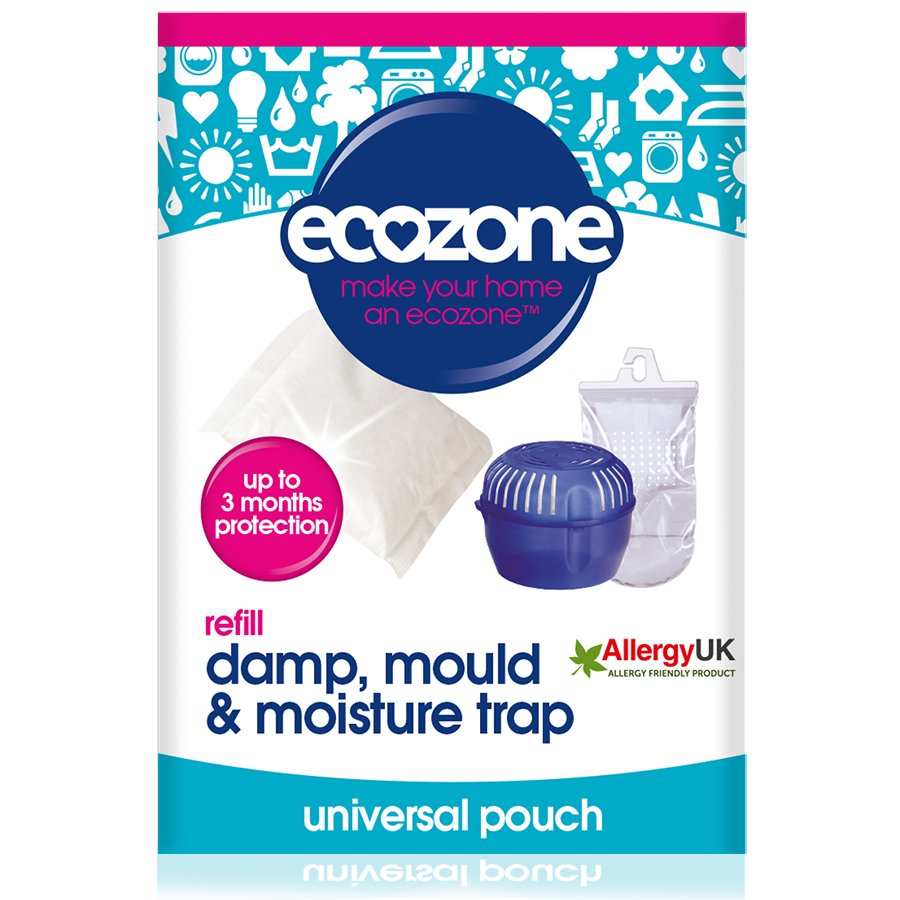
A simpler pot-and-pouch design than the device-style picks above, and Ecozone leans into that: a universal refill pouch fits every case the brand has ever sold, a PETA-approved formulation with no animal-derived ingredients, and Allergy UK endorsement. It’s explicitly marketed for caravans alongside the usual bathroom-and-bedroom-cupboard use, and the compact footprint suits a caravan locker better than the bulkier device-style picks.
Owner feedback is more mixed here than for the market leaders — several reviewers report collecting little water in a properly ventilated space, which really demonstrates the honest-limits point above rather than a fault with the product: in a room with reasonable air movement, there’s less standing humidity for any passive absorber to pull out.
For
- Universal refill pouch across the whole Ecozone range
- Vegan and allergy-friendly formulation
- Compact footprint for a caravan locker
Against
- Mixed owner feedback on how much water it actually collects
- Lid described as fiddly by some reviewers
Typically £8–£14
Check price on AmazonPingi Reusable Dehumidifier Bag
Best zero-waste option — no refills to buy, ever

A genuinely different mechanism: crystals in a sealed, leakproof bag that you recharge in the microwave once a colour-change indicator shows it’s saturated, rather than throwing the spent material away and buying more. For a cupboard, a car footwell or a boat locker that needs topping up every few weeks rather than months, that’s both cheaper over a year and less to remember to reorder.
The trade-off is capacity and reach — a 250g bag is sized for a small enclosed space, not a caravan cabin, and it needs an actual microwave nearby to recharge, which is exactly the thing that isn’t sitting next to a boat locker or a garage shelf. Buy the largest size that suits where it’ll live.
For
- No refills to buy or run out of, ever
- Genuinely leakproof bag design
- Cheaper over a year of continuous use
Against
- Smaller capacity than the tank-style devices
- Needs a microwave nearby to recharge
Typically £10–£18 depending on size
Check price on AmazonAbsodry Duo Family Hanger
Best for a wardrobe rail — hangs rather than sits on a shelf
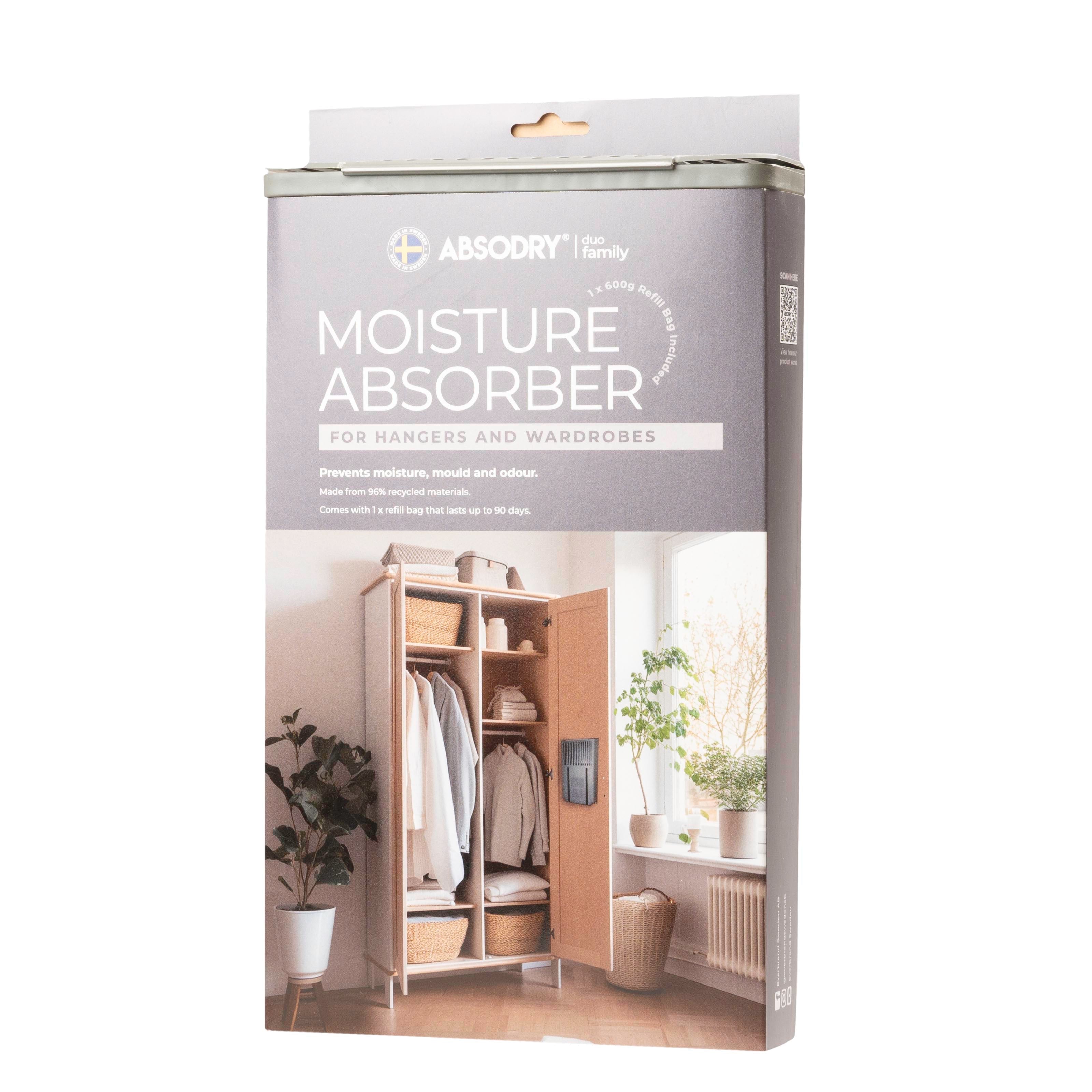
Where most of this list sits on a shelf or floor, the Absodry Duo Family Hanger clips over a wardrobe rail or screws to a wall, which solves the actual problem in a wardrobe against a cold external wall: floor space in there is for shoes, not a dehumidifier pot. A 600g refill bag is rated for up to 90 days and made from a high proportion of recycled material, a genuine point of difference from the injection-moulded devices elsewhere on this list.
It’s a specialist for hanging spaces rather than a generalist — a caravan cabin or a garage still wants a bigger floor-standing device. Within a wardrobe or a cupboard with a rail, it’s the tidiest option here.
For
- Hangs on a rail instead of taking up shelf or floor space
- 90-day refill life
- Made from a high proportion of recycled materials
Against
- Suited to hanging spaces specifically, not a general-purpose room device
- Pricier than a basic hanging bag multipack
Typically £18–£25
Check price on AmazonANSIO Wardrobe Dehumidifier Hanging Bags
Best budget multipack — twelve bags for the price of one device

The straightforward option: a pack of twelve 210g hanging bags, each rated to absorb up to three times its own weight in water over four to six weeks, cheap enough to hang one in every wardrobe, cupboard and drawer in a house without thinking about the cost. There’s no device to buy and no tank to empty carefully — when a bag’s spent, it goes in the bin and the next one goes up.
That disposability is also the honest downside: twelve single-use bags generate more packaging waste over a year than one refillable device, and there’s no level window telling you it’s still working versus quietly saturated. For a static caravan closed up over winter with nobody checking in, a bag that’s been full for six weeks does nothing more than an empty one.
For
- Cheapest way to cover multiple spaces at once
- No device or tank to buy or clean
- Genuinely effective in a small enclosed space
Against
- Disposable — more packaging waste than a refillable device over a year
- No way to tell a saturated bag from a working one at a glance
Typically £10–£15 for a pack of 12
Check price on AmazonDampRid Refillable Moisture Absorber
Best known budget brand — a straightforward tub with refills everywhere
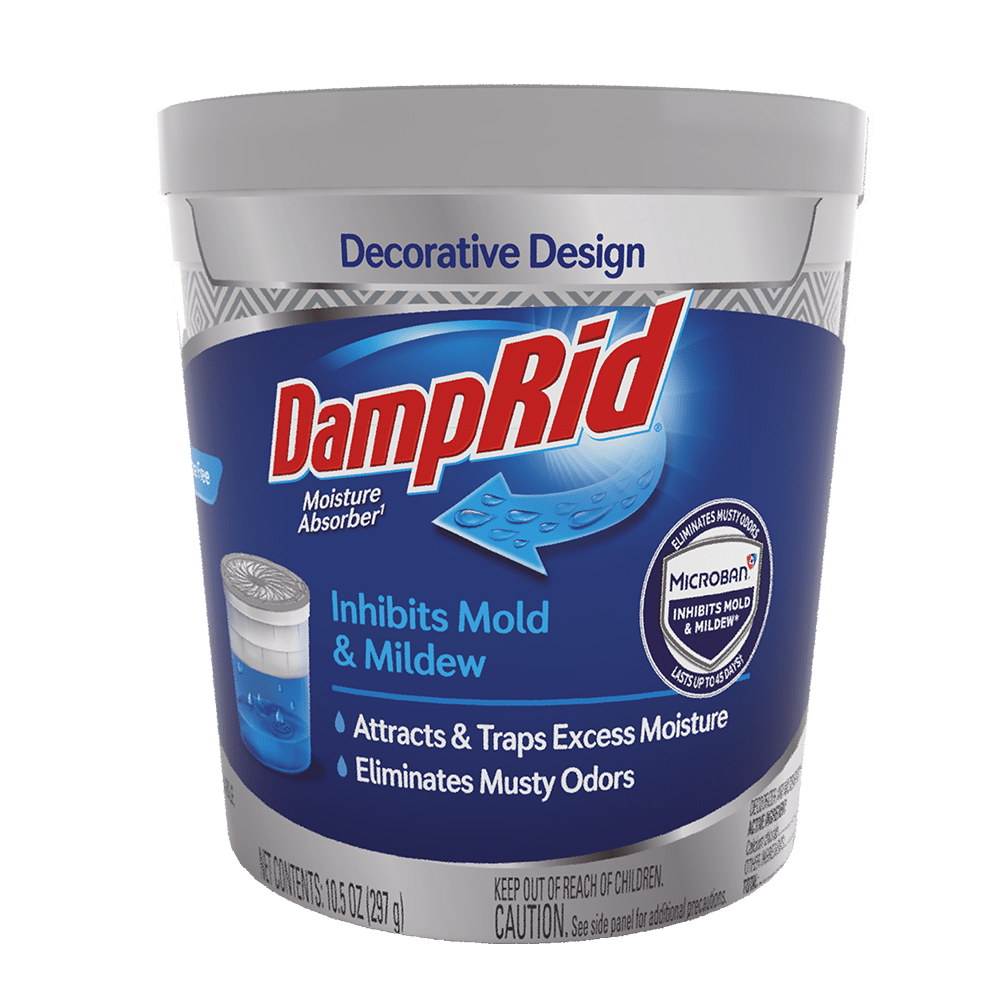
DampRid is the US market leader translated to UK shelves, and the mechanism is the same crystal-in-a-tub approach as the cheaper end of this list: a 10.5oz (297g) tub rated for up to 60 days, refillable rather than disposable, with a Microban additive the brand says inhibits mould and mildew growing in the collected liquid itself. It’s a straightforward, no-frills tub rather than a design piece.
Coverage is modest next to the UniBond or Pro Breeze devices, so it suits a cupboard or a small caravan locker rather than a garage. Owner feedback is extensive — tens of thousands of reviews across the range — and consistent about it being an unglamorous product that does the job it claims to.
For
- Refillable tub rather than disposable
- Microban additive targets mould in the collected liquid
- Huge review base, consistent owner feedback
Against
- Smaller capacity than the UniBond or Pro Breeze
- Fairly basic tub design
Typically £8–£12
Check price on AmazonWhat actually matters — and what doesn’t
A moisture trap treats a sealed volume, not a room. This is the whole honest-limits point. In a wardrobe, a caravan cabin closed up for winter, or a car boot, the air isn’t being replaced — whatever moisture is in there stays until something absorbs it or a door opens. In a bedroom or bathroom people actually live in, air is being replaced constantly through gaps, trickle vents and extract fans, and a moisture trap is competing against that turnover and losing. Condensation on a bedroom window is a ventilation problem, not a moisture-trap problem — see the guide to anemometers for ventilation testing for how that actually gets measured.
It has nothing to say about rising or penetrating damp. If a wall’s wet because of a failed damp-proof course, a blocked gutter or a render defect letting water in, no amount of crystals in a nearby pot will dry it out — the water’s coming from outside the room, not condensing out of the air inside it. A damp meter reading against the skirting tells you which problem you actually have before you spend money on either fix.
The box’s coverage claim assumes a sealed room. “Absorbs up to a litre” or “covers 20m²” is measured, reasonably, in a closed test chamber — not a room with a door that opens six times a day and a trickle vent left cracked. Treat the stated coverage as a best-case ceiling, not an expectation.
What the marketing pushes that doesn’t matter much. Scent options, colour ranges and design-led shells are decoration once the crystal quantity and tank size are sorted — the Absodry and the Osmo both look better on a shelf than a supermarket own-brand tub, and that’s a legitimate reason to buy one, just not a functional one.
A quiet caravan or boat over winter is the genuine sweet spot. Closed up for months with no heating and no ventilation running, that’s precisely the sealed, cold, humid volume a passive absorber is built for — which is exactly why so many of the products on this list market themselves that way.
Questions I get asked
Do moisture traps actually work? Within a small, enclosed, unventilated space — yes, genuinely; the liquid collecting in the tank after a few weeks is real evidence of water pulled out of the air. In a room with normal ventilation and air changes, the effect is far smaller than the packaging suggests, because fresh, more humid air keeps replacing whatever’s just been dried.
Will a moisture trap stop mould in a caravan or wardrobe? It reduces the humidity that mould needs to establish, which helps, but it won’t remove mould that’s already growing, and it won’t fix a leak or a cold bridge feeding moisture in faster than the trap can pull it out. Treat it as prevention for a space you’re about to close up, not a cure for one that’s already gone black.
Moisture trap or electric dehumidifier — which do I actually need? For a room people live in — a bedroom with condensation on the windows, a bathroom without an extract fan doing its job — an electric dehumidifier, or better, fixing the ventilation, is the right tool; see the guide to dehumidifiers. A moisture trap is for the spaces an electric dehumidifier can’t reach or isn’t worth running: a wardrobe, a caravan locker, an unheated shed.
How often does the refill actually need changing? Ignore the stated “up to 90 days” figure and watch the level window or indicator instead — a cold, humid space in winter will saturate a tab in weeks, while the same device in a dry summer cupboard might genuinely run the full quarter. A hygrometer left in the same space tells you whether it’s still working faster than the level window will.
If what’s behind the smell in that wardrobe or caravan turns out to be more than a sealed space needs a crystal pot for, that’s the day job — the practice carries out retrofit assessments and building surveys where damp and ventilation get diagnosed properly rather than guessed at. Get in touch. And for the rest of the kit worth carrying, there are more field-kit guides.
Small print. This guide is general information, not a survey or damp diagnosis of your property; a moisture trap collecting or not collecting water is never proof of what is or isn’t happening in a wall or roof. Prices are indicative, move constantly and were checked at the time of writing; the linked page always shows the current price. As an Amazon Associate I earn from qualifying purchases.