A surveyor’s own risk profile is a strange, split thing. Most of the job is done indoors, in an occupied house, where nothing above your head is moving and the worst that happens is a low beam in a Tudor cottage catching you by surprise. Then there’s the other half of the work: attending a site under construction or full refurbishment, walking a scaffold platform, standing beneath someone else’s open floor joists while a contractor works above — genuine falling-object territory, on somebody else’s site, under somebody else’s rules.
Almost all the day-to-day head-banging risk in ordinary survey work isn’t dramatic. It’s the roof void with purlins at exactly the wrong height, the cellar with a low Victorian brick arch, the loft hatch that puts your skull in line with a ceiling joist the moment you stand up a beat too soon. None of that is a falling-object risk in the sense a hard hat standard is built around — it’s a static object you walk or duck into, and a bump cap is built for precisely that, at a fraction of the weight and bulk of a full helmet.
The two aren’t interchangeable, and knowing which one a given day calls for matters more than which brand is on the shell. EN397 is the full hard hat standard, tested against a falling or moving object; EN812 covers a bump cap, tested only against a stationary object you walk into. A principal contractor’s site rules that specify hard hats mean EN397, full stop — a bump cap doesn’t meet that requirement no matter how helmet-like the listing makes it sound. What follows is the difference explained properly, three hard hats and four bump caps worth having, and which one actually belongs on your head for the job in front of you.
The one I’d buy
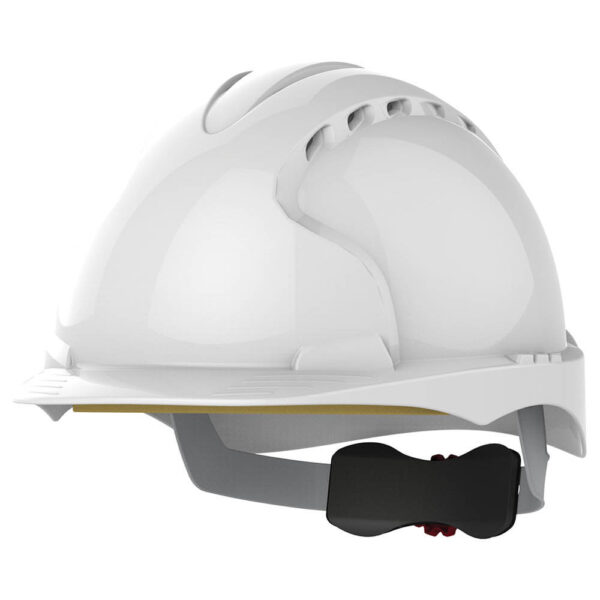
JSP EVO3 Vented Safety Helmet
JSP’s EVO3 updates the long-running MK-series shape with a genuinely easy one-handed wheel ratchet adjuster and a 6-point terylene cradle harness that spreads load properly rather than pinching at the temples. The HDPE shell tests tougher than EN397 requires, the vents keep it wearable through a warm loft survey, and the Chamlon sweatband with its Egyptian cotton core actually copes with a sweaty forehead rather than turning into a wet sponge by lunchtime. At around 330g it disappears on the head in a way cheaper vented helmets rarely manage.
Typically £9–£16
Check price on AmazonHow I judge a hard hat — and when a bump cap won’t do
EN397 or EN812, matched to the actual risk. EN397 is the standard for a genuine safety helmet, tested against a weight dropped from height onto the crown and against lateral crush. EN812 covers a bump cap, tested only against a much lower-energy impact from walking or ducking into a stationary object — a purlin, a low doorway, an exposed pipe run. A bump cap sold with hard-hat styling and language is still only EN812 underneath; check the certification moulded or printed inside, not the shape of the shell.
Weight, because it’s worn for hours, not minutes. A hard hat that’s fine for five minutes walking a scaffold platform becomes a genuine ache worn through a full loft survey. The lightest hard hats here are under 350g; the lightest bump caps under 150g. That difference is the whole reason a bump cap exists as a separate category rather than everyone just wearing a light hard hat everywhere.
Peak length and upward visibility. A full-length peak is useful walking a roof in the rain and a nuisance craning your neck to read a soffit or the underside of a loft hatch above your head. Most helmets built for construction and site work use a reduced or mid peak for exactly this reason — worth checking before assuming the biggest peak is the better one.
An adjustment system that works one-handed, with gloves on. A wheel or slip ratchet at the back beats a buckle-and-strap arrangement every time it needs adjusting between users or over a bulky hood. Cheap unbranded helmets often use a basic notched headband that’s fiddly enough that people stop bothering to refit it properly.
Compatibility with the rest of the head-worn kit. Ear defenders, a head torch, safety glasses and sometimes a dust mask all need to share the same head as whatever’s protecting your skull. Most proper safety helmets have side slots for clip-on ear defenders and visors; most bump caps don’t, so factor that in if you already carry ear defenders separately.
The comparison
| Model | Standard | Weight | Typical price | Best for | |
|---|---|---|---|---|---|
| JSP EVO3 Vented | EN397 | ~330g | ~£12 | Best overall hard hat | View |
| Centurion Concept Reduced Peak | EN397 | ~300g | ~£14 | Lightest hard hat, all-day comfort | View |
| Portwest PS50 Arrow Vented | EN397 | Lightweight PP shell | ~£8 | Budget hard hat | View |
| JSP Hardcap A1+ | EN812 | ~200g | ~£16 | Best bump cap overall | View |
| 3M First Base+ | EN812 | ~190g | ~£18 | Premium bump cap | View |
| Centurion AirPro | EN812 | ~135g | ~£12 | Lightest bump cap | View |
| Portwest PW59 | EN812 | Lightweight EVA | ~£6 | Budget bump cap | View |
The picks in detail
JSP EVO3 Vented Safety Helmet
Best overall — the one I’d buy, above
JSP’s EVO3 updates the long-running MK-series shape with a genuinely easy one-handed wheel ratchet adjuster and a 6-point terylene cradle harness that spreads load properly rather than pinching at the temples. The HDPE shell tests tougher than EN397 requires, the vents keep it wearable through a warm loft survey, and the Chamlon sweatband with its Egyptian cotton core copes with a sweaty forehead rather than turning into a wet sponge by lunchtime. At around 330g it disappears on the head in a way cheaper vented helmets rarely manage.
For
- Genuine EN397 shell tested tougher than the standard requires
- One-handed wheel ratchet adjuster
- 6-point cradle harness spreads load properly
- Comfortable enough for continuous, all-day wear
Against
- Vented shell isn’t the one to reach for near live electrics
- Sold across near-identical wheel-ratchet and slip-ratchet variants — check the listing
Typically £9–£16
Check price on AmazonCenturion Concept Reduced Peak Vented Safety Helmet
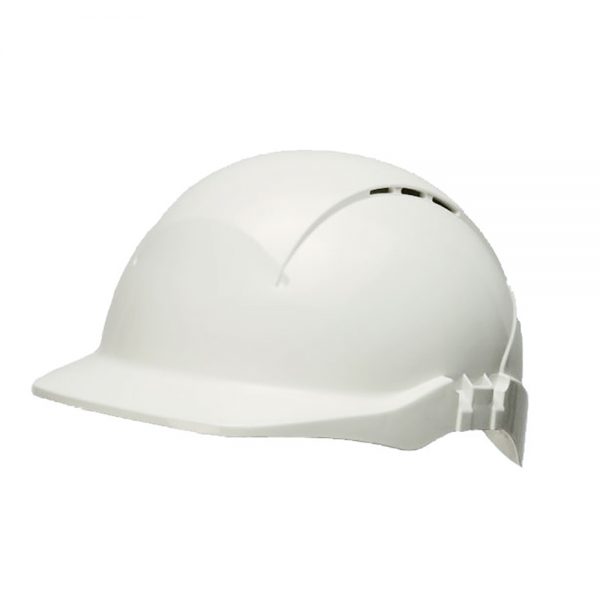
Best for all-day comfort — the lightest hard hat here
Centurion’s Concept shell is genuinely lighter than most of the competition at around 300g, built from ABS rather than the more common HDPE or polypropylene, with an extended nape at the back for a bit of extra rear coverage that a standard shape skips. The reduced peak keeps sightlines open craning up into a hatch or along a soffit, and the Dry-Tech sweatband copes reasonably well with a warm day. It’s the helmet I’d reach for on a day that means keeping a hard hat on continuously rather than putting it on and off for isolated tasks.
For
- Genuinely lighter than most alternatives at ~300g
- Reduced peak keeps upward sightlines open
- Extended nape adds rear coverage most helmets skip
Against
- ABS shell feels less substantial in the hand than HDPE rivals
- Ratchet sizing tops out lower than some — check 51–63cm covers you
Typically £13–£20
Check price on AmazonPortwest PS50 Arrow Vented Safety Helmet
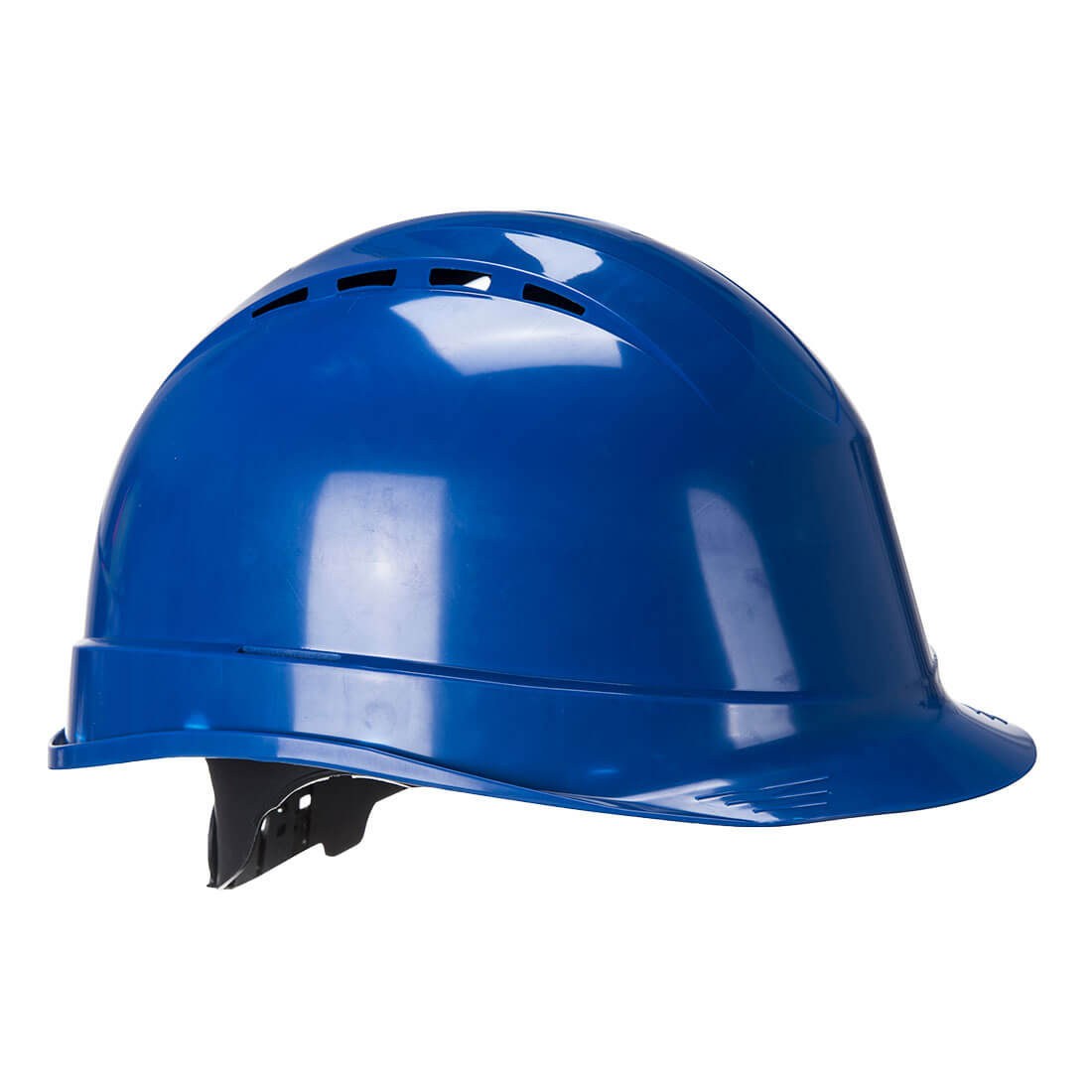
Best on a budget — a properly EN397-rated helmet for under a tenner
Portwest’s Arrow keeps the spec straightforward: eight vent ports for genuine airflow, a 6-point plastic suspension harness, and a slip ratchet that adjusts from 53 to 65cm, which covers a wider range of head sizes than most of the premium picks here bother with. It’s not going to win a comfort contest against the Centurion or JSP picks over a ten-hour day, but for a helmet that lives in the van as a spare, or gets handed to a client or contractor who’s turned up without one, there’s no real argument against the price.
For
- EN397 rated at a fraction of the premium picks’ price
- Wide 53–65cm sizing range
- Eight vent ports for genuine airflow
Against
- Suspension harness feels basic against the ratchet systems above
- Not the one for continuous all-day wear
Typically £6–£12
Check price on AmazonJSP Hardcap A1+ Bump Cap
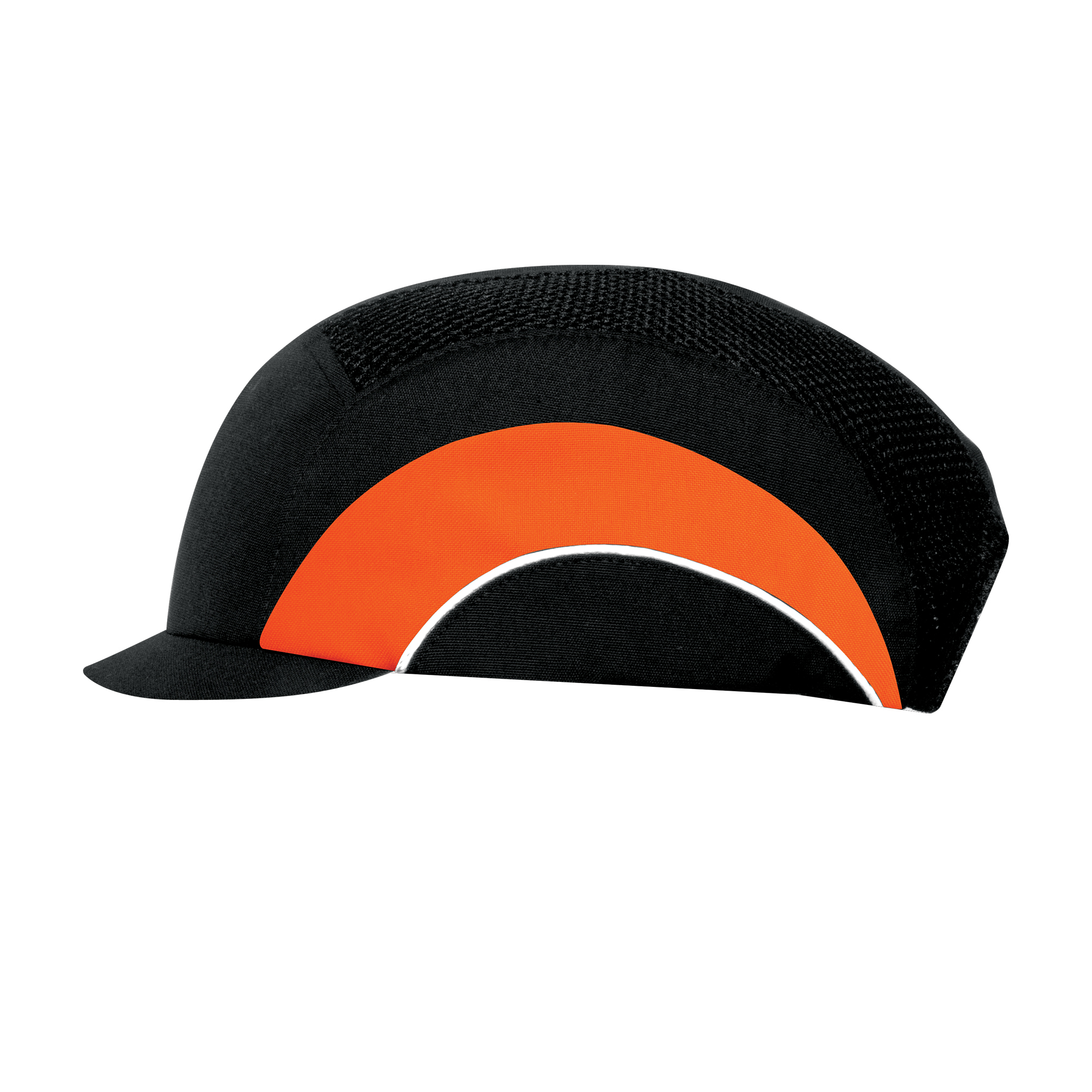
Best bump cap overall — the one that doesn’t look like PPE
JSP’s Hardcap A1+ is built to exceed EN812 rather than just scrape past it, and the point of the design is that it’s genuinely difficult to distinguish from an ordinary baseball cap at a glance — which matters more than it sounds for something you’re meant to actually keep wearing. The one-handed angled adjuster is shaped to sit under the occipital bone at the back of the skull for a fit that stays put rather than riding up, the liner is removable and machine-washable, and it’s available with a 2.5cm, 5cm or 7cm peak depending on how much shade you want over the loft hatch above you. At around 200g it’s not the lightest bump cap here, but it’s the one most likely to survive being worn all day without ending up in a pocket.
For
- Exceeds EN812 rather than the bare minimum
- Genuinely low-profile, non-PPE styling
- Removable, machine-washable liner
- Available in three peak lengths
Against
- Sold across several very similar variants — check peak length before buying
- Costs more than the basic Portwest pick
Typically £15–£25
Check price on Amazon3M First Base+ Bump Cap
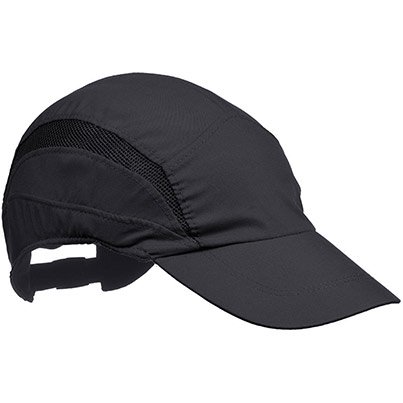
Best premium pick — genuine ventilation for warm, enclosed spaces
3M’s First Base+ uses a flexible ABS shell rather than a rigid one, which sounds like a downgrade until you’re wearing it in a warm loft and appreciate the airflow channels built into the design specifically to let moisture escape rather than pool under the crown. The microfibre outer is machine-washable, the shell is removable for cleaning separately, and at around 190g it sits noticeably lighter than the JSP pick above without giving up much peak coverage. It’s the one worth the extra cost if you’re regularly in warm, enclosed roof voids rather than just occasionally reaching for a bump cap.
For
- Flexible ABS shell with genuine ventilation channels
- Removable shell and machine-washable outer
- Lighter than most bump caps at ~190g
Against
- Costs close to what a proper hard hat runs
- Standard peak length limited on some colour variants
Typically £16–£24
Check price on AmazonCenturion AirPro Bump Cap
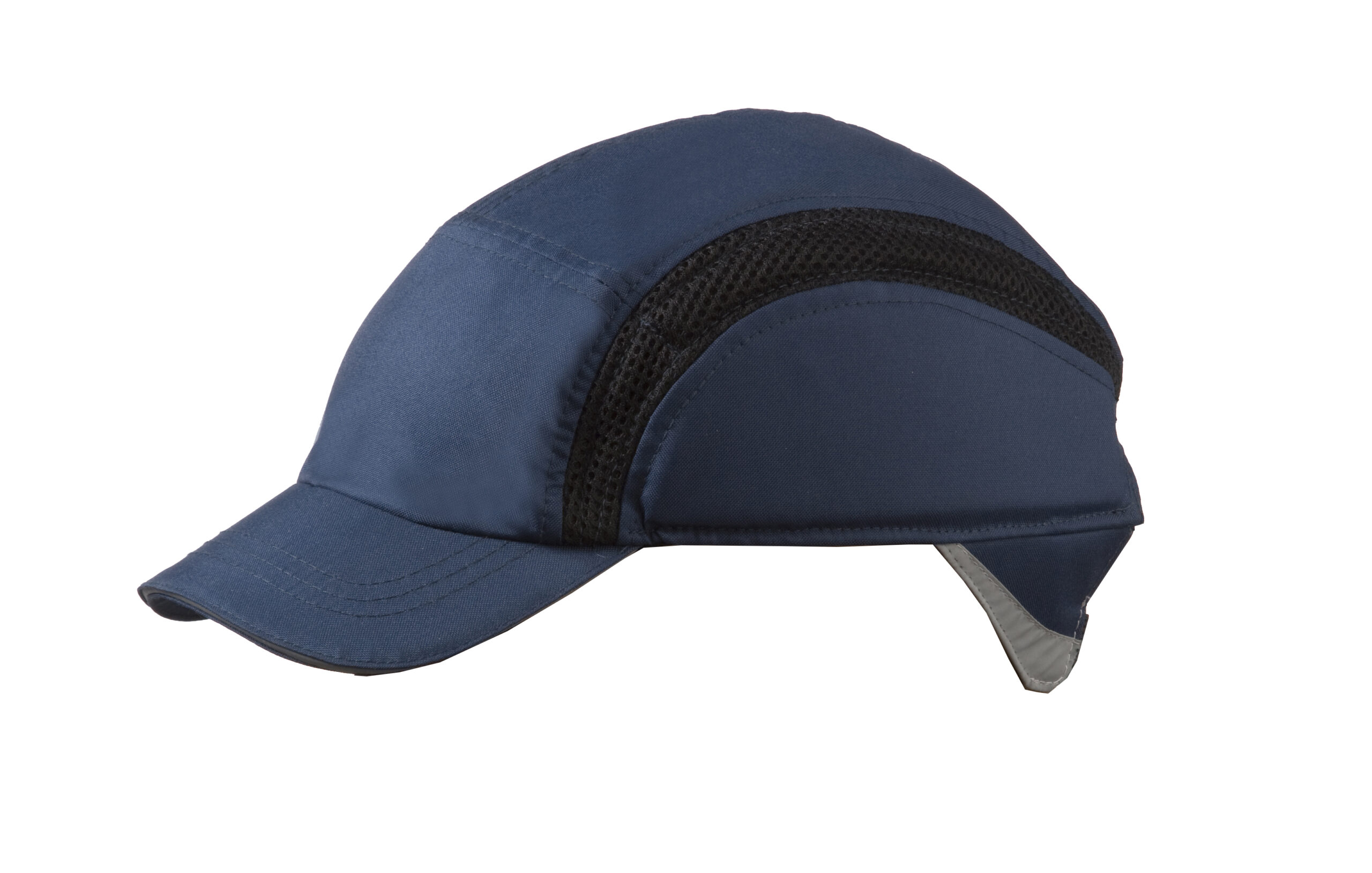
Best lightweight pick — for a bump cap you forget you’re wearing
At around 135g the AirPro is the lightest thing on this list by a clear margin, built specifically around breathability with a Teflon-treated fabric shell and side scoops designed to work with headband-mounted ear defenders rather than fighting them. It’s rated to work down to -40°C, which is more than any survey in the South East will ever ask of it, but speaks to how seriously the ventilation and material choices have been tested. It comes in a genuinely wide colour range if you need to colour-code a team, plus reduced and micro peak options for tighter headroom.
For
- Lightest bump cap here at ~135g
- Designed to work with headband ear defenders
- Wide range of peak lengths and colours
Against
- Hi-vis colour variants cost noticeably more than the standard colours
- Less structured feel than the ABS-shell picks
Typically £10–£16
Check price on AmazonPortwest PW59 Bump Cap
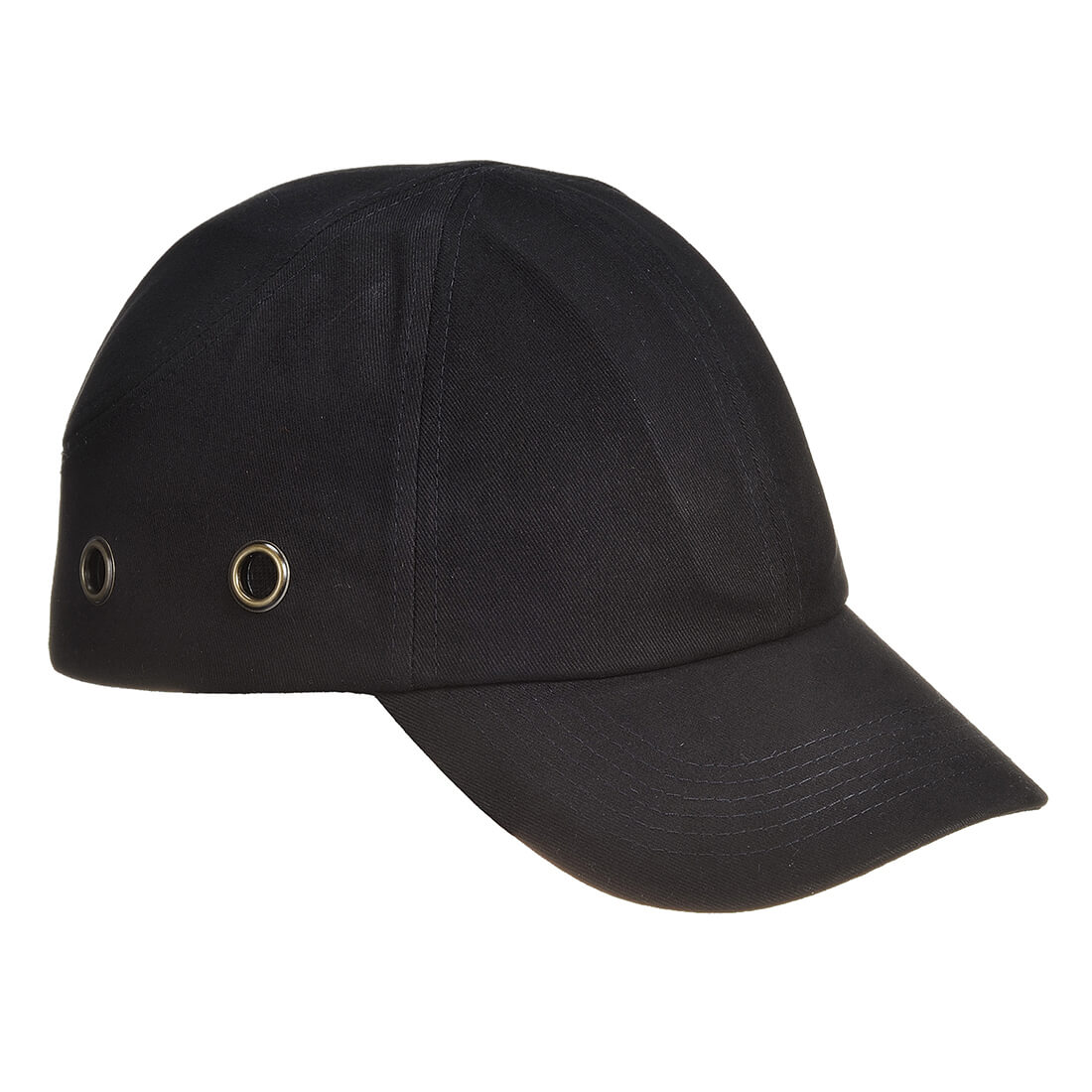
Best on a budget — a spare for the van door pocket
Portwest’s PW59 covers the basics properly: a genuine EN812-rated ABS insert under a cotton and EVA baseball-cap shell, a 7cm peak for reasonable eye protection, and a hook-and-loop strap that adjusts to fit most heads without fuss. It won’t match the ventilation or the fit of the premium picks above over a long day, but at a few pounds there’s no reason not to keep two or three scattered around the van — one for a colleague, one for a client who wants to see inside a loft themselves.
For
- Genuinely EN812 rated at a budget price
- 7cm peak gives reasonable coverage
- Cheap enough to keep several spares
Against
- Basic ventilation next to the AirPro and 3M picks
- Sizing is hook-and-loop only, less precise than a ratchet
Typically £5–£9
Check price on AmazonWhat actually matters — and what doesn’t
A bump cap is not a hard hat, whatever the listing implies. Plenty of Amazon listings describe bump caps as “lightweight safety helmets” or similar, and the baseball-cap styling doesn’t help. EN812 is tested against a much lower impact energy than EN397, from a stationary object only. If a site’s rules say hard hats, or there’s any genuine risk of something falling or swinging into your head, that means EN397, not a bump cap, regardless of how it’s marketed.
Vented usually means no electrical rating. Every vented helmet on this list is rated to EN397 for impact; some safety helmets on the market also carry EN50365 for electrical insulation, but that rating typically belongs to unvented shells, since the vents themselves are a gap in the insulation. Not usually relevant to survey work — surveyors aren’t meant to be working on live conductors — but worth knowing if a job genuinely calls for it.
The certification stamped inside the shell is what counts, not the marketing copy on the box. Genuine EN397 or EN812 marking, with the relevant standard number, should be moulded or printed inside every legitimate helmet or bump cap. A listing that talks about protection without citing the actual standard number is worth treating with more caution than one that does.
Peak length is a trade-off, not a straightforward upgrade. A longer peak shades better and protects more of the face outdoors; a shorter or reduced peak keeps your upward sightline open ducking through a hatch or reading a soffit above head height. Buy for the job you do most, not the peak that looks most like a proper hard hat in the photo.
Weight matters more than any other spec once you’re two hours into a survey. The lightest hard hat here is under half the weight some budget helmets run to, and the difference is genuinely noticeable by the afternoon. If a helmet or bump cap is going on for a full working day rather than ten minutes at a time, weight is worth prioritising over almost anything else on the spec sheet.
Questions I get asked
Do I actually need a hard hat for a routine building survey? Almost never for a standard visit to an occupied home — there’s nothing overhead that’s moving or being worked on above you. The exception is attending a site under active construction or full refurbishment, where a principal contractor’s rules under the CDM regulations will specify hard hats for anyone on site, surveyor included, and a bump cap doesn’t satisfy that requirement.
Is a bump cap enough for loft and cellar work? For the actual risk in most lofts, cellars and crawl spaces — banging your head on a static purlin, joist or brick arch — yes, that’s exactly what EN812 is built for. It’s not enough if there’s genuine work happening above you, or anything that could fall or swing, in which case the job has moved into hard-hat territory whatever the space looks like.
What’s the real difference between EN397 and EN812? EN397 tests a helmet against a mass dropped from height onto the crown, simulating a falling or moving object, alongside lateral crush and penetration tests. EN812 tests a bump cap against a much lower-energy impact from walking or ducking into something stationary. They’re not two tiers of the same protection — they’re built for two genuinely different hazards.
Can I wear a hard hat with ear defenders or a head torch? Yes — most proper safety helmets have side slots designed for clip-on ear defenders and visors, and a head torch strap sits comfortably over the top of the harness on most designs. Bump caps vary more; check a specific model’s compatibility with headband-style ear defenders before assuming it’ll work, as some bump cap shells interfere with the clamp.
Head protection is one part of a wider PPE picture that changes depending on whether a visit is a routine survey or attendance on an active site — if you’re regularly stacking a hard hat with ear defenders or working under a head torch in a loft, it’s worth checking the combination fits properly. The practice carries out building surveys and PAS 2035 retrofit assessments across sites at every stage, from occupied homes to live refurbishment — get in touch. And if you’re kitting out a survey bag, there are more field-kit guides.
Small print. This guide is general information, not a site-specific risk assessment; the right head protection for a given job depends on the actual hazard present, including whatever a principal contractor’s site rules specify, and this guide doesn’t replace that assessment where one applies. Prices are indicative, move constantly and were checked at the time of writing; the linked page always shows the current price. As an Amazon Associate I earn from qualifying purchases.