A safety boot handles most of a survey — the loft, the stairs, the garden if it isn’t too bad. It stops being the right footwear the moment the ground turns to standing water: a cellar with an inch on the floor after a wet week, a crawl space where the last person through left boot prints in silt, a rear garden that’s effectively a pond by November. That’s a specific, occasional problem, which is exactly why it needs its own answer rather than a boot doing a job it was never built for.
The wellington boots that turn up in survey kit are not garden-centre wellies. Half the models below carry the same S4 or S5 safety rating as a site boot — a steel or composite toe, a penetration-resistant midsole — because plenty of the ground a wellington covers has the same nails-and-glass risk as anywhere else on site. The other half trade that rating for something a crawl space actually rewards: an ankle that flexes enough to kneel and crawl in, rather than a rigid tube built to stand upright in a farmyard all day.
None of the pairs below have been worn on an actual visit — the notes are built from manufacturers’ specifications and recurring owner feedback, filtered through what a surveyor’s wet-weather work actually needs. First, the one I’d buy.
The one I’d buy
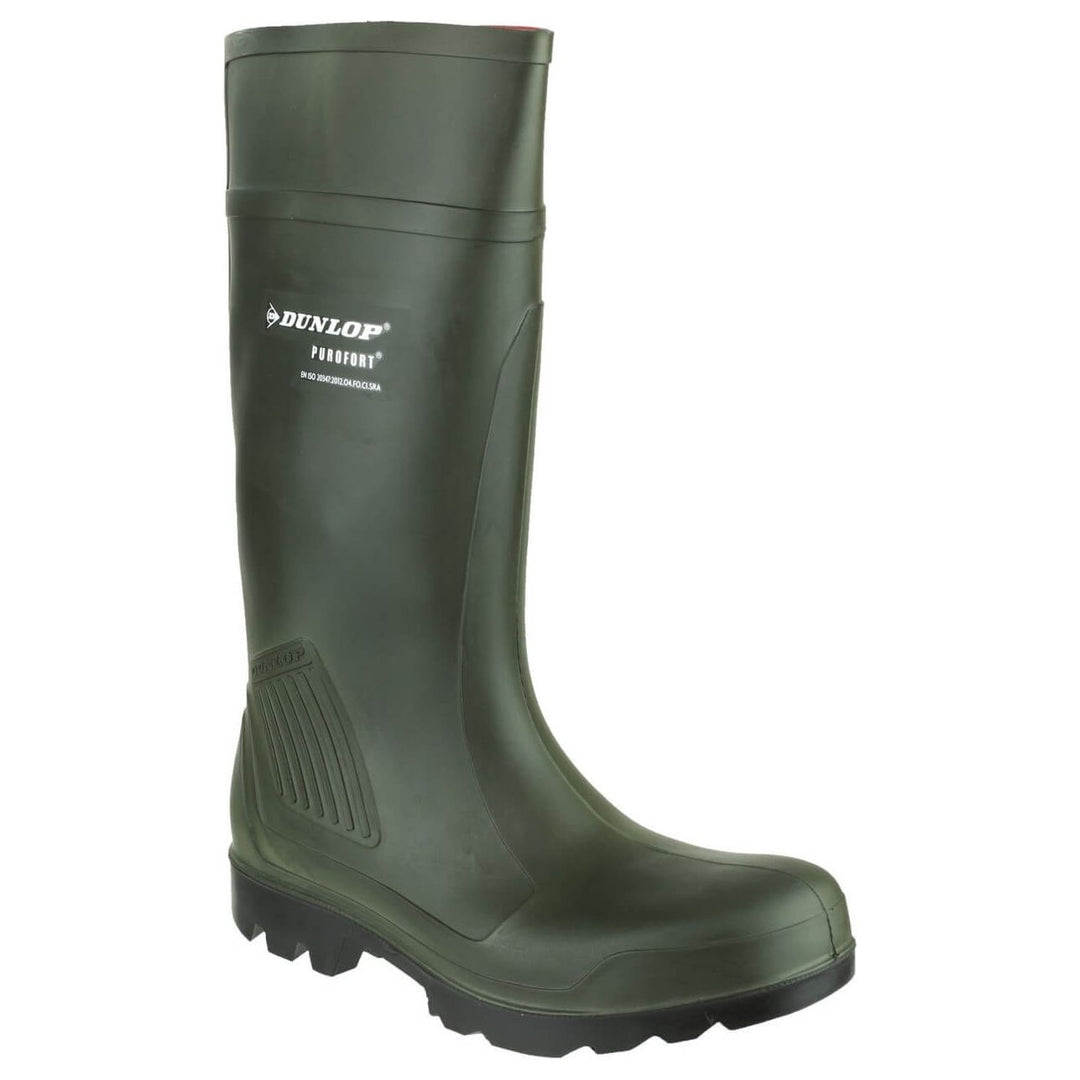
Dunlop Purofort Professional
Purofort is Dunlop’s own injection-moulded polyurethane, and the Professional is the boot that put it on nearly every trade counter in the country — S5 rated with a steel toe and midsole, insulated to -20°C, and noticeably lighter than an equivalent rubber welly straight out of the box. Owner feedback is consistent that it stays comfortable over a full day where rubber wellies start to drag, and the smooth PU surface sheds mud and cleans off with a hose rather than staying stained. It’s not the most flexible boot here for crawling, but as the default safety wellington for wet site work, it’s the one most surveyors already own.
Typically £32–£48
Check price on AmazonHow I judge a wellington boot
A safety rating matched to the ground, not worn as a default. S4 is a fully waterproof rubber or PU boot with an antistatic sole and energy-absorbing heel — no penetration protection. S5 adds a steel or composite midsole on top, the same protection a site boot offers against a nail through rotten decking or glass in an overgrown garden. Most managed sites that specify boots at all specify S5; a domestic crawl space or flooded garden rarely needs more than S4, and the lighter, more flexible boot is usually the better trade for that job.
Material: PU, rubber or neoprene. Purofort-style polyurethane (Dunlop, Bekina) is light, warm and quick to clean, but it’s a harder shell that some owners find stiffer at the ankle. Natural or synthetic rubber (Hunter, most budget wellies) is heavier and needs no break-in, but perishes faster in UV and ozone over years of van storage. Neoprene-and-rubber hybrids (Muck Boot) trade some of the knee-high boot’s waterproof height for a genuinely flexible, sock-like fit. None is universally better; the material decides what the boot is actually for.
Flex at the ankle and knee, for crawling as well as standing. A wellington built for standing in a farmyard all day is not automatically good at kneeling in a suspended timber floor void or crawling to a soil pipe. The stiffer PU and rubber boots resist folding at the ankle; neoprene-backed boots and shorter-leg options fold more like a normal boot. If a chunk of the job is genuinely crawling rather than standing in water, that matters more than the safety rating.
Grip that holds on wet timber, mud and slick concrete — not just grass. A cleated farmyard tread is designed for soft ground; it can be worse than a fine tread on a wet concrete cellar floor or a mud-greased ladder rung. Worth checking whether the listing specifies an SRC slip rating, which is tested on ceramic tile as well as steel, rather than just describing the tread as “heavy-duty”.
On and off without turning it into a job. A wellington that takes two hands and a doorframe to remove gets left in the van, which defeats the point of owning one. Pull tabs, a reasonably loose calf and a boot that doesn’t need socks peeled inside-out to get free all matter more once you’ve done it a dozen times over a wet week.
The comparison
| Model | Rating | Material | Typical price | Best for | |
|---|---|---|---|---|---|
| Dunlop Purofort Professional | S5, insulated to -20°C | Polyurethane (Purofort) | ~£32–£48 | Best overall | View |
| Bekina Steplite X | S5, insulated to -30°C | Polyurethane, dual-density | ~£58–£85 | Premium/professional pick | View |
| Amblers Safety AS1005 | S5 | PVC/rubber compound | ~£25–£38 | Best on a budget | View |
| Muck Boot Chore Classic (steel toe) | S5 | Rubber shell, neoprene upper | ~£78–£110 | Best for crawling & flexibility | View |
| Skellerup Quatro Insulated Super Safety | S5, insulated to -25°C | Natural rubber, neoprene lining | ~£90–£135 | Best for cold weather | View |
| Dickies Landmaster Pro | S5 | Rubber, neoprene lining | ~£30–£46 | Best value safety alternative | View |
| Hunter Original Tall | Not safety rated | Natural rubber, vulcanised | ~£110–£135 | Best for non-safety, client-facing days | View |
The picks in detail
Dunlop Purofort Professional
Best overall — light, warm, S5-rated and everywhere for a reason
The injection-moulded Purofort shell is the whole story: millions of tiny air pockets make it noticeably lighter than a rubber welly of the same size, while still insulating to -20°C and resisting oils, manure and most site chemicals. It ships with a steel toe and midsole as standard on the Professional line, and owner feedback consistently rates the fit as true-to-size and comfortable straight away, without the break-in period rubber sometimes needs. The trade-off is a slightly stiffer ankle than a neoprene boot, so it’s built more for standing and walking in wet conditions than for repeated crawling.
For
- S5 rated — steel toe and midsole as standard
- Genuinely lighter than an equivalent rubber wellington
- Cleans off with a hose rather than staying stained
Against
- Stiffer ankle flex than a neoprene-backed boot
- PU shell can crack if left folded flat in storage
Typically £32–£48
Check price on AmazonBekina Steplite X
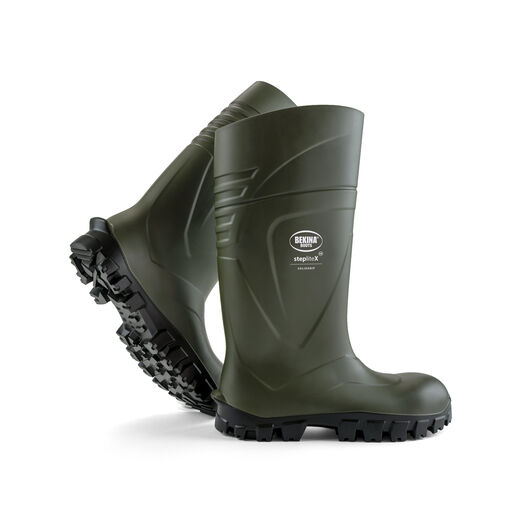
Premium/professional pick — the lightest, warmest safety wellington here
Bekina’s dual-density PU construction goes further than Dunlop’s in the same direction — a softer inner layer against the foot and a harder outer shell, insulated to -30°C, built to outlast a standard rubber welly by a claimed factor of three under daily agricultural and construction use. It’s the boot professional buyers upgrade to once a budget welly has worn through its second or third pair in a year, and owner feedback repeatedly praises how little it weighs on the foot by the end of a long day. It costs roughly double the Dunlop, which is hard to justify for occasional use but easy to for anyone in wellingtons most weeks.
For
- Dual-density PU — noticeably lighter and warmer than the S5 field
- Reported to outlast budget rubber wellingtons several times over
- SRC-rated sole grips well on wet concrete and tile
Against
- Roughly double the price of the Dunlop or Amblers
- Overkill for occasional, dry-season use
Typically £58–£85
Check price on AmazonAmblers Safety AS1005
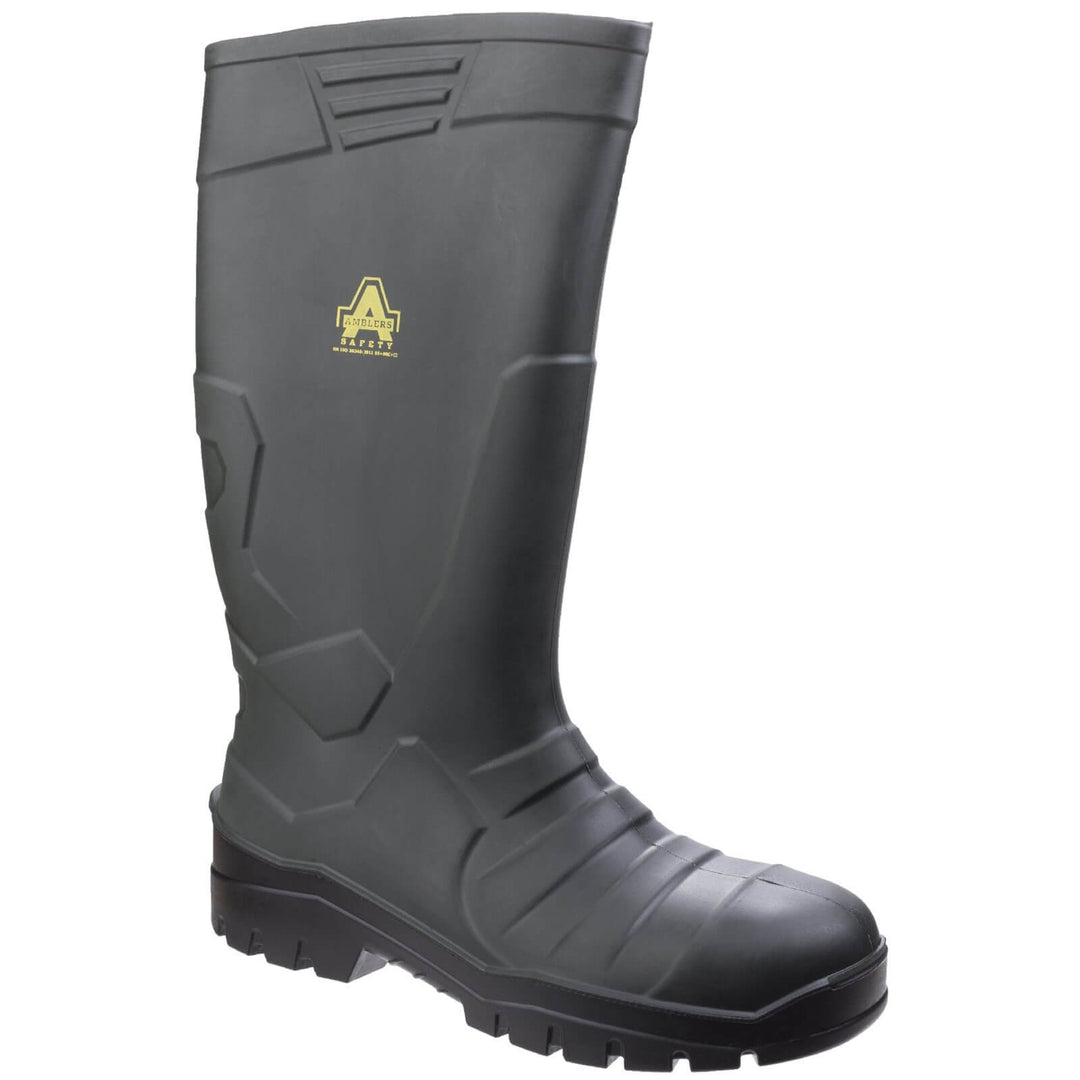
Best on a budget — full S5 spec without the professional price
Amblers’ own-brand wellington covers the same S5 checklist as the pricier options — steel toe, steel midsole, antistatic sole, energy-absorbing heel — in a PVC/rubber compound that costs a fraction of the Bekina. It won’t last as many seasons and owner feedback describes a heavier, less refined fit than the PU boots above, but for a pair kept as a spare in the van, or for anyone who only needs safety wellingtons a handful of times a year, it does the job the induction sheet actually asks for.
For
- Complete S5 spec at a genuinely low price
- Cheap enough to keep as a spare pair in the van
- Widely stocked, easy replacement sizing
Against
- Heavier and less refined fit than the PU options
- Shorter working life under regular use
Typically £25–£38
Check price on AmazonMuck Boot Chore Classic (steel toe)
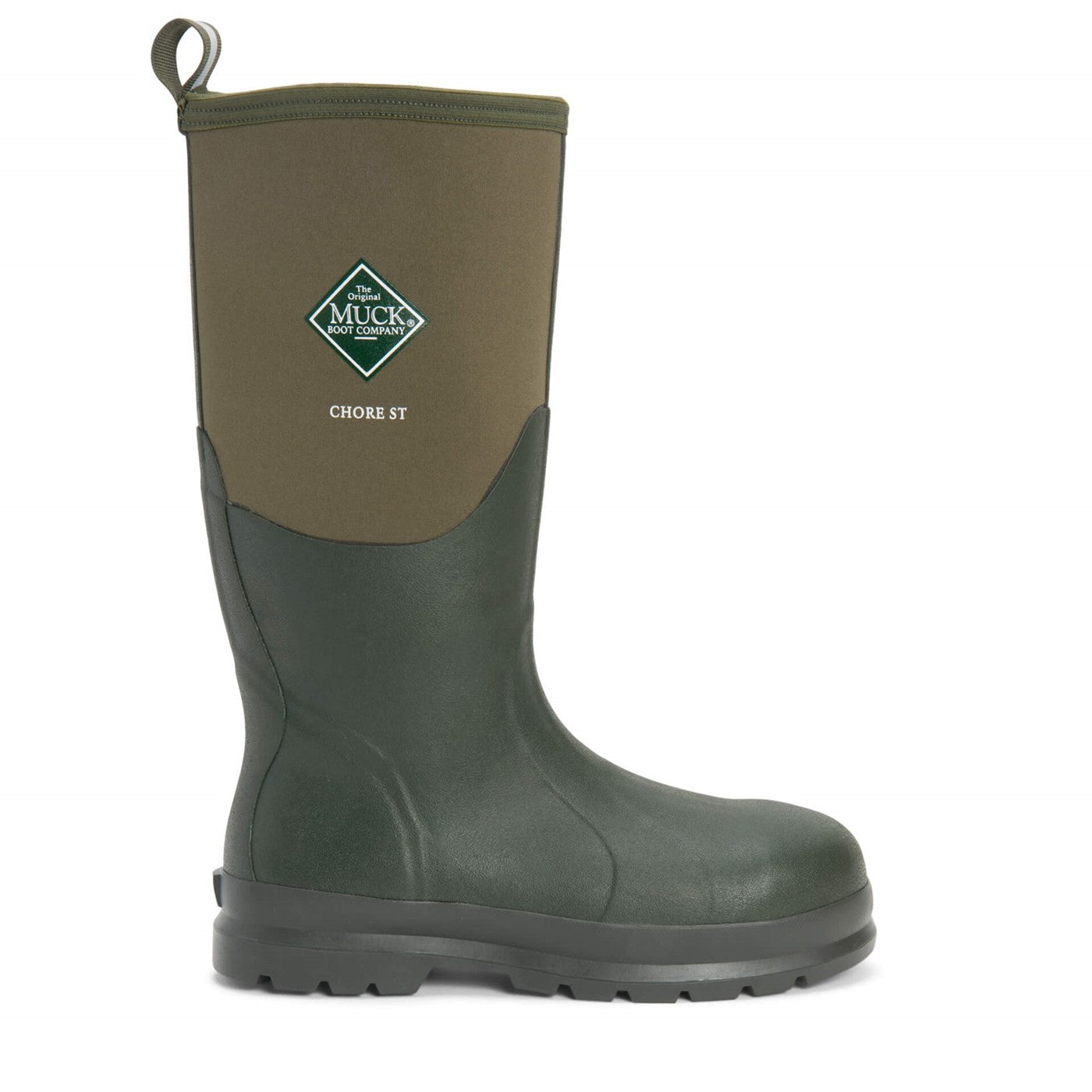
Best for crawling and flexibility — a boot that folds at the ankle
The Chore Classic swaps a rigid PU or rubber leg for a neoprene upper over a rubber foot, which is the material choice that actually matters for a crawl space: it flexes at the ankle like a normal boot rather than a stiff tube, making it noticeably easier to kneel, crouch and crawl in for any length of time. The steel-toe version keeps S5 protection for the parts of the job that need it, and owner feedback consistently highlights all-day comfort over the standing-still-in-a-field boots elsewhere in this guide. It gives up some of the outright waterproof height of a full wellington, so it’s the better choice for a wet, debris-strewn void rather than genuinely standing water.
For
- Neoprene upper flexes at the ankle — genuinely better for crawling
- S5 protection without a rigid, farmyard-style leg
- Comfortable enough for a full day, per consistent owner feedback
Against
- Not as tall or as waterproof as a full rubber or PU wellington
- Costs more than the budget and mid-market picks here
Typically £78–£110
Check price on AmazonSkellerup Quatro Insulated Super Safety
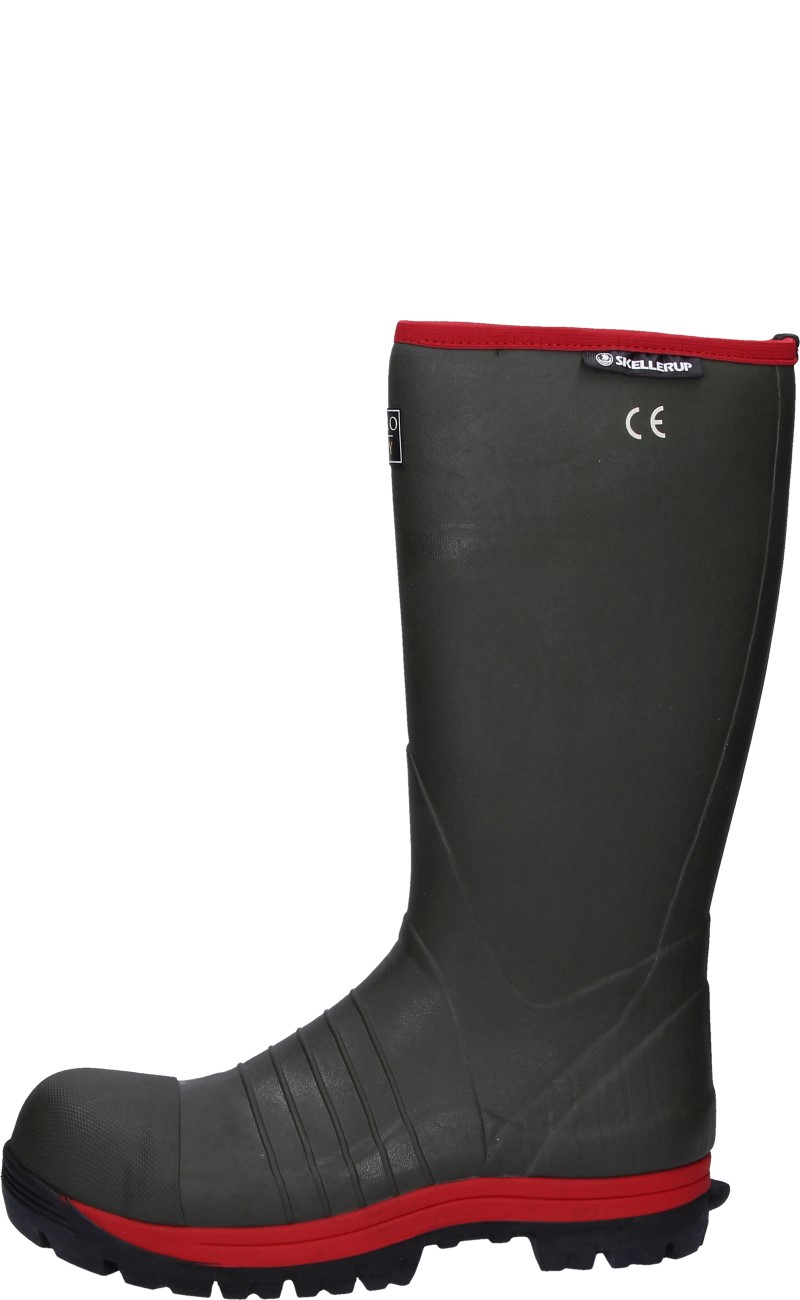
Best for cold weather — heavily insulated, hand-built rubber
Skellerup builds the Quatro from natural rubber rather than PU, hand-laid in layers with a neoprene lining rated to a claimed -25°C comfort range, which makes it the boot for a January external inspection or a genuinely cold flooded cellar rather than a mild autumn garden. The steel toe and penetration-resistant midsole meet S5, and owner feedback is positive on long-term durability against farm chemicals and repeated wet use, though several reviewers note it runs warm outside of proper cold weather — a reasonable trade for a boot built around insulation.
For
- Genuinely warm — hand-built rubber with a neoprene lining
- S5 protection with a reputation for long-term durability
- Reinforced digging pad and sturdy sole for rough ground
Against
- Too warm for anything but genuinely cold conditions
- Among the more expensive options in this guide
Typically £90–£135
Check price on AmazonDickies Landmaster Pro
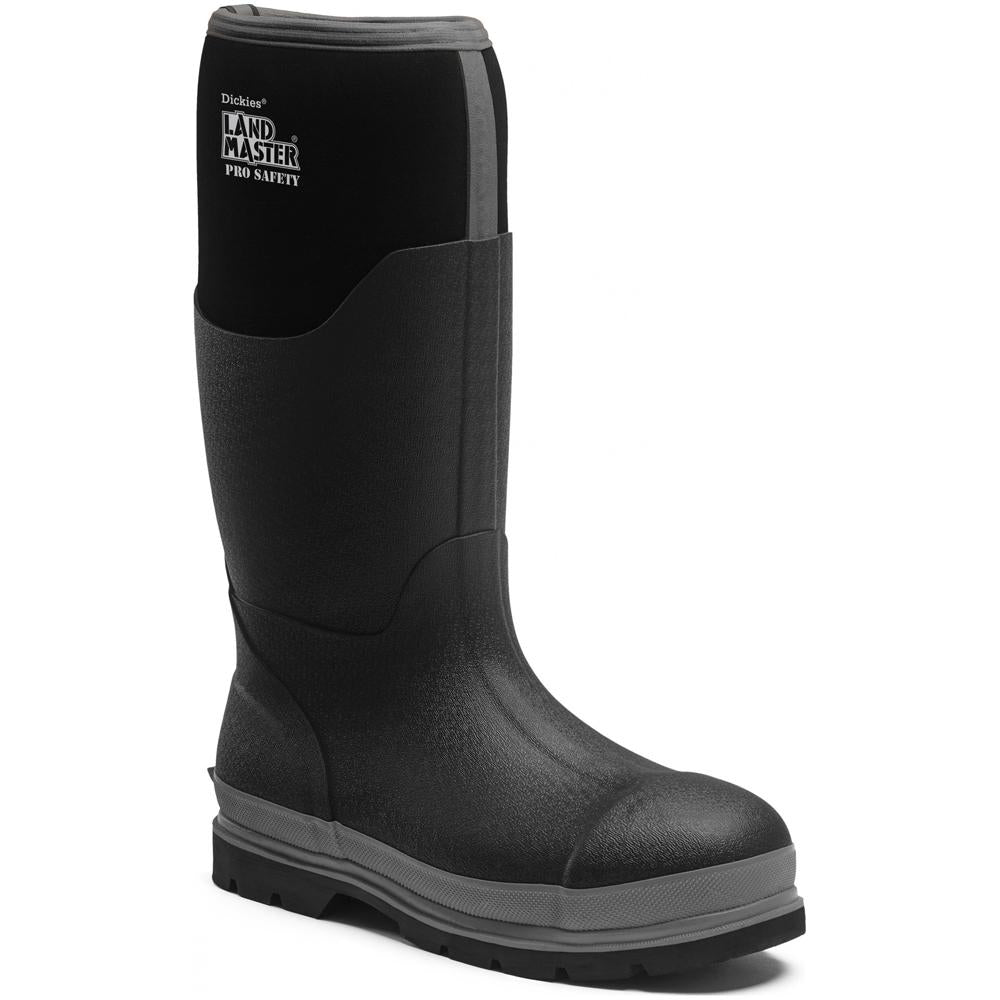
Best value safety alternative — a middle ground between Amblers and Dunlop
The Landmaster Pro sits between the Amblers and the Dunlop on the shelf — a rubber-and-neoprene S5 wellington with a steel toe and a claimed 1100N midsole, priced closer to the budget end but built with a bit more insulation and a slightly better reputation for holding up over a season. Owner feedback describes it as a sensible middle option rather than a stand-out in any one respect, which is precisely the point for anyone who wants full safety spec without stretching to the Bekina or Skellerup price.
For
- Full S5 spec including a 1100N-rated midsole
- Neoprene lining adds warmth over the cheapest options
- Sits comfortably below the premium picks on price
Against
- Not a standout on any single feature
- Stock and colour availability varies by size
Typically £30–£46
Check price on AmazonHunter Original Tall
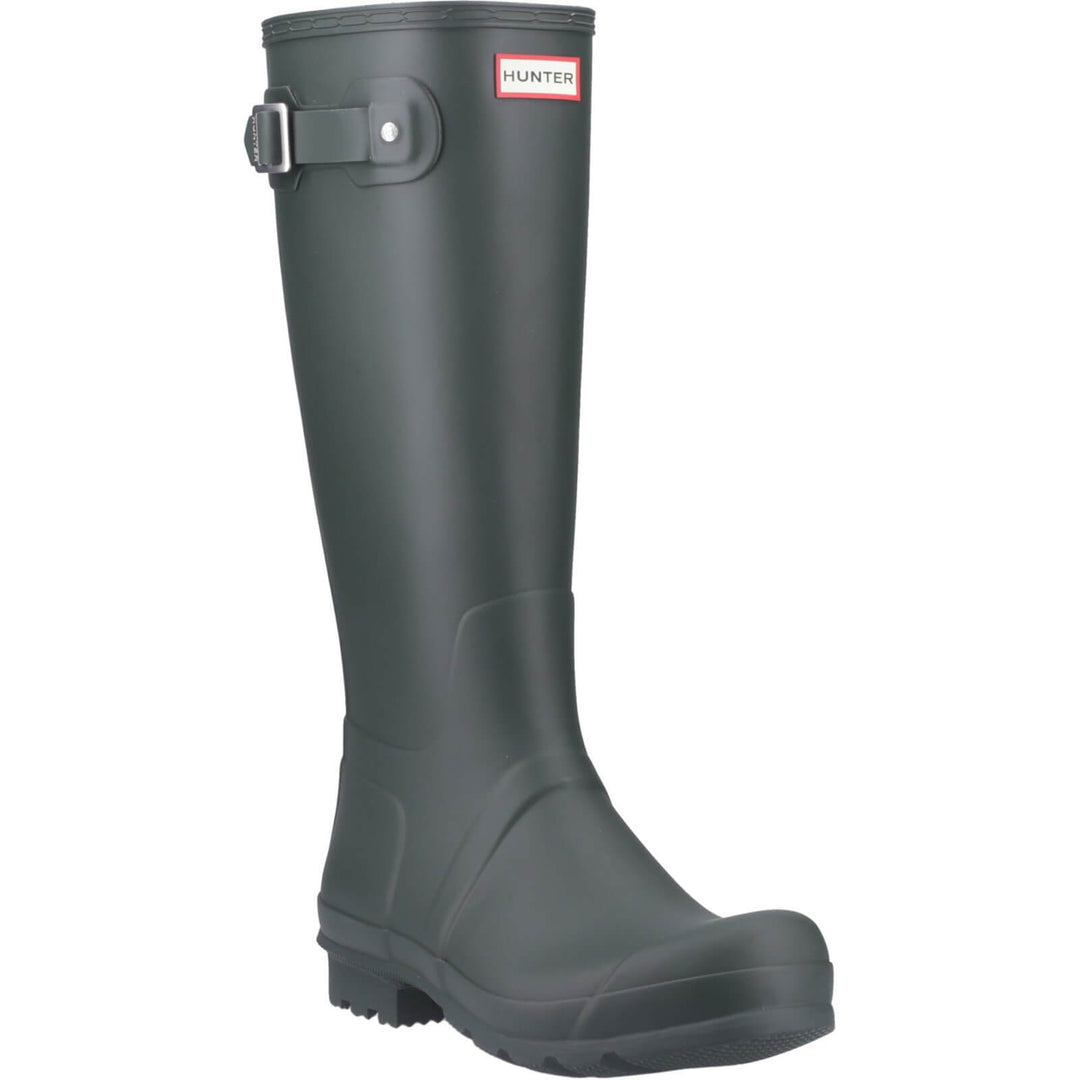
Best for non-safety, client-facing days — presentable enough for a garden walk-round
Hunter’s Original Tall carries no safety rating and no pretence of being site kit — hand-assembled vulcanised natural rubber, built for genuinely wet ground rather than debris or induction rules. It earns a place here for the opposite reason to most of this guide: an overgrown garden walk-round or a client-accompanied look at standing water where turning up in a scuffed safety welly reads wrong. It costs more than boots with twice the protection, which only makes sense if presentability is actually part of the job that day.
For
- Genuinely waterproof natural rubber, well proven over decades
- Presentable enough for client-accompanied garden inspections
- Widely available, easy replacement sizing
Against
- No safety rating — wrong boot for a managed site
- Premium price for what is, mechanically, a plain rubber welly
Typically £110–£135
Check price on AmazonWhat actually matters — and what doesn’t
The midsole is the reason to buy S5 at all. The toe cap gets the attention, but for a wellington the real risk is from below — a nail through a rotten decking board hidden in long grass, glass in a garden that’s been derelict a while, debris under silt in a flooded crawl space. If the ground is unknown, that’s what the steel or composite midsole is actually protecting against, and it’s worth paying for before insulation or brand name.
Insulation is a genuine feature, not marketing padding — but only for part of the year. A boot insulated to -20°C or colder is a real difference on a January external inspection or a flooded cellar in winter, and the warmer options here earn their premium honestly. For the rest of the year the same insulation just means hot feet, so it’s worth matching the boot to the season rather than buying the warmest pair by default.
PU is not simply “better” than rubber. Purofort-style PU wins on weight and warmth-to-weight, and cleans up faster. Rubber wins on long-term resistance to UV and ozone, which matters more than it sounds for a pair that spends most of its life in a van rather than on a foot. Neither claim about material superiority survives contact with how the boot is actually stored and used.
Sizing runs generous, and that’s usually deliberate. Most wellingtons are cut to allow a thick sock or a boot liner, so true-to-size or slightly roomy is normal rather than a fit problem. The exception is calf width on tall boots, which owner feedback flags far more often than length — worth checking before buying if a wide calf has been an issue with wellingtons before.
A safety-rated wellington is not a substitute for a full risk assessment. S5 protects against a specific, defined impact and puncture test; it says nothing about slip risk on an unstable surface, structural risk from standing on a rotten floor, or confined-space hazards in a crawl space. The boot is one part of getting into a wet or awkward space safely, not the whole answer.
Questions I get asked
Do I need safety-rated wellingtons for a survey, or will ordinary wellies do?
For most residential work, ordinary non-safety wellingtons are fine — a standard garden or a domestic crawl space rarely carries the same debris risk as an active building site. Safety-rated wellingtons earn their place for anything with an unknown or genuinely hazardous floor: a derelict property, a part-demolished garden, or any site that specifies boots at induction regardless of what’s underfoot. If in doubt, S5 costs little more than a non-safety pair and removes the question entirely.
What’s the actual difference between S4 and S5 rated wellington boots?
Both are fully waterproof with an antistatic sole and an energy-absorbing heel; S5 adds a penetration-resistant steel or composite midsole on top, the same protection a site safety boot offers against a nail or sharp object underfoot. S4 suits a straightforwardly wet but otherwise clear site — a flooded cellar with a known floor, a clean garden. S5 is the safer default anywhere the ground itself is an unknown.
Are wellington boots actually practical for crawling under a suspended timber floor?
It depends more on the material than the rating. A rigid PU or rubber welly resists folding at the ankle and gets awkward fast on hands and knees; a neoprene-backed boot like the Muck Boot Chore Classic flexes closer to a normal boot and is noticeably easier to kneel and crawl in for any length of time. For genuinely tight, dry timber voids a lower boot or knee pads paired with ordinary boots is sometimes the more practical answer — wellingtons earn their place when the void is also wet.
How long do wellington boots actually last, and what makes them fail?
PU boots typically last two to four years of regular use before the shell starts to crack, usually at a flex point like the ankle; rubber boots fail more often through perishing — UV and ozone degrading the material over time, especially if stored folded or in direct sunlight rather than upright. A pair kept as an occasional spare in the van will outlast either estimate considerably. The safety-rated midsole doesn’t wear out the way a sole tread does, but a split in the upper defeats the point of a waterproof boot regardless of what’s inside it.
Wellington boots are a small, occasional line in a survey kit list — right up until the day a cellar or crawl space makes them essential. If it’s your own property with a wet crawl space or standing water that needs a proper look, the practice carries out building surveys across Sussex, Kent and Surrey — get in touch. Or browse the rest of the field-kit guides, including the safety boots and knee pads guides this one sits alongside.
Small print. This guide is general information, not a risk assessment for your work; footwear and safety requirements are set by the site and the task in front of you, so always follow the specific rules of the site you’re entering. Prices are indicative, move constantly and were checked at the time of writing; the linked page always shows the current price. As an Amazon Associate I earn from qualifying purchases.