A decent chunk of any building survey happens outside, and none of it waits for good weather: the elevation walk-round, the roof pitch and gutter line checked from ground level or by drone, the garden and outbuildings, the DPC line around the base of the walls, the external condition section of an EPC assessment. Rain doesn’t move the appointment, and neither does a cold wind off the Weald in February. Most kit in a survey bag gets reached for occasionally — a waterproof jacket gets worn most days between October and April, and plenty of the rest of the year besides.
That everyday use is exactly why a repurposed hiking coat or a bargain-bin cagoule tends to disappoint. A survey jacket needs pockets that actually fit a phone, a laser measure or a damp meter rather than just car keys, sleeves that move properly when reaching up a downpipe or crouching at a DPC line, and a hood that stays put in wind without blocking the view of a ladder’s footing. Some sites also specify hi-vis at the gate regardless of what’s underfoot, which is a different jacket to the one worn for a quiet residential homebuyer survey.
None of the jackets below have been worn on an actual visit — the notes are built from manufacturers’ specifications and recurring owner feedback, filtered through what a surveyor’s outdoor work actually needs. First, the one I’d buy.
The one I’d buy
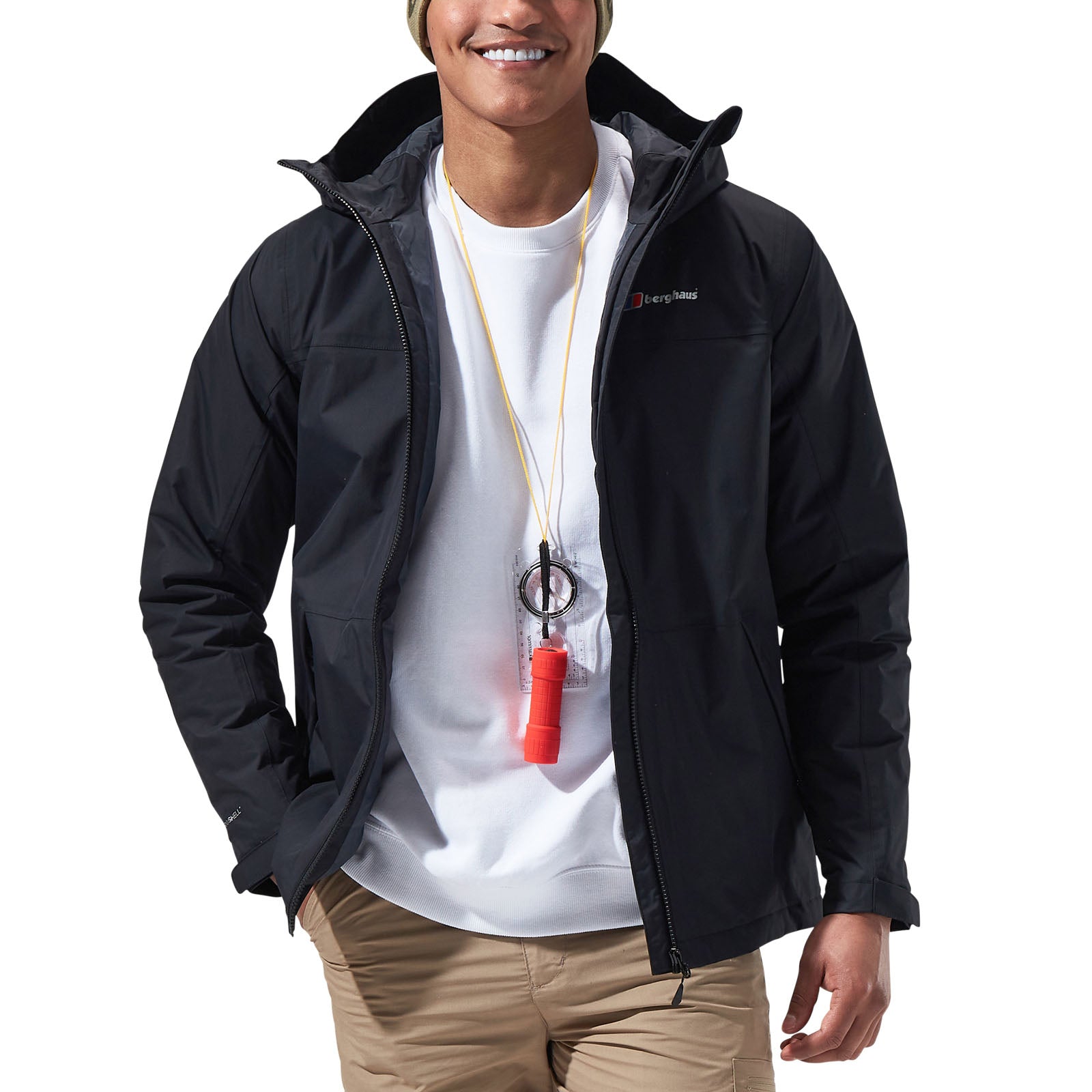
Berghaus Deluge Pro 2.0
Berghaus built Hydroshell for hillwalking, which turns out to be exactly what a day of elevation walk-rounds and roof inspections in South East weather needs — two-layer waterproof, breathable fabric with taped seams and a PFC-free finish. Owner feedback consistently rates it as one of the few jackets under £100 that stays dry rather than merely staying waterproof: the fabric breathes enough that a long garden walk-round doesn’t turn into a sauna the way a cheaper, thicker shell does. It isn’t cut for scaffold clips and brambles the way a dedicated workwear jacket is, which is why it earns its place as the everyday jacket rather than the one for a demolition site.
Typically £55–£95
Check price on AmazonHow I judge a waterproof jacket
A genuine waterproof rating, not a “shower resistant” softshell wearing the word loosely. A properly waterproof jacket carries a hydrostatic head rating — usually quoted in millimetres — tested against a column of water, combined with taped seams at every stitch line. A softshell treated with a durable water repellent (DWR) finish beads water off the surface, which is fine for light drizzle and nowhere near enough for standing in driving rain on a roof inspection.
Breathability, because most of the wet on a survey comes from the inside. Climbing a ladder, crouching at a DPC line or walking a long garden generates enough heat that a genuinely non-breathable shell leaves a surveyor wetter from sweat than the rain would have. It’s the reason the technical hillwalking-style shells in this guide earn their place over cheaper, thicker jackets that are waterproof on paper alone.
Room to move: reaching, crouching, kneeling, climbing. Pre-bent or articulated sleeves and a dropped back hem matter more on site than they do standing still, which is exactly the difference between a jacket designed for tradespeople and one designed for a dog walk. It’s also why a full day in a jacket cut for standing around gets uncomfortable fast once the actual job starts.
Hi-vis when the site asks for it, not worn as a default. Most residential survey work is better served by a plain jacket — hi-vis reads as unnecessary, occasionally alarming, on a domestic doorstep. It earns its place for managed sites, new-build developments and any job with a site induction that specifies it, which is worth keeping one jacket in the van for rather than buying as the everyday choice.
Small enough to live in the bag, for the day the forecast turns without warning. The best waterproof jacket is the one that’s actually there when an unplanned shower catches a garden walk-round, not the technical shell left at home because it takes up a third of the boot. A packable spare earns a permanent place in the kit for exactly that reason.
The comparison
| Model | Waterproof rating | Type | Typical price | Best for | |
|---|---|---|---|---|---|
| Berghaus Deluge Pro 2.0 | Hydroshell 2-layer, taped seams | Technical hardshell | ~£55–£95 | Best overall | View |
| Snickers 1303 AllroundWork | 5,000mm, EN 343 | Professional workwear shell | ~£75–£95 | Premium/professional pick | View |
| Dickies Raintite (WP50000) | 5,000mm | Budget workwear jacket | ~£28–£38 | Best on a budget | View |
| Portwest H440 | Waterproof, taped seams | Hi-vis Class 3 rain jacket | ~£14–£22 | Best lightweight hi-vis | View |
| Portwest S463 | 15,000mm, EN 343 Class 3:1 | Hi-vis insulated bomber | ~£18–£28 | Best for cold hi-vis days | View |
| Regatta Pack-It III | Isolite fabric, taped seams | Packable shell | ~£15–£30 | Best packable spare | View |
| Mac in a Sac Origin 2 | 10,000mm, 8,000g breathability | Premium packable shell | ~£35–£50 | Best premium packable | View |
The picks in detail
Berghaus Deluge Pro 2.0
Best overall — genuinely waterproof and breathable, without a workwear price tag
Berghaus built Hydroshell for hillwalking, which turns out to be exactly what a day of elevation walk-rounds and roof inspections in South East weather needs — two-layer waterproof-breathable fabric, taped seams throughout, and a PFC-free finish that doesn’t rely on the older, more persistent waterproofing chemistry. The hood adjusts enough to stay put in wind without blocking peripheral vision when checking a ladder’s footing, and owner feedback consistently rates it as one of the few sub-£100 jackets that stays dry rather than just staying waterproof. It’s not built for scaffold clips and brambles the way a dedicated workwear jacket is, so it earns its place as the everyday jacket rather than the one for a demolition site.
For
- Genuinely waterproof and breathable Hydroshell fabric
- Adjustable, packable hood that stays put in wind
- PFC-free, bluesign-approved fabric
Against
- Two hand pockets only — no chest pocket for a phone or laser measure
- Less abrasion-resistant than a dedicated workwear shell
Typically £55–£95
Check price on AmazonSnickers 1303 AllroundWork Waterproof Shell Jacket
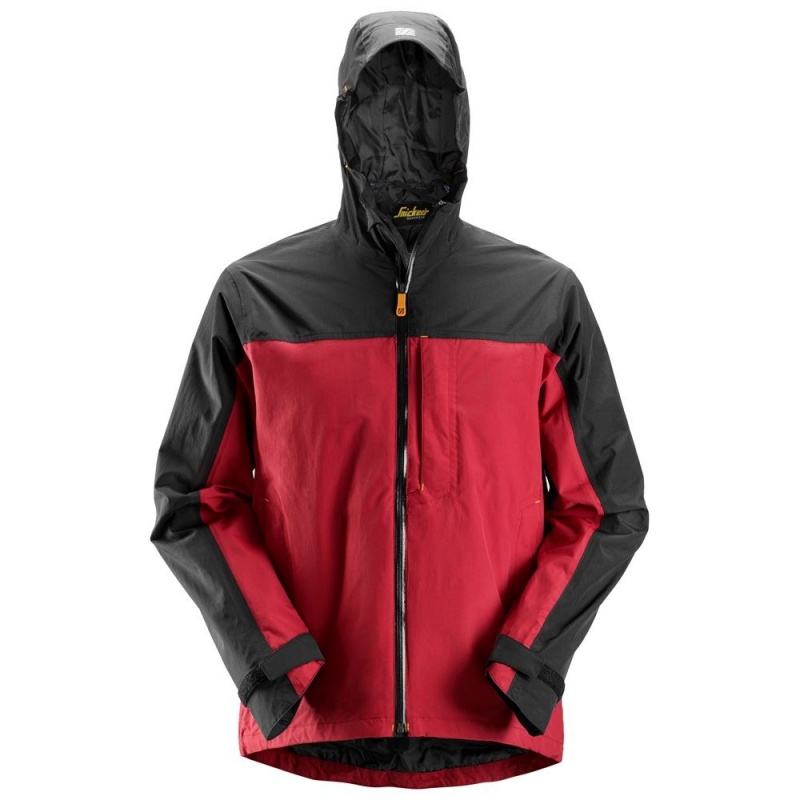
Premium/professional pick — built for site work rather than adapted to it
Snickers designs for tradespeople first, and it shows: pre-bent sleeves and a dropped back hem are cut for reaching and crouching rather than standing still, and the YKK AquaGuard coil zip is a noticeably more durable detail than the zips on most hiking jackets at this price. EN 343 certified to a 5,000mm waterproof rating with taped seams throughout, it carries three pockets sized properly for a phone, a damp meter or a laser measure rather than just car keys, plus reflective detailing that helps on a dim winter afternoon without being a full hi-vis jacket. It costs more than most of this list, which is the trade-off for a jacket built to survive scaffold clips and brick dust rather than a weekend on the fells.
For
- Pre-bent sleeves and dropped back cut for site work, not hiking
- Three properly sized pockets for survey tools
- Durable YKK AquaGuard zip and reinforced construction
Against
- Among the more expensive jackets in this guide
- Not hi-vis rated out of the box
Typically £75–£95
Check price on AmazonDickies Raintite Jacket (WP50000)

Best on a budget — full waterproofing without the workwear price
The Raintite has been a trade-counter staple for years, and the spec explains why: 200gsm double-knitted polyester waterproof to 5,000mm, welded seams, and a studded storm flap over a two-way zip that keeps water out at the one place most jackets let it in. It won’t breathe like the Berghaus or move like the Snickers, and owner feedback describes it as noticeably bulkier under a bag strap, but as a jacket kept as a permanent spare in the van for the day the forecast turns without warning, it does everything the job actually needs for a fraction of the price.
For
- Genuinely waterproof to 5,000mm at a budget price
- Studded storm flap over the zip, hood included
- Internal zipped pocket keeps a phone dry
Against
- Bulkier and less breathable than the technical shells above
- No articulated sleeves for tight crawl-space or ladder work
Typically £28–£38
Check price on AmazonPortwest H440 Waterproof Hi-Vis Rain Jacket
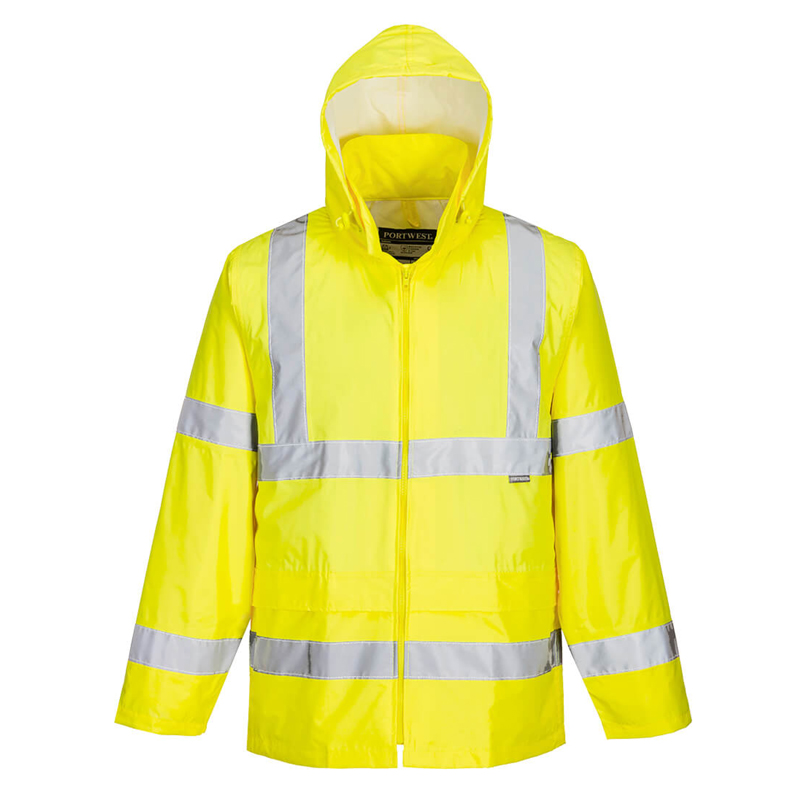
Best lightweight hi-vis — the one that satisfies a site induction
Plenty of residential surveys never need a hi-vis jacket, but a managed site, a commercial instruction or a housing association job usually specifies one at the gate regardless of what’s actually underfoot. The H440 is EN ISO 20471 Class 3 certified, taped-seam waterproof, and light enough to fold into a bag for the jobs where it’s needed rather than worn as a default — a vented back yoke stops it turning into a greenhouse the moment the sun comes out between showers. It’s a basic rain jacket underneath the hi-vis spec rather than a technical shell, so it’s the one for satisfying the induction sheet, not the one for a full day in driving rain.
For
- EN ISO 20471 Class 3 certified for site inductions
- Genuinely waterproof with taped seams
- Light and packable enough to keep as a permanent spare
Against
- Basic rain-jacket build under the hi-vis spec, not a technical shell
- Drawcord hood is less adjustable than a proper toggle
Typically £14–£22
Check price on AmazonPortwest S463 Hi-Vis Winter Bomber Jacket
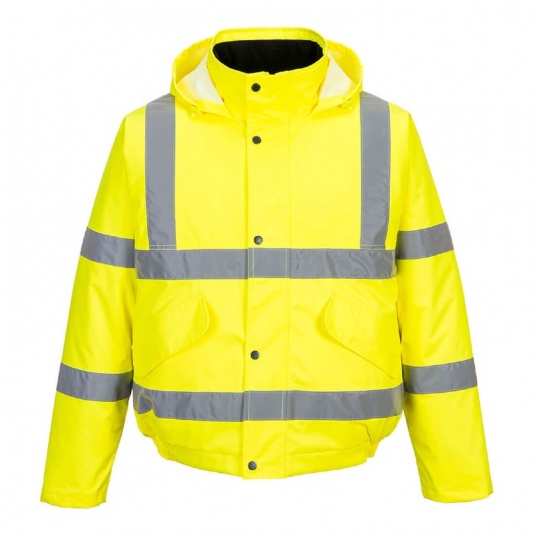
Best for cold hi-vis days — insulated and rated to 15,000mm
For a January external inspection on a site that specifies hi-vis, the H440’s thin rain-jacket build stops being enough, and the S463 is the obvious step up — fully lined and padded, waterproof to a claimed 15,000mm under EN 343:2019 Class 3:1, with knitted storm cuffs and a studded two-way zip that shut out wind as effectively as rain. Four pockets, including a concealed phone pocket, cover what a cold-weather site visit actually needs to carry, and the fleece-lined collar is a detail that matters more than it sounds once the wind picks up on an exposed elevation. It runs warm outside of genuinely cold conditions, which is exactly the trade a padded jacket makes.
For
- EN ISO 20471 Class 3 hi-vis with EN 343 Class 3:1 waterproofing to 15,000mm
- Fully lined and padded for cold-weather site work
- Four pockets including a concealed phone pocket
Against
- Too warm for anything but genuinely cold conditions
- Bulkier than the shell jackets above, less practical under a tool belt
Typically £18–£28
Check price on AmazonRegatta Pack-It III Jacket

Best packable spare — small enough to live in the bag permanently
The Pack-It folds into its own stuff sack down to roughly the size of a water bottle, which is the entire point: a jacket that’s genuinely no trouble to carry every day rather than one left in the van because it takes up a third of the boot. ISOLITE fabric with taped seams and an adjustable shockcord hood cover the basics, and at a price that’s regularly discounted well below its RRP, it’s cheap enough to keep in a toolbag as well as a car. It won’t survive years of daily site abuse the way the Snickers will, and two lower pockets is a thin spec next to the dedicated workwear jackets, but as the jacket that’s actually there when an unplanned shower catches a garden walk-round, that’s beside the point.
For
- Packs into its own stuff sack, genuinely pocket-sized
- Taped seams and adjustable hood cover the basics
- Frequently discounted well below RRP
Against
- Thinner fabric than a dedicated workwear shell
- Only two pockets, no chest pocket
Typically £15–£30
Check price on AmazonMac in a Sac Origin 2
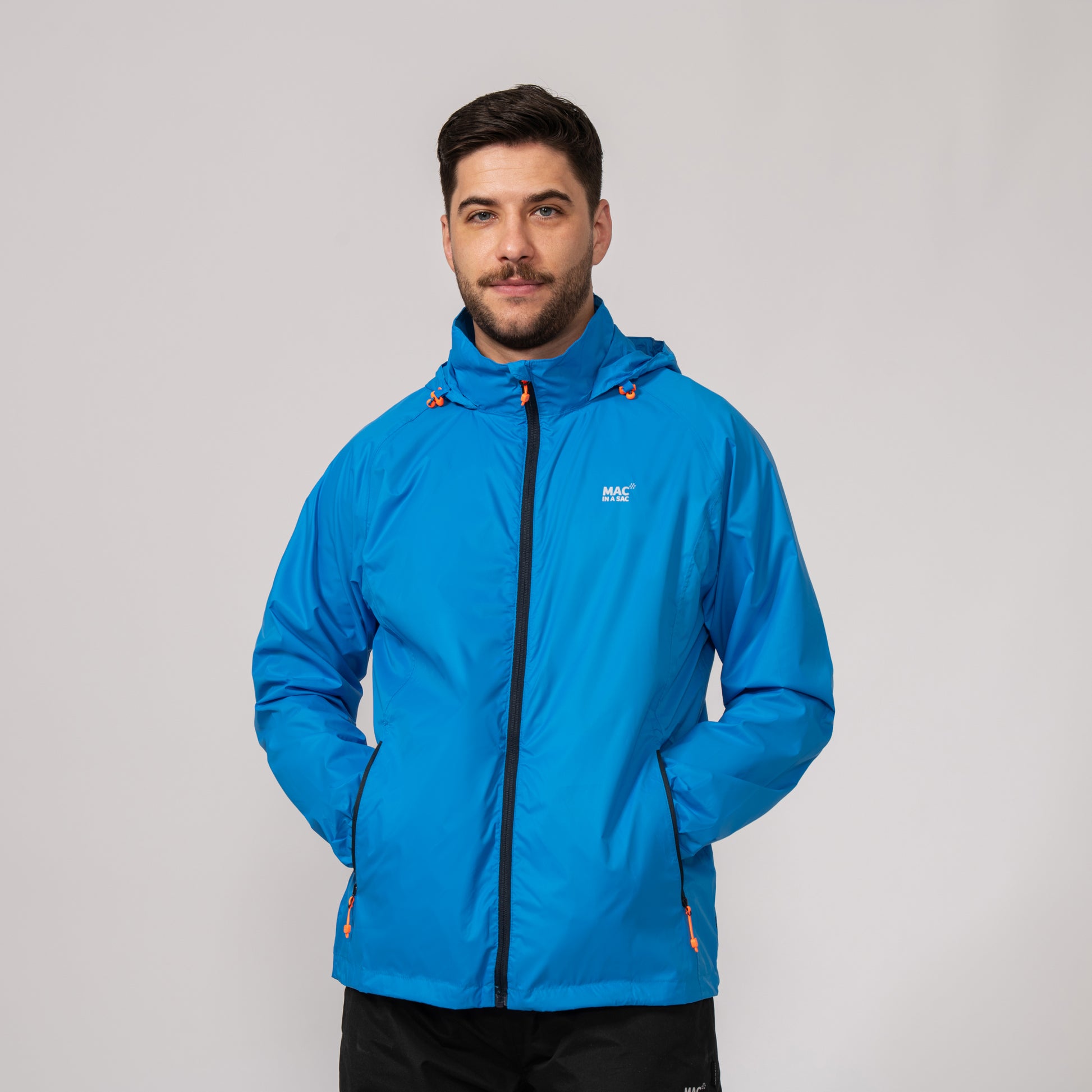
Best premium packable — a proper waterproof rating in a jacket the size of a lunchbox
Mac in a Sac has built essentially one product since 1987 and refined it rather than chasing a wide range, and the Origin 2 is the result — a 10,000mm hydrostatic head with 8,000g breathability, genuinely competitive with the technical shells above, packed into a jacket that folds into an attached stuff sack smaller than the Regatta’s. Back venting, a water-repellent YKK zip and fully taped seams put it a clear step above most packable jackets at this size, and owner feedback consistently highlights that it performs like a full-size shell rather than a compromise once it’s actually on. It costs more than the Regatta for that reason, which is a fair trade for anyone who wants one packable jacket rather than two.
For
- 10,000mm waterproof with genuinely competitive breathability for its pack size
- Back venting and fully taped seams throughout
- Smaller packed size than most technical shells
Against
- Costs noticeably more than the Regatta for a similar packable format
- Less widely stocked than the mainstream brands above
Typically £35–£50
Check price on AmazonWhat actually matters — and what doesn’t
The hydrostatic head number matters less past about 10,000mm than the seams and zips do. A jacket rated to 20,000mm is not meaningfully drier in normal UK rain than one rated to 10,000mm if the seams aren’t taped or the front zip isn’t storm-flapped — water finds the gap before it finds the fabric. Past that point, breathability and durability are the numbers worth comparing, not the waterproof rating printed on the label.
Breathability is not marketing padding for a survey jacket specifically. Ladder work, reaching into a downpipe or just walking a long garden generates enough heat that a genuinely non-breathable shell gets a surveyor wetter from sweat than most showers would. It’s the reason the Berghaus and the Mac in a Sac earn their place above cheaper, thicker jackets that are waterproof on paper alone.
Hi-vis is a site requirement, not a default upgrade. Most residential survey work is better served by a jacket that doesn’t read as a contractor’s to a homeowner opening the door, and the hi-vis jackets here earn their place for managed and commercial sites specifically, not as the one jacket worn for every job.
A softshell labelled “water resistant” is not a waterproof jacket, whatever the marketing implies. Softshells breathe brilliantly and move well, but most rely on a durable water repellent finish that beads water rather than a genuine waterproof membrane — fine for light drizzle, not for standing in driving rain on a roof inspection.
Packed size decides whether a jacket actually gets carried. The best waterproof jacket is the one that’s in the bag when the forecast turns without warning, not the technical shell left at home because it takes up too much of the van.
Questions I get asked
Do I need a hi-vis waterproof jacket for a residential survey?
For most homebuyer surveys and building surveys, no — a hi-vis jacket reads as unnecessary, occasionally slightly alarming, on a domestic doorstep, and a plain waterproof jacket does the job. It earns its place for managed sites, new-build developments, housing association instructions or anywhere with a site induction that specifies it regardless of the property type, which is worth keeping one in the van for rather than buying by default.
What’s the actual difference between a waterproof jacket and a water-resistant one?
Waterproof means a genuine membrane or coated fabric rated to a hydrostatic head, usually 5,000mm or higher, tested to resist a column of water without leaking, combined with taped seams at the stitch lines. Water-resistant, or a durable water repellent (DWR) finish, only makes water bead off the surface rather than stopping it penetrating — fine for light drizzle, not for standing in prolonged rain on an external elevation.
Is a hardshell or a softshell better for survey work?
A hardshell — the Berghaus, Snickers, Dickies and the hi-vis Portwest jackets here — is the safer default because it’s genuinely waterproof rather than just water-resistant. A softshell breathes and moves better and is worth carrying for a dry, cold day, but very few softshells sold as “waterproof” actually meet the same rating, so it’s a jacket for a forecast that’s merely threatening rather than one that’s already raining.
How long should a decent waterproof jacket last with regular site use?
A dedicated workwear shell like the Snickers or Dickies, built with heavier fabric and reinforced stitching, should manage several years of weekly use before the waterproofing needs reproofing or the seams start to fail. Lighter hillwalking-style shells like the Berghaus, or packable jackets, will need a wash-in reproofing treatment sooner — the DWR finish wears off with regular use well before the membrane itself fails, and a jacket that’s stopped beading water is usually a reproofing job, not a replacement one.
A waterproof jacket is one of the few pieces of kit that earns its place on almost every visit rather than the occasional one. If external condition is the actual question on your own property, the practice carries out building surveys and EPCs across Sussex, Kent and Surrey — get in touch. Or browse the rest of the field-kit guides, including the hi-vis vests and wellington boots guides this one sits alongside.
Small print. This guide is general information, not a site-specific risk assessment; PPE and hi-vis requirements are set by the site and the task in front of you, so always follow the specific rules of the site you’re entering. Prices are indicative, move constantly and were checked at the time of writing; the linked page always shows the current price. As an Amazon Associate I earn from qualifying purchases.