A trickle vent is the small, permanently-open slot built into or bolted onto a window frame that gives a room its background ventilation — the slow, constant trickle of air that stops moisture building up between the times an extractor fan runs or a window gets opened wide. It doesn't do the heavy lifting after a shower or a pan boiling over; that's the fan's job. What it does is stop a well-sealed, well-insulated modern window from turning a bedroom or living room into a sealed box that quietly steams up its own corners over a cold winter.
The figure most homeowners and even some installers still quote — 5,000mm² for a habitable room, 2,500mm² for a wet room — was the 2010 edition of Approved Document F. The 2021 edition, in force since 15 June 2022, raised those minimums substantially: 8,000mm² for a habitable room or kitchen in a multi-storey dwelling, 10,000mm² in a single-storey dwelling, and 4,000mm² for a bathroom either way. There's no minimum window-to-floor-area calculation that decides whether background ventilation applies at all — if the room has an external wall, Table 1.7 applies regardless of how big the window is. A single small retrofit vent bought off a shelf rarely clears the higher figure on its own, which is worth knowing before you assume one vent per window is automatically enough.
If the problem is condensation running well beyond the window reveal — landing ceilings, cold corners, wardrobes on an external wall — a trickle vent on its own won't fix it; that's usually a whole-house ventilation question, and a PIV unit or a proper MVHR installation is the more likely answer. If you're weighing up new windows anyway, double glazing costs covers what a full replacement runs to, since the vent question usually gets decided at the same time as the frame. With that context, here's the trickle vent I'd fit first.
The one I’d buy

Titon Trimvent Select XS13
Titon is one of the two names (with Greenwood) you'll find specified across most volume housebuilder and fabricator window ranges, and the XS13 is its straightforward surface-mounted retrofit vent: fits over an existing 13mm slot, gives 4,400mm² equivalent area with the XC13 canopy fitted, and needs nothing more than a screwdriver to swap. It's sold in white and brown to suit most PVCu and timber frames.
Typically £11–£15
Check price on AmazonHow I judge a trickle vent
Equivalent area against the current Table 1.7 figure, not the old one. 8,000–10,000mm² for a habitable room, 4,000mm² for a bathroom, is the 2021 figure. Most of what's written online still quotes the smaller 2010 numbers.
Independently tested area, not just the box figure. The mm² quoted is measured to BS EN 13141-1 at 1Pa, in theory a level playing field — but as one pick below shows, a published third-party test found a real gap between a claimed figure and what was actually measured.
Frame-mounted retrofit versus glazed-in. A surface-mounted or routed slot vent bolts onto the existing frame with no glass work. A glazed-in vent runs through the sealed unit itself and can only be fitted when the glass is being replaced — a fabricator-specified item, not something you buy and fit yourself.
Acoustic attenuation where it's actually needed. A plain open slot does nothing for road noise. Worth the extra cost on a busy-road elevation; unnecessary on a quiet one.
Colour, slot size and fixing centres matching what's already there. A vent that doesn't match the existing routed slot or screw centres means more cutting, not a clean swap.
The comparison
| Model | Type | Equivalent area | Typical price | Best for | |
|---|---|---|---|---|---|
| Titon Trimvent Select XS13 | Surface-mounted, plastic | 4,400mm² | ~£11–£15 | Best all-round retrofit vent | View |
| Titon SF Xtra SFX13 4000EA | Surface-mounted, aluminium | 4,000mm² | ~£10–£14 | Premium/professional pick | View |
| Greenwood 4000SFW | Surface-mounted, plastic | 4,000mm² | ~£16–£20 | Trade alternative to Titon | View |
| Merriway BH05603 | Surface-mounted, adjustable | Not independently rated | ~£6–£9 | Cheapest, simple like-for-like swap | View |
| Glazpart 236mm (Tan) | Surface-mounted, rebated | 2,500mm² | ~£11–£15 | Smallest profile, timber rebating | View |
| Greenwood 5000EA | Surface-mounted, plastic | 5,000mm² claimed | ~£16–£19 | Budget, spec disputed — see below | View |
The picks in detail
Titon Trimvent Select XS13
Best all-round retrofit vent — largest genuinely-tested area here at a modest price
Titon vents turn up across a huge share of UK fabricator ranges, so an XS13 is a straightforward, drop-in match for a lot of existing slots. 4,400mm² with the canopy fitted gives real headroom over most single-vent budget alternatives, it's a five-minute screwdriver job to swap, and white and brown covers most PVCu and timber frames without needing a special order. It won't, on its own, clear the current 8,000–10,000mm² habitable-room figure — see the section below on when one vent isn't enough.
For
- 4,400mm² equivalent area, above most single-vent alternatives
- Widely fitted, so slot size and fixing centres are a common match
- White and brown in stock, no special order
Against
- Still short of the current habitable-room minimum on its own
- Plastic canopy, not the toughest finish here
Typically £11–£15
Check price on AmazonTiton SF Xtra SFX13 4000EA
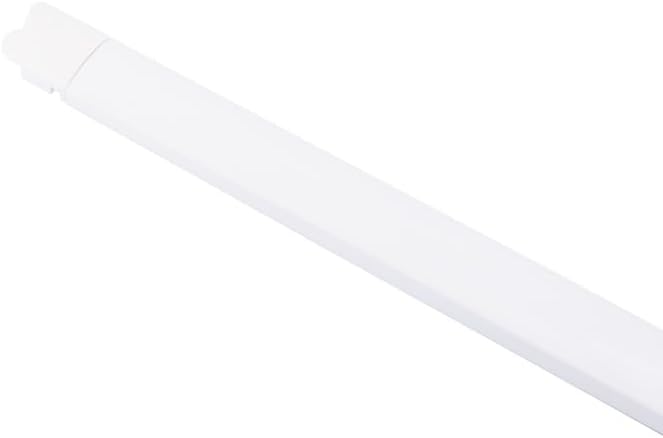
Best build quality — aluminium construction with a proper compression seal
Where the plastic XS13 is the practical everyday retrofit, the SF Xtra is Titon's more robust aluminium line: a high-performance gasket and compression closure that seals better against driving rain than a basic plastic slot vent, at 4,000mm². It's also sold in a smaller 2,500mm² (294mm) version for topping up a smaller opening or a bathroom, and in black and anthracite grey for darker frames. It costs about the same as the plastic XS13 despite the better build, which is worth knowing before assuming metal always means a premium.
For
- Aluminium body with a proper compression seal, not just a clip-fit cover
- Also sold in a smaller 2,500mm² size and darker finishes
- Not meaningfully pricier than the plastic alternative
Against
- 400mm² less equivalent area than the top pick
- Fewer stocked colour options than the Trimvent range
Typically £10–£14
Check price on AmazonGreenwood 4000SFW

Best trade alternative — the other name you'll see specified alongside Titon
Greenwood is the other big fabricator-specified name, and the 4000SFW is its equivalent everyday retrofit vent: 4,000mm² equivalent area, a front-faced finger lever rather than a recessed catch, and the same straightforward surface-mounted fitting as the Titon options. It's genuinely useful as a like-for-like match where the existing vents already carry the Greenwood name, since the slot cut and fixing centres are more likely to line up. It's priced a few pounds above the Titon equivalents for essentially the same job.
For
- Best match if the existing window's vents are already Greenwood
- Front-faced lever, easier to operate than a recessed catch
- Brown also in stock
Against
- Costs more than the equivalent Titon vent
- 400mm² less than the top pick
Typically £16–£20
Check price on AmazonMerriway BH05603

Cheapest here — a basic adjustable vent for a simple like-for-like swap
Merriway is a general window-hardware brand rather than a fabricator name, and this is the cheapest vent here by some margin: an adjustable hinged flap, internal and external sections, screws and fixing covers included. What it doesn't have is a published, independently-tested equivalent area figure like the Titon, Greenwood and Glazpart vents do, so I wouldn't use it to calculate whether a room clears its Table 1.7 minimum from scratch — it's the sensible choice for replacing a cracked or seized existing vent of similar size, not for working out background ventilation from first principles.
For
- Cheapest option here by a clear margin
- Adjustable flap, screws and fixing covers included
- Brown and grey also available
Against
- No published equivalent-area figure to check against Part F
- Not the vent to specify for a room starting from zero background ventilation
Typically £6–£9
Check price on AmazonGlazpart 236mm (Tan)

Best for timber frames — rounded ends rebate cleanly into a routed slot
Glazpart's rounded end profile is designed to rebate into timber window frames rather than just sit proud on a uPVC surface, with 34dB airborne sound insulation and a 600Pa watertightness rating on the datasheet. At 2,500mm² it's the smallest equivalent area here, so it suits topping up an opening that already has some ventilation rather than providing all of it. Worth flagging: the white and anthracite grey versions of this exact vent were showing as delisted on Amazon at the time of writing, despite otherwise-normal-looking listings — tan, cream and Chartwell green were the colours actually in stock, so check the live listing for your frame colour before assuming white is available.
For
- Rounded ends suit rebating into a timber frame
- 34dB sound insulation and 600Pa watertightness stated
- Genuinely in stock in Tan, Cream and Chartwell Green
Against
- Smallest equivalent area of the six — 2,500mm²
- White and Anthracite Grey versions were unavailable at time of writing
Typically £11–£15
Check price on AmazonGreenwood 5000EA

Budget pick, but with a genuine spec caveat worth reading
On the label this is the biggest equivalent area of the six at a claimed 5,000mm², for less than the 4000SFW above. I'd flag it rather than simply recommend it, though: Titon's own published independent testing (carried out by BRE/SRL Technical Services to BS EN 13141-1) found this Greenwood vent measured closer to 4,000mm² in practice, not the claimed 5,000mm². That's a competitor's published claim, not something I've independently re-verified, but it's a real test result rather than marketing, so I'd treat the printed figure as optimistic rather than take it at face value.
For
- Cheapest of the two Greenwood vents here
- Same easy surface-mounted fitting as the rest
Against
- Independent third-party testing disputes the claimed 5,000mm² figure
- The dispute is a competitor's claim, not independently re-verified here
Typically £16–£19
Check price on AmazonFrame-mounted, glazed-in or acoustic — and when a shelf-bought vent isn't enough
Every product above is a frame-mounted retrofit vent: it bolts onto or routs into the existing frame, and any competent DIYer can fit one in minutes. That's not the only kind. A glazed-in vent runs through the sealed glass unit itself — Titon's own Maxiglaze system gives 12,000mm² per metre of extrusion, well clear of the habitable-room figure in a single vent — but it can only be specified when the glass is being re-manufactured, so it's ordered through your window installer, not bought off a shelf. There's also an acoustic tier: Titon's SF Xtra Sound Attenuator is rated up to roughly 44dB attenuation open, built to actually cut road noise rather than just admit it with the air. Neither is a retail SKU I could verify in stock on Amazon at a fixed price, so neither gets a buy button here — ask your installer to price one in if the plain vents above don't fit the job.
Which is the honest answer to "when isn't a shelf-bought vent enough": a single 4,000–4,400mm² retrofit vent doesn't clear the current 8,000mm² (multi-storey) or 10,000mm² habitable-room figure on its own. Two vents per window is the common practical fix; a glazed-in strip is the other. If you're replacing windows rather than retrofitting, Part F's own retrofit rule (paragraph 3.14–3.15) says the new window's vents must be at least as large as whatever was there before, or hit the Table 1.7 figure where none existed — one more reason to check what your installer is actually specifying.
What actually matters — and what doesn’t
The number on the box versus the number independently tested. The Greenwood 5000EA pick above is the clearest example: a claimed figure and an independently tested one aren't always the same thing. Trust third-party test data over the marketing spec where you can find it.
One vent is often not the whole answer any more. The habitable-room figure nearly doubled between the 2010 and 2021 editions of Part F. A small retrofit vent that cleared the old rule comfortably often falls short of the current one.
Closing a vent to stop a draught just moves the problem indoors. Most of these have an adjustable or closable flap, tempting to shut in winter. Do that permanently and the moisture it was clearing has to go somewhere — usually the cold corner behind the wardrobe.
Colour matters more than it looks like it should. A white vent on a woodgrain or anthracite frame is a small thing I flag on survey purely because it looks like an afterthought — check the finish before ordering, not after fitting.
On a listed building or in a conservation area, a routed slot is an alteration. Cutting a new vent slot, or fitting one to the front elevation, is exactly the kind of small change a conservation officer can have a view on. Check before you cut.
Questions I get asked
Do I still need trickle vents if I already have an extractor fan? Yes — they do different jobs. An extractor fan clears a burst of moisture after cooking or showering; a trickle vent provides the constant low-level background ventilation Part F expects a habitable room to have all the time, fan running or not.
Will fitting trickle vents make my house colder or hurt my EPC? The heat loss through a trickle vent is genuinely small next to what's lost through the glass and frame around it, and RdSAP doesn't penalise a compliant vent. Blocking existing vents to save heat is a false economy that shows up as a damp or mould finding on the next survey, not a real saving.
Can I fit a trickle vent myself? A surface-mounted retrofit vent like the ones above is a straightforward job for a confident DIYer — mark, drill, screw. Routing a new slot into a frame that's never had one, or anything glazed-in, is a job for whoever's doing the glazing.
Is my installer required to fit trickle vents when they replace my windows? In substance, yes: if the old window had vents, the new one must have vents at least as large; if it didn't, the installer should get as close to the current Table 1.7 figure as feasible. A FENSA or CERTASS-registered installer should build this into the spec unasked, not treat it as an optional extra.
I don’t fit windows or trickle vents myself, but if condensation on or near a window is what's brought you here, a ventilation testing visit checks what's actually being delivered against what Part F expects, and a PAS 2035 retrofit assessment is the right next step if the problem looks bigger than one window — which is exactly the territory a PIV unit and MVHR installation cover. If you're weighing up new windows anyway, see double glazing costs for what that runs to. Get in touch for a second opinion, and there are more field-kit guides to work through.
Small print. This guide is general information, not a room-by-room ventilation calculation for your specific property — get that checked properly, especially on a listed building or in a conservation area where an alteration may need consent. Prices are indicative, move constantly and are checked at the time of writing; the linked page always shows the current price. As an Amazon Associate I earn from qualifying purchases.