Checking the smoke alarms is a five-minute job on almost every visit I make to a let property, and it tells me more about a landlord than the boiler does. A single battery alarm on the landing, bought once in 2016 and never touched since, says one thing. A matched set that all sound together when I press the test button on the one furthest from the door says another. Most of the landlords I meet assume the first is already against the law and the second is a nice-to-have. It is closer to the opposite.
Here is the part that catches people out: the Smoke and Carbon Monoxide Alarm (Amendment) Regulations 2022 did not introduce a duty to fit a smoke alarm on every storey — that has applied to private landlords since the original 2015 regulations. What 2022 actually changed was the CO duty (extended from solid-fuel appliances only to any fixed combustion appliance) and who it applies to (social landlords too, not just private ones). Neither instrument requires alarms to be interlinked, or a heat alarm in the kitchen. That is Scotland’s requirement, under the tolerable standard that has applied to every home there, regardless of tenure, since February 2022.
None of which means an English landlord should stop at the bare minimum. BS 5839-6:2019, the code of practice the industry designs to, recommends an interlinked system as standard for a rented home — and if the property is a licensed HMO, your council’s licence conditions have very likely already made that compulsory, whatever the national Alarm Regulations say. This guide covers both routes in: wireless retrofit kits needing no electrician, a hard-wired option for a rewire or new build, and the heat alarms that belong in the kitchen alone.
The one I’d buy
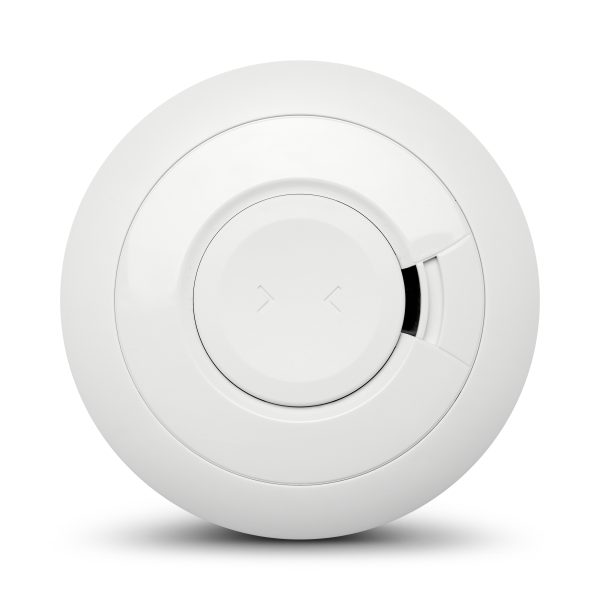
Aico Ei650iRF
The alarm social landlords standardise on, sold at close to trade money. RadioLINK+ wireless interlink covers a dozen devices over 100 metres in free air, so a whole house — and a kitchen heat alarm, and eventually a CO alarm — can share one mesh with no rewiring. Sealed 10-year lithium battery, Kitemarked to BS EN 14604:2005, and AudioLINK+ plays the alarm’s event log to a phone for anyone who wants evidence rather than a hopeful assumption.
Typically £55–£75
Check price on AmazonHow I judge a smoke or heat alarm
The Kitemark, not the marketing. Smoke alarms carry BS EN 14604:2005; heat alarms carry BS 5446-2:2003 — standards specifying real test conditions rather than self-declared claims. A BSI Kitemark means the certification was independently audited. Every alarm below carries one or the other; a lot of what surrounds them in a search results page does not.
Which interlink ecosystem, because you can’t mix them. Wireless interlink is proprietary per manufacturer — RadioLINK+, Wi-Safe 2 and X-Sense’s own protocol don’t talk to each other. Pick one system for a property and stay in it. Hard-wired interlink sidesteps the brand question but wants an electrician and, ideally, a property being rewired anyway.
A sealed 10-year battery. The most common failure I see is not a dead sensor, it’s a missing battery — borrowed for a remote control, or pulled when the low-battery chirp got annoying at 2am. A sealed-for-life lithium cell closes that off completely, which for a tenancy that outlives the landlord’s last visit is the difference between compliance on paper and compliance in reality.
The right sensor in the right room. A standard smoke alarm in a kitchen is a nuisance-alarm generator — steam and cooking fumes will set it off until someone disables it. A heat alarm, triggered by a genuine temperature rise rather than particles in the air, belongs there instead. Optical (photoelectric) smoke sensors, used throughout below, are also the sensible default over old ionisation types — faster on the smouldering fires that actually start in furniture and bedding, nothing radioactive inside.
Data, for the landlord who isn’t on site. AudioLINK+ and Wi-Safe 2’s optional gateway both turn an alarm into a record of when it last sounded and whether it’s still within its 10-year life. None of that is a legal requirement; it’s useful if the property is twenty minutes away and the tenant isn’t who you’ll hear it from first.
The comparison
| Model | Type | Interlink | Typical price | Best for | |
|---|---|---|---|---|---|
| Aico Ei650iRF | Smoke | RadioLINK+ wireless | ~£65 | Best overall — the landlord standard | View |
| FireAngel Pro Connected FP2620W2-R | Smoke | Wi-Safe 2 wireless | ~£65 | Remote alerts via app gateway | View |
| Aico Ei3016 | Smoke | Hard-wired (RF optional) | ~£50 | New build or full rewire | View |
| Aico Ei630iRF | Heat | RadioLINK+ wireless | ~£60 | Kitchen partner to the Ei650iRF | View |
| FireAngel Pro Connected FP1720W2-R | Heat | Wi-Safe 2 wireless | ~£60 | Kitchen partner to the FP2620W2-R | View |
| X-Sense XS01-WR | Smoke | Proprietary RF wireless | ~£20 | Cheapest genuine interlink | View |
The picks in detail
Aico Ei650iRF
Best overall — the wireless interlink most letting agents already expect; my top pick above
Aico is the Ei Electronics brand housing associations and letting agents standardised on years ago, and the Ei650iRF is why: RadioLINK+ links up to twelve smoke, heat and CO alarms over 100 metres in free air, so a whole terrace — landing, lounge, kitchen heat alarm, eventually a CO alarm too — runs off one wireless mesh with no cable pulled. Sealed 10-year lithium battery, BS EN 14604:2005 Kitemark, and AudioLINK+ extracts the alarm’s event history to a phone rather than trusting a tenant’s memory of when it last went off.
For
- The specification-grade choice most agents and lenders already recognise
- Interlinks with Aico’s own heat and CO alarms on one mesh
- Sealed 10-year lithium, BS EN 14604:2005, AudioLINK+ event log
Against
- Price varies widely by retailer — worth a quick check before buying
- No display; the app needs the AudioLINK+ hardware add-on to read
Typically £55–£75
Check price on AmazonFireAngel Pro Connected FP2620W2-R

Best for a portfolio landlord who isn’t on site — the alarm that can text you
FireAngel’s Wi-Safe 2 protocol does the same wireless-mesh job as Aico’s, up to 50 devices, but adds an optional Gateway hub that pushes alarm and low-battery alerts straight to a phone over Wi-Fi — genuinely useful if the property is a drive away and a tenant’s call would otherwise be the first you hear of it. Sealed 10-year Panasonic battery underneath the connectivity. The Gateway is a separate purchase that does nothing on its own; buy it once you’ve committed to the ecosystem, not before.
For
- Wi-Safe 2 links up to 50 alarms wirelessly
- Optional Gateway pushes alerts to a phone over Wi-Fi
- Sealed 10-year Panasonic battery
Against
- Remote alerts need the separately-sold Gateway
- A different ecosystem to Aico — the two won’t interlink together
Typically £60–£70
Check price on AmazonAico Ei3016
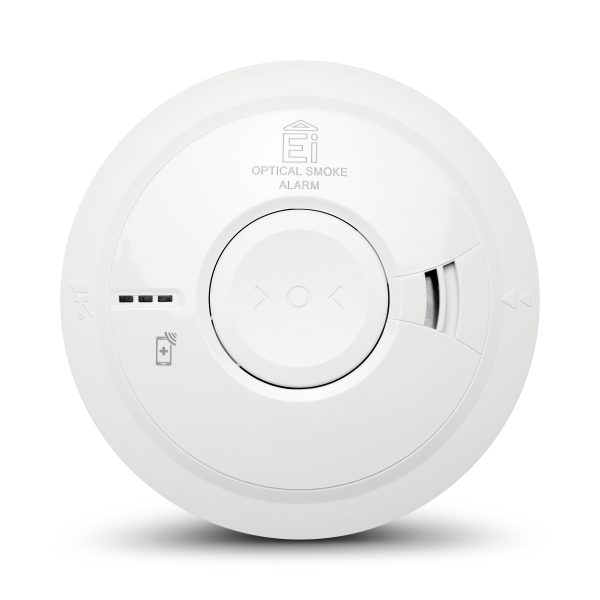
Best for a new build or full rewire — mains power, no battery to fail on the trigger side
Where the wireless alarms above suit an existing let with no appetite for an electrician, the Ei3016 suits the opposite job: a property already being rewired, where running a cable between alarms costs nothing extra. It runs on 230V mains with a 10-year rechargeable lithium cell as backup rather than the sole power source, wires directly to other Aico mains devices for interlink, and takes an optional Ei3000MRF module to also join a RadioLINK+ wireless mesh — useful if the rewired part of the house needs to reach older battery alarms elsewhere. BS EN 14604:2005 Grade D1, AudioLINK+ built in.
For
- Mains-powered — interlink and detection don’t depend on a battery
- Wired interlink is unambiguous, no proprietary radio to worry about
- Optional module bridges to a wireless mesh if needed
Against
- Needs an electrician and, ideally, floorboards already up
- Wireless bridging is an extra part, not built in
Typically £45–£60
Check price on AmazonAico Ei630iRF
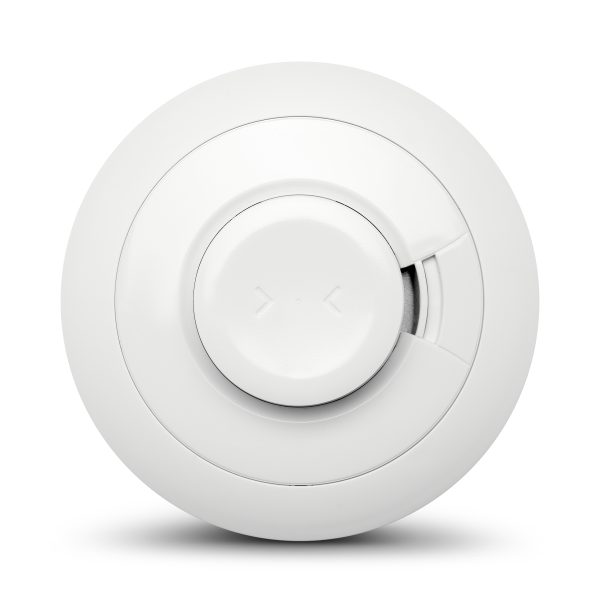
The kitchen alarm to pair with the Ei650iRF — heat, not smoke, where cooking happens
A heat alarm triggers on a genuine rise in temperature — 58°C on this one — rather than particles in the air, which is why it belongs in the kitchen and a smoke alarm does not: steam off a pan would set a smoke sensor off routinely enough that someone eventually takes the battery out. The Ei630iRF shares the Ei650iRF’s RadioLINK+ protocol and 10-year sealed battery, so the two join one mesh straight out of the box — the sensible kitchen companion if you’ve already bought the smoke alarms. BS 5446-2:2003 Kitemarked.
For
- Correct sensor type for a kitchen — no cooking false alarms
- Interlinks directly with the Ei650iRF and other RadioLINK+ devices
- Sealed 10-year lithium, BS 5446-2:2003
Against
- Only useful once you’ve committed to the Aico ecosystem
Typically £55–£65
Check price on AmazonFireAngel Pro Connected FP1720W2-R

The Wi-Safe 2 equivalent — kitchen partner to the FP2620W2-R
Same logic as the Aico pairing above, in FireAngel’s ecosystem: a Thermistek heat sensor rated Class A1 (54–65°C) sharing Wi-Safe 2 wireless interlink and the optional Gateway with the FP2620W2-R, so a kitchen fitted with this and a hallway fitted with that ring as one system. Sealed 10-year Panasonic battery, and it won’t sound over a boiling pan the way a smoke alarm in the same spot eventually would.
For
- Matches the FP2620W2-R’s interlink and Gateway ecosystem
- Class A1 Thermistek sensor, sealed 10-year battery
Against
- Stock runs thin at times — check availability before planning around it
- Locks you into Wi-Safe 2 rather than RadioLINK+
Typically £45–£65
Check price on AmazonX-Sense XS01-WR

Best budget — the cheapest route into a genuinely interlinked system
Aico and FireAngel both sell into the trade as much as to Amazon; X-Sense sells almost entirely direct, which is where the price gap comes from. The XS01-WR is a compact photoelectric smoke alarm on its own proprietary wireless protocol, linking up to 24 units with roughly 250-metre range — enough for most houses, though solid Victorian brick eats into that more than modern timber-frame will. The compromise is the battery: a replaceable CR123A cell rated around five years rather than a sealed 10-year unit, the wrong trade-off for a rental you won’t remember to revisit on schedule, and the right one for an owner-occupier topping up a landing on a budget.
For
- Genuinely interlinked (up to 24 units) at a fraction of the trade-brand price
- Compact photoelectric sensor, decent RF range
Against
- Replaceable 5-year battery, not sealed for 10 — a landlord risk, not a homeowner one
- Thinner UK trade track record than Aico or FireAngel
Typically £18–£25
Check price on AmazonWhat actually matters — and what doesn’t
England’s law and Scotland’s law are not the same law. England requires at least one smoke alarm per storey (a duty dating to 2015) and a CO alarm in any room with a fixed combustion appliance other than a gas cooker (the genuine 2022 change, alongside extending the duty to social housing) — not interlink, not a heat alarm. Scotland’s tolerable standard has required interlinked smoke alarms in the main living room and every circulation space, an interlinked heat alarm in the kitchen, and an interlinked CO alarm by any fuel-burning appliance, in every home regardless of tenure, since 1 February 2022. Let in both countries, and building to the Scottish spec everywhere means you never fall short of the English one.
Your HMO licence has probably already decided this for you. Councils issuing HMO licences under the Housing Act 2004 typically specify a fire detection standard against BS 5839-6 — commonly Grade D1 category LD2 for a smaller shared house (interlinked, sealed-battery or mains, covering escape routes and the kitchen), stepping up to a Grade A panel system for larger HMOs of three-plus storeys or five-plus occupants. Check your licence schedule rather than the national Alarm Regulations if the property is an HMO; the schedule is very likely the stricter document.
The test button proves less than it feels like it proves. Pressing it confirms the sounder, the electronics and, on an interlinked set, that the radio signal reaches the other units — not that the sensing chamber is still as sharp as the day it was fitted. Optical chambers slowly accumulate dust over a decade, which is why every alarm here carries a stamped end-of-life date rather than an indefinite one. Test monthly, and specifically after any period a property has stood empty.
What the listings push that doesn’t matter here. Multi-sensor combination alarms are convenient but check what they replace — a smoke-plus-heat unit in a hallway still isn’t a kitchen-specific heat alarm if the kitchen is a separate room. App connectivity is genuinely useful for a landlord who isn’t on site and pure theatre for one who is. An unbranded ten-pack with no Kitemark and a suspiciously low price isn’t a bargain; it’s ten units you’ll replace the day an assessor or insurer asks for the certification.
Questions I get asked
Do landlords in England have to fit interlinked smoke alarms? Not under the national Alarm Regulations — those require one smoke alarm per storey and CO alarms by combustion appliances, full stop. Interlink is a BS 5839-6 best-practice recommendation that most letting agents, lenders and insurers now expect, and it’s very often a mandatory HMO licence condition. Scotland is the one place in the UK where interlink is a straightforward legal requirement for every home.
Where does a heat alarm go instead of a smoke alarm? In the kitchen, and generally nowhere else. Cooking produces enough steam and airborne particulate to trip a photoelectric sensor regularly enough that people start disabling alarms — a heat alarm, responding only to a genuine temperature spike, doesn’t have that problem. Smoke alarms then cover hallways, landings and the main living room, the split every pairing above is built around.
Can I mix smoke alarm brands on one interlinked system? Not the wireless kind. RadioLINK+, Wi-Safe 2 and X-Sense’s own protocol are proprietary and don’t recognise each other’s signal. Pick one brand’s wireless ecosystem per property and buy every alarm in it from that range; the only reliable way to mix brands is a fully hard-wired system, where the cable carries the interlink signal instead of a radio protocol.
How long do smoke and heat alarms actually last? Ten years for a sealed-battery unit, matched to the battery’s own life; a replaceable-battery alarm is usually rated five to seven years on the sensing chamber regardless of how often the battery gets changed. Every alarm here prints a replace-by date on the casing — write the fitting date on it in marker too, because nobody remembers a decade later.
For the wider compliance picture rather than just the alarms — what a fire risk assessment covers, what a gas safety certificate checks alongside the CO duty, or how a carbon monoxide alarm joins the same wireless mesh — see the linked guides. For the survey itself, a Buy to Let Survey looks at exactly this kind of compliance gap alongside the building’s condition — get in touch. And for the rest of a landlord’s toolkit, there are more field-kit guides.
Small print. This guide is general information, not advice on your specific property or licence conditions, and does not replace checking your local authority’s HMO licence schedule or a competent fire risk assessor’s judgement. Prices are indicative, move constantly and were checked at the time of writing; the linked page always shows the current price. As an Amazon Associate I earn from qualifying purchases.