A survey produces a steady trickle of physical things that need identifying later: a bagged scrape of loft insulation going off for a fibre check, a core sample cut from a solid wall, a set of moisture readings taken at four points round the same bay window, three near-identical loft hatch photographs that need to stay in the right order. None of it means anything back at the desk unless it was labelled clearly before it left the property, and a permanent marker on a sample bag rubs off in a pocket long before anyone opens it.
Retrofit work adds a second, more formal use. PAS 2035 and most competent-person schemes expect a durable record somewhere accessible — inside the meter cupboard, on the loft hatch, at the consumer unit — noting what was installed and when, so whoever opens that hatch in ten years isn’t guessing whether the joists above have already been dealt with. A luggage tag in biro does not survive that timescale; a proper label does.
The category splits the same way most kit on this site does: cheap direct-thermal printers whose labels fade within a year, sat against laminated-tape machines built to survive a loft, a van and daylight for a decade. Seven compared below, from a keychain-sized phone printer to an industrial patch-panel machine, on what actually matters for labelling samples, evidence and site fixtures rather than office filing. First, the one I’d buy.
The one I’d buy
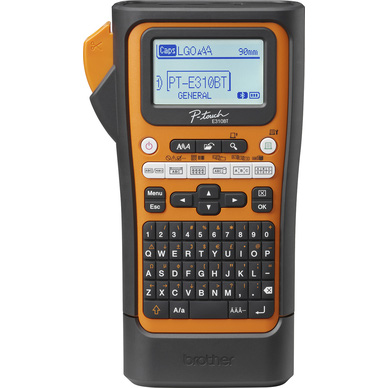
Brother PT-E310BT
Brother’s electrician-range handhelds are built for the conditions a survey van actually lives in, and the E310BT gets the balance right: a rubber-armoured body that shrugs off being dropped down a loft hatch, hot keys that print a cable wrap, cable flag or general label without retyping the layout each time, and laminated TZe tape that survives a damp sample bag rather than smudging in it. Bluetooth pairing means labels can be typed and previewed on a phone; the physical QWERTY keyboard still works when a phone isn’t to hand or gloves are on.
Typically £140–£175
Check price on AmazonHow I judge a label printer
Laminated tape over direct thermal, for anything that leaves the site. A direct-thermal label — the kind printed without a ribbon or laminate — fades within months of daylight and rubs off if it gets wet or brushes against something. That is fine for a temporary box label, useless on a sample bag that might sit in a lab’s in-tray for a fortnight or a meter cupboard label meant to last the life of the installation.
Hot keys for the labels actually repeated on a survey. Cable wrap, cable flag, sample reference, room ID — the same handful of formats get printed over and over, and a printer with a dedicated key for each saves retyping the layout from scratch every time, which matters more on site than a long list of clip-art symbols.
A label width range that stretches from a sample tag to a cable ID. A 6mm label wraps a probe or a small sample bag; a 24mm label is what most consumer-unit and cable-ID jobs actually need. A printer limited to one narrow width ends up doing only half the job it was bought for.
Usable one-handed, in a loft, with the other hand on a torch. A backlit screen, a keyboard laid out for gloved fingers and a body that survives being dropped matter more on a genuine site printer than anything on the spec sheet about app polish.
Battery type that matches how the printer is actually used. A printer that lives in the van and gets picked up once a week is better served by replaceable AA or AAA batteries than a rechargeable pack that is flat by the time it is needed; one used daily is the reverse.
The comparison
| Model | Label type | Max width | Typical price | Best for | |
|---|---|---|---|---|---|
| Brother PT-E310BT | Laminated TZe | 24mm | ~£155 | All-round site printer | View |
| Brother PT-E560BT | Laminated TZe | 24mm | ~£245 | Data/M&E professional | View |
| DYMO Rhino 5200 | Industrial vinyl | 19mm | ~£150 | Cable & patch-panel ID | View |
| DYMO LabelManager 160 | D1 tape | 12mm | ~£40 | Simple general labelling | View |
| Brother PT-H110 | Laminated TZe | 12mm | ~£38 | Budget Brother handheld | View |
| DYMO LabelWriter 450 | Direct thermal roll | 56mm | ~£85 | Desktop batch printing | View |
| Niimbot D110 | Direct thermal | 15mm | ~£25 | Phone-only, ultra-budget | View |
The picks in detail
Brother PT-E310BT
Best overall — rugged, Bluetooth, hot keys for repeat labels
This is the top pick above, and the case for it holds up in the detail: the rubber-armoured body is built to the same drop-resistant standard as Brother’s other trade-range tools, the backlit LCD is readable in a dim roof space, and the dedicated hot keys for cable wrap, cable flag and general labels mean a repeat job doesn’t need retyping the layout each time. Bluetooth pairing to a phone covers the quick jobs; the physical keyboard covers everything else, including when gloves make a touchscreen useless.
For
- Rubber-armoured body built for drops and site conditions
- Hot keys print repeat label formats without retyping
- Bluetooth and physical keyboard both work, so neither is a single point of failure
Against
- 24mm is the widest tape it takes, same as the pricier Brother below
- No WiFi, so it can’t be shared across a small team the way the E560BT can
Typically £140–£175
Check price on AmazonBrother PT-E560BT

Best for data/M&E professionals
The E560BT sits above the E310BT in Brother’s electrician range, and the extra spend buys WiFi as well as Bluetooth — useful where more than one person needs to print to the same labeller, or where it stays connected to an office network rather than paired to a single phone. The same rugged, rubber-armoured build carries over, along with a wider library of pre-built wiring-regulation and data-infrastructure symbols, which matters more on M&E-heavy retrofit jobs than on a routine survey.
For
- WiFi as well as Bluetooth, so it can serve more than one user
- Wide library of wiring-regulation and network symbols
- Same rugged build as the E310BT, one size up
Against
- Noticeably more expensive for features a solo surveyor rarely needs
- Same 24mm maximum tape width despite the higher price
Typically £220–£270
Check price on AmazonDYMO Rhino 5200
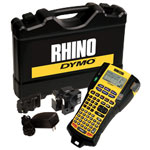
Best for cable and patch-panel identification
The Rhino 5200 is built for a narrower job than the Brothers above it — wire, cable, terminal block and patch-panel labelling to ANSI/TIA-606 standards — and it does that job with dedicated hot keys that size and space cable-wrap and flag labels automatically, plus the ability to print Code 39 and Code 128 barcodes where a job actually needs one. Industrial vinyl and heat-shrink label stock is rated for chemical, heat and UV exposure, which suits a label going somewhere genuinely hostile rather than a filing cabinet.
For
- Hot keys purpose-built for cable, wire and patch-panel labels
- Barcode printing where asset tracking actually needs it
- Industrial label stock rated for heat, chemicals and UV
Against
- 19mm maximum width is narrower than the Brother picks
- Barcode and hot-key features go unused on jobs that don’t need cable ID
Typically £120–£180
Check price on AmazonDYMO LabelManager 160
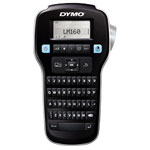
Best simple general-purpose handheld
Where the picks above are built around a specific trade job, the LabelManager 160 is a plain handheld label maker for everything else — kit box labels, file folders, van storage bins — at a fraction of the price. A full QWERTY keyboard and a large preview display make it quick to use without hot keys or an app, and it runs on AAA batteries rather than a rechargeable pack, so it doesn’t go flat sitting unused in a van for a month between jobs.
For
- Genuinely cheap for a full-keyboard handheld
- AAA batteries rather than a rechargeable pack that can go flat unused
- Large preview display reduces typos before printing
Against
- D1 tape is paper-laminate, less durable than Brother’s TZe on a damp sample bag
- No hot keys or templates for repeat label formats
Typically £35–£50
Check price on AmazonBrother PT-H110
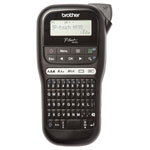
Best budget Brother handheld
The H110 is Brother’s entry-level handheld, and it keeps the one feature that matters most from the pricier trade-range tools above it: genuine laminated TZe tape, rather than the paper-based tape most budget label makers use. What it drops is the rugged casing and hot keys — this is a light, plain plastic body meant for a desk or a toolbox rather than a loft — but for anyone who mainly needs durable labels on a budget rather than a printer built to survive being dropped, it is the cheaper way to get Brother’s tape quality.
For
- Genuine laminated TZe tape at a budget price
- Simple QWERTY keyboard, no app or pairing needed
- Light enough for a jacket pocket
Against
- Plain plastic body, not rated for the drops the E-series tolerates
- No hot keys for repeat label formats
Typically £30–£45
Check price on AmazonDYMO LabelWriter 450
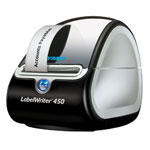
Best for batch printing before a site visit
Every other printer here is handheld; the LabelWriter 450 is a desktop machine that plugs into a PC and prints from software rather than a built-in keyboard, and that trade-off is worth making for one specific job — printing a sheet of numbered sample or evidence labels in the office before a visit, rather than typing each one out on site. At 51 labels a minute it does that in seconds, and because it prints direct thermal it needs no ink or ribbon, though that same process means the labels are not as fade-resistant as laminated tape.
For
- Fast batch printing of numbered labels before a visit
- No ink or ribbon to run out mid-job
- Wide 56mm label width suits file and evidence-bag labelling
Against
- Desktop only — no keyboard, so nothing can be typed on site
- Direct thermal print fades faster than laminated tape in daylight
Typically £70–£100
Check price on AmazonNiimbot D110
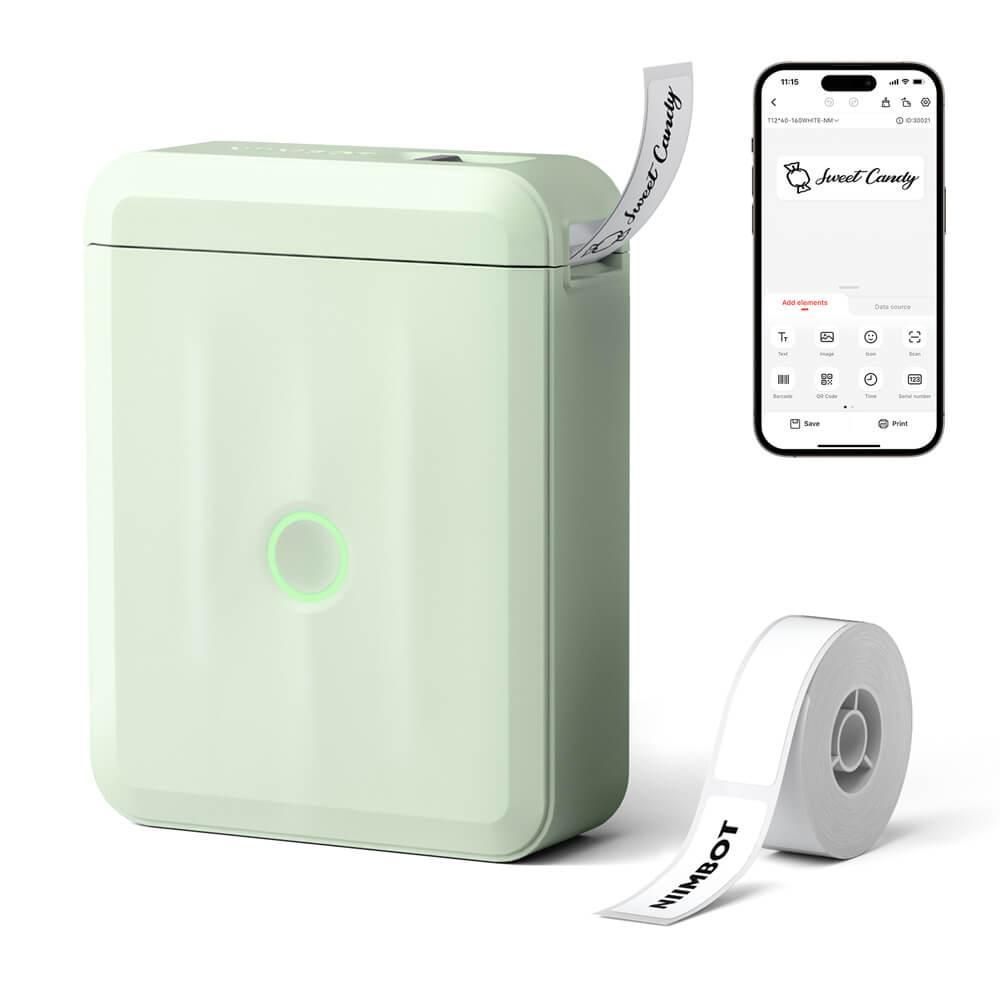
Best ultra-budget, phone-only option
The D110 is a different category again — a genuine keychain-sized printer controlled entirely through a phone app rather than a built-in keyboard — and it is worth including for exactly the job the app suits: quick, disposable labels typed and previewed on a phone that’s already in a pocket, printed on the spot in seconds. It is direct thermal like the LabelWriter, so the same fading caveat applies, and there is no way to type a label without a phone in hand, which rules it out for anyone who wants a printer that works on its own.
For
- Cheapest printer in this comparison by a distance
- Small enough to live in a pocket or glovebox permanently
- App preview catches typos before anything prints
Against
- No keyboard — a phone is required to print anything
- Direct thermal labels fade faster than laminated tape
Typically £20–£30
Check price on AmazonWhat actually matters — and what doesn’t
Laminated tape matters more than tape colour or symbol count. A label that has to survive being on a sample bag, a loft hatch or a meter cupboard for years needs Brother’s TZe-style laminated tape or DYMO’s industrial vinyl, not a direct-thermal print that fades within months regardless of how many clip-art symbols the printer’s library claims to hold.
Hot keys save more time on site than a bigger font library. The handful of label formats used on a repeat basis — cable wrap, sample reference, room ID — are worth a dedicated key each; a longer list of fonts and symbols nobody uses on a survey is not.
WiFi and app connectivity are conveniences, not requirements. A solo surveyor gets no practical benefit from a printer that can be shared across a network; a physical keyboard and a Bluetooth pairing to one phone cover everything a one-person site visit actually needs.
Barcode printing is only worth paying for if something is actually scanning it. The Rhino 5200’s barcode capability is genuinely useful for a practice tracking equipment by scan, and dead weight for one that isn’t — it is worth checking which category a given firm falls into before paying the premium for it.
Questions I get asked
What’s the best way to label a sample being sent off for testing?
A laminated label, not a marker pen direct on the bag. Ink rubs off inside a sealed sample bag long before it reaches a lab, and a loose paper tag can separate from the sample it was meant to identify. A small laminated label printed with a reference number that matches the site notes, stuck to the outside of the bag, survives handling and transit far better than either.
Do meter cupboard and loft hatch labels actually need to be this durable?
For retrofit work, generally yes. PAS 2035 and most competent-person schemes expect installation records to remain legible for the life of the measure, which for loft or cavity insulation can mean decades. A direct-thermal label printed on a budget printer can fade to blank within a year or two in a sunlit meter cupboard; laminated tape is built to survive that timescale.
Can labels be printed from a phone on site, without carrying a printer with a keyboard?
Yes, on any of the Bluetooth-enabled printers here, including the Niimbot and both Brother E-series picks — the label is typed and previewed in an app and sent to the printer over Bluetooth. The trade-off is that the printer becomes useless without the phone, which is why the picks with a physical keyboard as well as Bluetooth are the safer choice for anyone who doesn’t want a single point of failure.
Is DYMO or Brother tape better for site use?
Both make a laminated option that performs well — Brother’s TZe range and DYMO’s industrial vinyl for the Rhino series — and the practical difference is availability and format rather than durability: TZe cassettes fit a wider range of Brother printers and are stocked more widely, while DYMO’s Rhino tape is built specifically around the cable and patch-panel hot-key templates the 5200 uses.
A label on a sample bag or a meter cupboard is a small thing next to working out what’s actually wrong with a property and what it will cost to put right — which is what a retrofit assessment or building survey is for. If you need one anywhere in Sussex, Kent or Surrey, get in touch — or browse the rest of the field-kit guides, including the rugged tablets that cover the other half of the report workflow.
Disclaimer. This guide is general information, not a substitute for the manufacturer’s instructions, current PAS 2035 guidance, or your own judgement for your circumstances. Prices are indicative, move constantly and were checked at the time of writing; the linked page always shows the current price. As an Amazon Associate I earn from qualifying purchases.