The back of a survey van is worth more than the van itself. A thermal camera, a couple of laser levels, a damp meter, a borescope, ladders and the odd EPC gadget add up to several thousand pounds of kit that a thief only has to recognise by the badge on the door. A GPS tracker doesn’t stop that break-in — a decent slamlock or lock protector does more of that work — but it answers the one question that actually matters once the van’s gone: where is it now, and is it still moving.
Every tracker in this guide needs an active data connection to do that job properly — a SIM card, built in or supplied, reporting position back over the mobile network in something close to real time. That’s the trade-off against a passive tag: genuine live tracking, geofence alerts and a movement notification the moment the van starts, rather than a last-known position from whoever’s phone happened to walk past. It costs a modest monthly, annual or multi-year plan on top of the hardware, which is worth budgeting for before comparing device prices alone.
None of the units below have been bolted under an actual wheel arch or wired into an actual ignition feed on a job of mine — what follows is built from manufacturers’ specifications and the recurring themes in owner feedback, filtered through what a working surveyor’s van needs rather than what a forty-vehicle fleet needs. First, the one I’d fit.
The one I’d buy
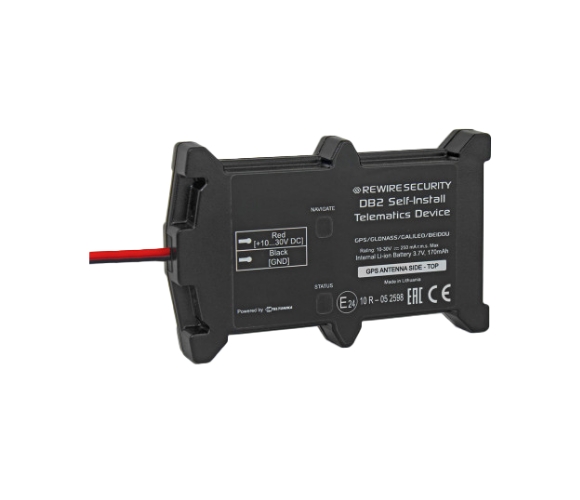
REWIRE SECURITY DB2 4G GPS Tracker
The DB2 hardwires onto a 10–30V feed with two wires and an internal antenna, which means it starts working within minutes of fitting and then never needs a second thought — no magnet to reseat, no battery to remember to charge. Rewire Security is a UK company running its own GPSLive platform and app, covering geofence, movement and low-battery alerts, and the device is priced honestly rather than sold as a loss-leader ahead of an expensive contract. For a van that’s driven every working day and rarely swapped, permanently wired beats portable.
Typically £30–£40, plus a subscription plan from around £5 a month
Check price on AmazonHow I judge a GPS tracker for a van
Hardwired or magnetic. A hardwired tracker runs off the vehicle’s own power, so it never needs charging and stays live for the life of the van — the trade-off is a proper two-wire install, either done yourself or by a fitter. A magnetic or portable unit is tool-free and can move between vehicles in seconds, but it only works for as many days as its battery lasts and needs remembering to charge.
Subscription cost and how it’s structured. Every tracker here needs an ongoing SIM or data plan to report position live — treat the device price as half the story. Monthly and annual plans cost more per month but keep you free to walk away; long multi-year plans look cheap per month but tie the van’s tracking to one supplier for years.
The alerts that actually matter on a work van. A geofence alert (the van leaves a set area outside working hours), a movement or tow alert, and an unauthorised-start alert do the real work. An instant push notification the moment something happens beats a slicker app that only tells you if you think to open it.
Update frequency, kept in proportion. A tracker reporting every ten seconds sounds precise, but a position every one to two minutes is plenty to follow a moving van in the minutes after a theft. The real difference between trackers is how reliably the signal gets through, not how often it tries.
Battery life and where it has to hide. A magnetic tracker tucked under a wheel arch or chassis rail is only useful for as many days as the battery actually lasts under real movement, not the optimistic standby figure on the box — and the mounting has to survive potholes and pressure washing without working loose.
The comparison
| Model | Install type | Power | Typical price | Best for | |
|---|---|---|---|---|---|
| REWIRE SECURITY DB2 4G | Hardwired, 2-wire self-install | Permanent, no charging | ~£30–£40 | Best overall | View |
| REWIRE SECURITY DB1 Advanced | Hardwired, optional immobiliser relay | Permanent + backup battery | ~£55–£65 | Premium/professional pick | View |
| SafeTag Mag 4G | Magnetic, no wiring | Rechargeable, weeks per charge | ~£35–£45 | Best magnetic/covert | View |
| Optimus 2.0 | Magnetic/portable, no wiring | Rechargeable, up to 2 weeks | ~£40–£50 | Best for multi-asset tracking | View |
| SafeTag Mini 4G | Rechargeable, no wiring, compact | Rechargeable, 2–6 days | ~£25–£35 | Best compact | View |
| REWIRE SECURITY 104N | Magnetic, no wiring | Rechargeable, up to 21 days | ~£20–£30 | Best on a budget | View |
The picks in detail
REWIRE SECURITY DB2 4G GPS Tracker
Best overall — permanently wired, nothing to remember
The DB2 is built around a GPS/GNSS module and a GSM/GPRS radio with internal antennas, wired straight onto the vehicle’s own 10–30V supply so it needs no external aerial and no charging routine. Once it’s in, it stays live for the life of the van, reporting through Rewire’s GPSLive app and web platform with geofence, movement and low-battery alerts. It’s a genuine two-wire self-install for anyone reasonably confident with a multimeter, and straightforward for a auto-electrician to fit in minutes if not.
For
- Permanently powered — never needs charging
- Genuine 2-wire self-install, UK company and app
- Honest device price rather than a loss-leader-plus-contract model
Against
- Needs basic electrical confidence, or a fitter, to wire in
- Subscription required on top of the device price
Typically £30–£40, plus a subscription from around £5 a month
Check price on AmazonREWIRE SECURITY DB1 Advanced GPS Tracker
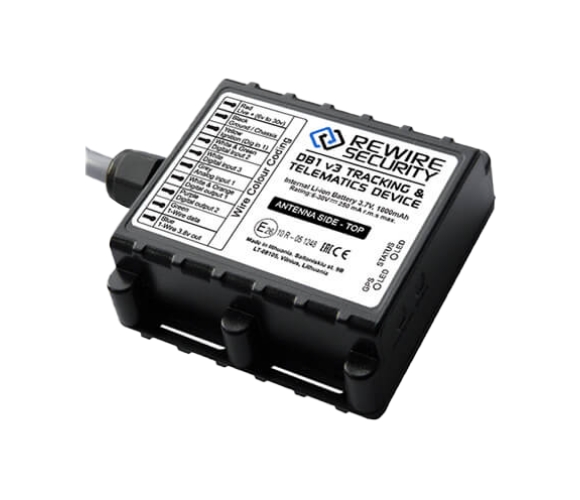
Premium/professional pick — remote immobilisation and driver reporting
The DB1 Advanced is the same hardwired principle as the DB2, built up with dual internal antennas for better accuracy and an optional remote immobilisation relay that can prevent the engine restarting once the van is stationary. It also logs overspeed events and driver-behaviour reports, aimed squarely at businesses running more than one vehicle, though a sole trader gets the same benefit from a single van. The immobiliser option costs a little more on top and needs using with care — it’s a stationary-vehicle feature, not something to trigger on a moving one.
For
- Optional remote immobilisation relay
- Driver behaviour and overspeed reporting
- Dual internal antennas for better accuracy
Against
- Immobiliser add-on costs extra and needs careful use
- Priciest device in this guide before the subscription
Typically £55–£65, plus a subscription from around £8 a month
Check price on AmazonSafeTag Mag 4G GPS Tracker

Best magnetic/covert — strong hold, real-world weeks between charges
SafeTag’s Mag 4G is built for hiding rather than fitting — eight strong magnets hold it against a chassis rail or wheel arch, with no wiring or tools involved. The standby figure claims up to 90 days, though the more realistic figure with an hour or two of daily movement is somewhere between two and four weeks, still comfortably longer than a working week between charges. It ships with a SIM and a free trial, and rapid USB-C charging means topping it up is quick when it does need it.
For
- Strong magnets, genuinely covert placement
- Real-world weeks between charges
- UK company, SIM included, 7-day free trial
Against
- Still needs remembering to charge eventually
- Magnetic mount can work loose on rough tracks if not seated well
Typically £35–£45, plus a subscription from around £5 a month
Check price on AmazonOptimus 2.0 GPS Tracker
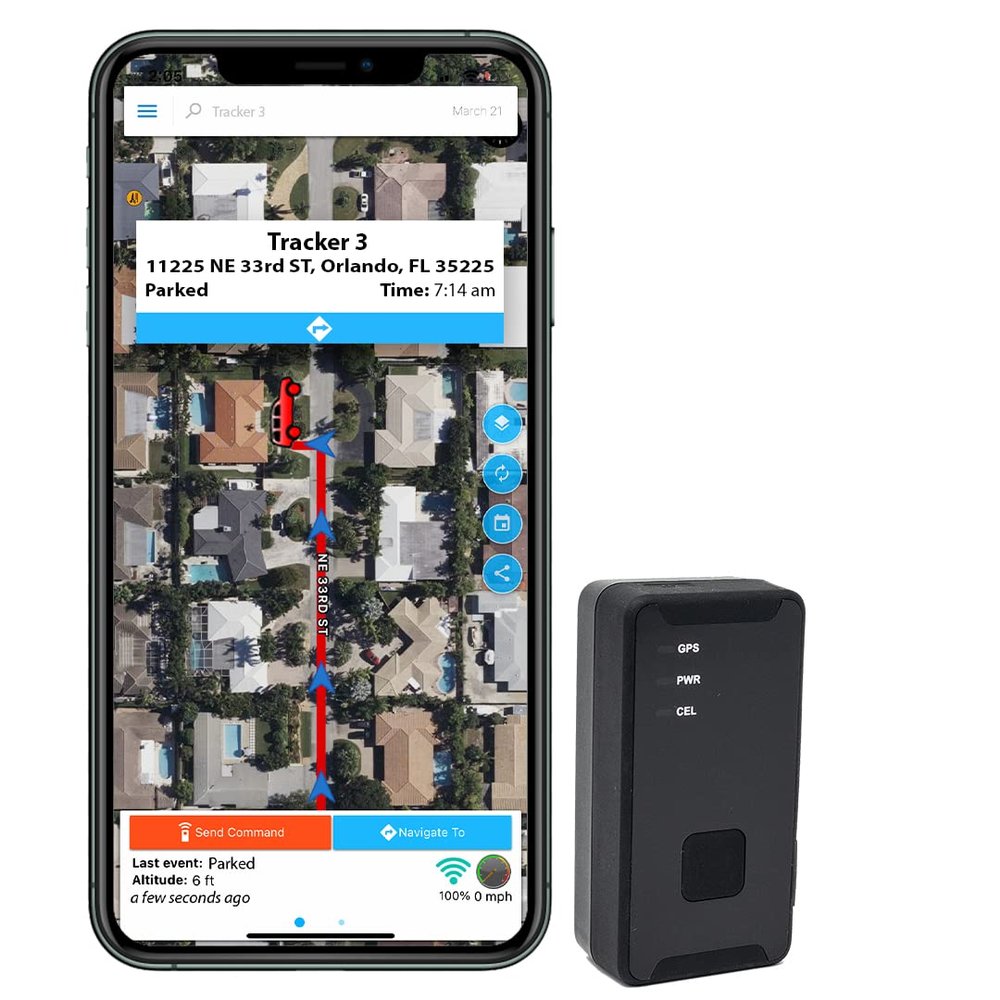
Best for multi-asset tracking — the same device covers the van and the kit inside it
Optimus 2.0 is a long-established 4G LTE tracker sold for vehicles, assets and people rather than vans specifically, which is exactly why it earns a place here — the same unit that lives in the van one week can go into a site tool store or a trailer the next. Reporting is configurable down to ten-second intervals, with email and text alerts for movement, speeding, geofence and an SOS button, and battery life stretches to around two weeks at a one-minute reporting rate. Worth knowing before buying: like any GPS device, it loses signal inside a fully enclosed metal load area, so it needs siting with a sightline rather than buried under tools.
For
- Works equally well on a van, a tool chest or an asset
- Configurable reporting down to 10 seconds, SOS button
- Around 2 weeks’ battery life at typical reporting rates
Against
- Loses signal in a fully enclosed metal load area
- UK subscription terms are less transparent than the British brands here
Typically £40–£50, plus an ongoing data plan sold separately
Check price on AmazonSafeTag Mini 4G GPS Tracker

Best compact — small enough to tuck almost anywhere
The Mini 4G is SafeTag’s smallest unit, built for discretion over battery life — a genuinely pocketable size that tucks into a door cavity, glovebox or bag rather than needing a magnetic mount underneath the van. It runs on the same real-time platform and app as the Mag 4G, reporting location roughly every 40 seconds, with the trade-off being a battery that lasts days rather than weeks between charges. For a second unit kept as a backup, or for tracking something smaller than the van itself, it’s the cheapest way into SafeTag’s ecosystem.
For
- Genuinely compact, easy to keep out of sight
- Same app and platform as the pricier Mag 4G
- Cheapest SafeTag device in this guide
Against
- Battery life measured in days, not weeks
- No magnetic mount as standard for underneath the van
Typically £25–£35, plus a subscription from around £5 a month
Check price on AmazonREWIRE SECURITY 104N 4G Magnetic GPS Tracker
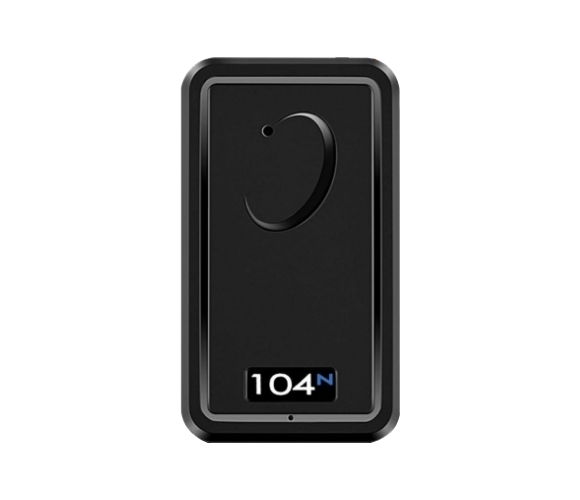
Best on a budget — cheapest way to add live tracking to a van
The 104N covers the basics without asking for a screwdriver: a magnetic base for tool-free mounting, a 5,000mAh battery good for up to 21 days between charges, and the same GPSLive app and platform as Rewire’s hardwired units. It arrives pre-configured with a multi-network SIM covering 120 countries, so there’s nothing to set up beyond mounting it and downloading the app. It’s the entry point into live tracking rather than a feature-rich unit, but for a van that mostly needs a location and a movement alert, that’s all it has to be.
For
- Cheapest tracker in this guide
- No wiring, no tools, fitted in seconds
- Up to 21 days between charges
Against
- Battery life trails the pricier magnetic units here
- Basic feature set next to Rewire’s own DB-series
Typically £20–£30, plus a subscription from around £5 a month
Check price on AmazonWhat actually matters — and what doesn’t
Hardwired beats magnetic for a daily driver. A magnetic tracker is only as reliable as the person remembering to charge it. For a van that goes out every working day, a hardwired unit that draws power from the vehicle itself removes that entire failure mode — it’s the same reason a hardwired dash cam beats a battery one for parking-mode cover.
Remote immobilisation is a genuine feature, not a gimmick — used correctly. Being able to stop a stationary van restarting is a real deterrent once it’s recovered or during a confrontation, but it’s explicitly a stationary-vehicle feature. No system here is meant to cut an engine while the van is moving, and it shouldn’t be treated as one.
A ten-second reporting interval sells better than it performs. For following a van in the minutes after a theft, a location every one or two minutes is functionally identical to one every ten seconds — what actually matters is whether the signal gets through reliably, not how often the device tries to send it.
A long lock-in contract looks cheap per month and isn’t. Multi-year subscription plans bring the monthly cost down, which is exactly what makes them easy to sell, but they tie a van’s tracking to one supplier’s app and network for years. A monthly or annual plan costs more day to day but keeps the option to switch if the service or coverage disappoints.
None of the trackers here are Thatcham-accredited. Insurer-recognised Thatcham Category S5/S7 trackers exist, cost considerably more, and need professional fitting — a different category aimed at high-value vehicles and fleet insurance discounts. The trackers in this guide are aimed at the practical job of knowing where the van is, not at meeting an insurer’s accreditation list, and are priced accordingly.
Questions I get asked
Do I need a tracker if the van already has good locks and a dash cam?
Yes — they cover three different moments, not one. Slamlocks and lock protectors slow down or defeat the break-in itself; a dash cam with parking mode records evidence at the point of attack; a GPS tracker answers the question neither of those can, which is where the van actually is once it’s gone. Each layer covers a gap the others leave open.
Can I just use an Apple AirTag instead of a proper tracker?
Not really, for van theft specifically. An AirTag relies on Bluetooth and Apple’s crowd-sourced Find My network rather than genuine live GPS reporting, so it works well in a busy city and patchily on a rural lane where fewer iPhones pass by to relay a position. It also has no continuous tracking or geofence alert — you check it, it doesn’t proactively warn you. Worth knowing the other side of that coin too: thieves themselves have started planting AirTags on vehicles they’re scouting, so an unexpected one turning up isn’t always yours.
Do GPS trackers actually get stolen vans back?
They meaningfully improve the odds rather than guarantee anything. A live position reported to the police promptly gives a real chance of recovery before a van is stripped or moved on; a tracker sat unnoticed in a glovebox is easy for a thief to find and bin, while one hidden under a chassis rail or wired in out of sight is much harder to locate and disable in the time a thief usually has. No tracker here is a substitute for good locks in the first place.
Will fitting a tracker reduce my van insurance?
Sometimes, but usually only for the pricier Thatcham-accredited category rather than the trackers in this guide. It’s worth asking an insurer directly what they recognise before buying on the promise of a discount — the practical trackers here are bought for genuine location and recovery, and any insurance saving on top of that should be treated as a bonus rather than the reason to buy.
A tracker is one layer in protecting what’s in the van, not the whole answer — it works best alongside proper van security locks and a dash cam that covers the doors while parked. The practice carries out building surveys, EPCs and PAS 2035 retrofit assessments across Sussex, Kent and Surrey, all run out of a van carrying exactly this kind of kit — get in touch. Or browse the rest of the field-kit guides.
Small print. This guide is general information, not security or insurance advice; fitting a tracker does not guarantee recovery of a van or its contents, and any specific insurance, warranty or fitment questions should be checked with the manufacturer, insurer or installer concerned. Prices are indicative, move constantly and were checked at the time of writing; the linked page always shows the current price. As an Amazon Associate I earn from qualifying purchases.