“Damp proof paint” is one of the more misleading names on a DIY shelf. Most people searching it have just found a patch of damp or a run of black mould and want the single-coat fix the name seems to promise. Read the small print on any of these tins and none of them claim to cure rising damp, penetrating damp, or a leaking gutter — nothing in a tin does that. What they actually do, and do reasonably well when the right one's picked for the right job, is block an old stain from bleeding through fresh decoration, or resist mould regrowing on a wall that's staying slightly damp regardless. That's a real, useful job. It just isn't the job most buyers think they're getting.
On survey work I see the aftermath of this more often than the cause. A bedroom ceiling painted brilliant white over a brown tide mark that's back within six months. A bathroom wall refreshed in anti-mould emulsion while the extractor fan hasn't run in years. The paint isn't lying — the tin says “resists mould growth” or “blocks stains,” not “cures damp” — but it's an easy product to reach for instead of doing the actual diagnosis, and an efficient way to make a problem invisible for a few months, which matters rather a lot if a house is about to go on the market.
There are two places these products earn a genuine spot on a shopping list: as the mould-resistant finish coat once the real cause — usually poor ventilation, sometimes a fixed leak — is actually dealt with, and as part of a proper tanking system on a below-ground wall, where a purpose-built waterproofer is doing structural work rather than decorative work. Below is how to tell those two jobs apart, six products worth having depending on which one applies, and where I think the marketing oversells what's actually in the tin.
The one I’d buy
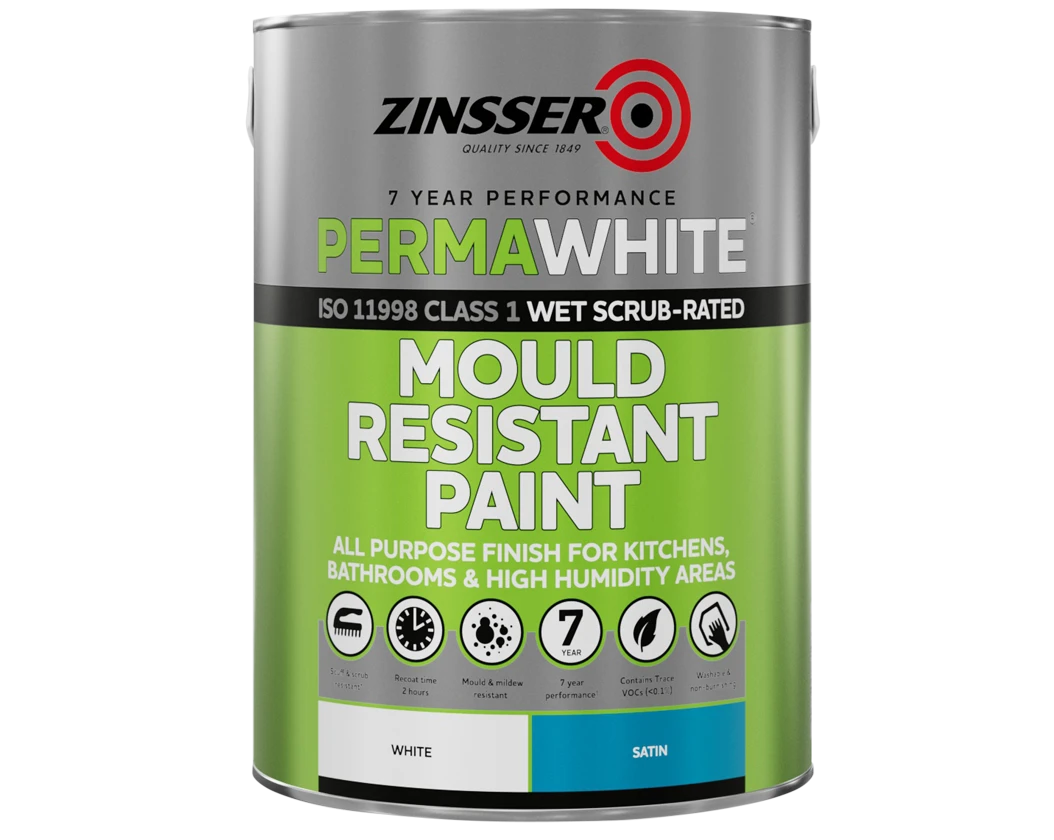
Zinsser Perma-White Interior 2.5L
Self-priming, water-based, and one of the few products in this category tradespeople reach for by name rather than whatever's nearest on a shelf, with manufacturer testing backing a seven-year mould-resistance claim. The honest use case is the finish coat in a bathroom or kitchen once the ventilation's actually sorted — not a substitute for sorting it.
Typically £35–£45 (2.5L, matt or satin)
Check price on AmazonHow I judge a damp proof or anti-mould paint
What it actually claims, printed on the tin. “Resists mould growth for five years” and “permanently blocks damp stains” are two different, narrower promises than “damp proof.” The honest products here are specific about which one they're making; treat any packaging that implies it cures damp itself with real suspicion.
Decorative finish versus structural waterproofer. This is the single biggest distinction in the whole category. A mould-resistant emulsion is a decorative topcoat doing a cosmetic job on a wall that's basically sound. A tanking-grade waterproofer is formulated to physically resist water pressure through bare masonry and belongs in a below-ground wall system, applied as part of a proper job rather than brushed on as decoration.
The mould-resistance mechanism, and its limits. A biocide built into the paint film discourages mould from colonising the surface, for a manufacturer-stated number of years. It only works on the top, exposed layer — paint over it with an ordinary emulsion later and the protection is gone, which is an easy mistake for a decorator or landlord to make without realising.
Stain-blocking as a separate job from mould-resistance. Some of these products only stop an old tide mark or mould scar bleeding through fresh paint or paper — they carry no claim about resisting future mould at all. That's a genuinely useful, narrow job once the cause behind the mark is dealt with; it says nothing about preventing it coming back if the cause isn't.
What it can go over, and what happens if the real problem isn't fixed. Coverage claims, damp-tolerant application (some can go on a wall that isn't fully dry yet) and substrate compatibility with plaster, masonry or old paintwork all matter for the job in hand. None of it changes what happens if the underlying moisture keeps coming: blistering, peeling, and the same stain working its way back through, whatever's written on the tin.
The comparison
| Model | Type | Claims | Typical price | Best for | |
|---|---|---|---|---|---|
| Zinsser Perma-White Interior 2.5L | Mould-resistant finish paint | Self-priming, 7-year mould resistance | ~£35–£45 | Genuine finish coat once the cause is fixed | View |
| Zinsser Watertite 5L | Masonry waterproofer, tanking-grade | Resists water pressure through bare masonry | ~£65–£75 | Cellar and basement walls, professional tanking | View |
| Dryzone Anti-Mould Emulsion Paint 1L | Mould-resistant finish paint | 5-year mould resistance, specialist brand | ~£22–£28 | Finish coat from a dedicated damp-proofing manufacturer | View |
| Dryzone Damp and Stain Seal Paint 500ml | Stain-blocking undercoat | Blocks stain bleed-through only, no mould claim | ~£15–£20 | Covering an old tide mark before redecorating | View |
| Ronseal 6 Year Anti Mould Paint 750ml | Mould-resistant finish paint | 6-year mould resistance | ~£14–£20 | The high-street default, widely stocked | View |
| Polar Anti Mould Paint 2.5L | Mould-resistant finish paint | 5-year mould resistance | ~£25–£35 | Best value for a whole wall or ceiling | View |
The picks in detail
Zinsser Perma-White Interior 2.5L
Best overall — the one finish coat that genuinely earns its price, once the cause is fixed
Zinsser built its reputation on stain-blocking primers before this mould-resistant emulsion, and it shows: it's self-priming straight onto most sound surfaces, dries to a washable finish, and manufacturer testing backs a seven-year claim against mould regrowth. It's the product most often specified where mould resistance genuinely needs to perform — rented bathrooms, communal kitchens, anywhere a landlord needs the finish to last rather than just look good on the day.
None of that changes what it is: a decorative topcoat, not a fix. Used on a bathroom ceiling with a working extractor fan and reasonable heating, it's doing a real job. Used instead of fixing the ventilation, it buys a few extra months before the same black spots return.
For
- Self-priming, no separate primer coat needed on most surfaces
- Manufacturer-tested 7-year mould-resistance claim
- Washable, durable finish for bathrooms and kitchens
Against
- Only protects while it stays the exposed, top surface
- Does nothing for the ventilation or damp actually causing the mould
Typically £35–£45 (2.5L, matt or satin)
Check price on AmazonZinsser Watertite 5L
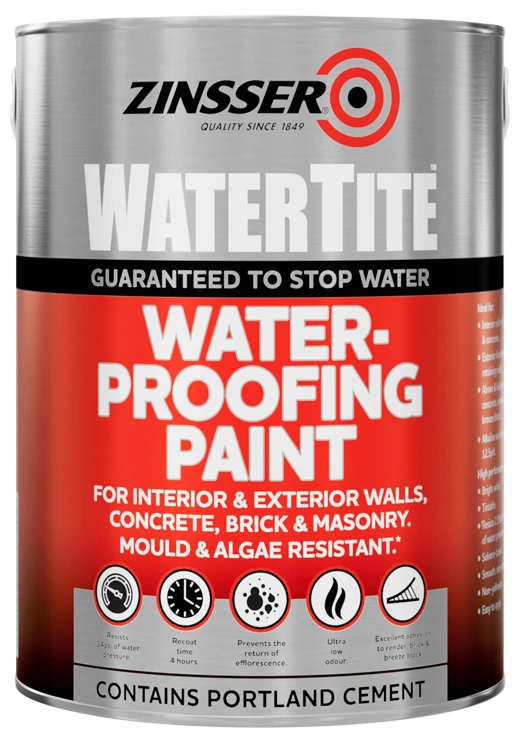
Best for cellar and basement walls — a genuine tanking-grade waterproofer, not a cosmetic finish
This is the one product on this list that belongs in a different category entirely. Watertite is an oil-based waterproofing coating formulated to resist water actively pushing through bare masonry, applied as a two-coat system directly onto concrete, brick or block. It's the sort of product a damp-proofing contractor uses as part of a proper below-ground tanking job, not something reached for on a whim in a bathroom.
That's also its limit: it's one component of a system, not the whole answer. A cellar with a genuine water ingress problem — a high water table, poor external drainage, no sump — needs that addressed too, or the water simply finds the next weakest point. For the legitimate use case named at the top of this guide, treating a below-ground wall as part of a considered waterproofing scheme, it's the honest product to reach for; for painting over a damp patch in a ground-floor lounge, it's the wrong tool entirely.
For
- Genuine tanking-grade waterproofer, not a decorative product
- Applies to bare, damp or dry masonry
- Also carries a mould-resistance claim
Against
- Only one part of a proper waterproofing system, not the whole fix
- Overkill, and the wrong product, for an ordinary decorative job
Typically £65–£75 (5L)
Check price on AmazonDryzone Anti-Mould Emulsion Paint 1L
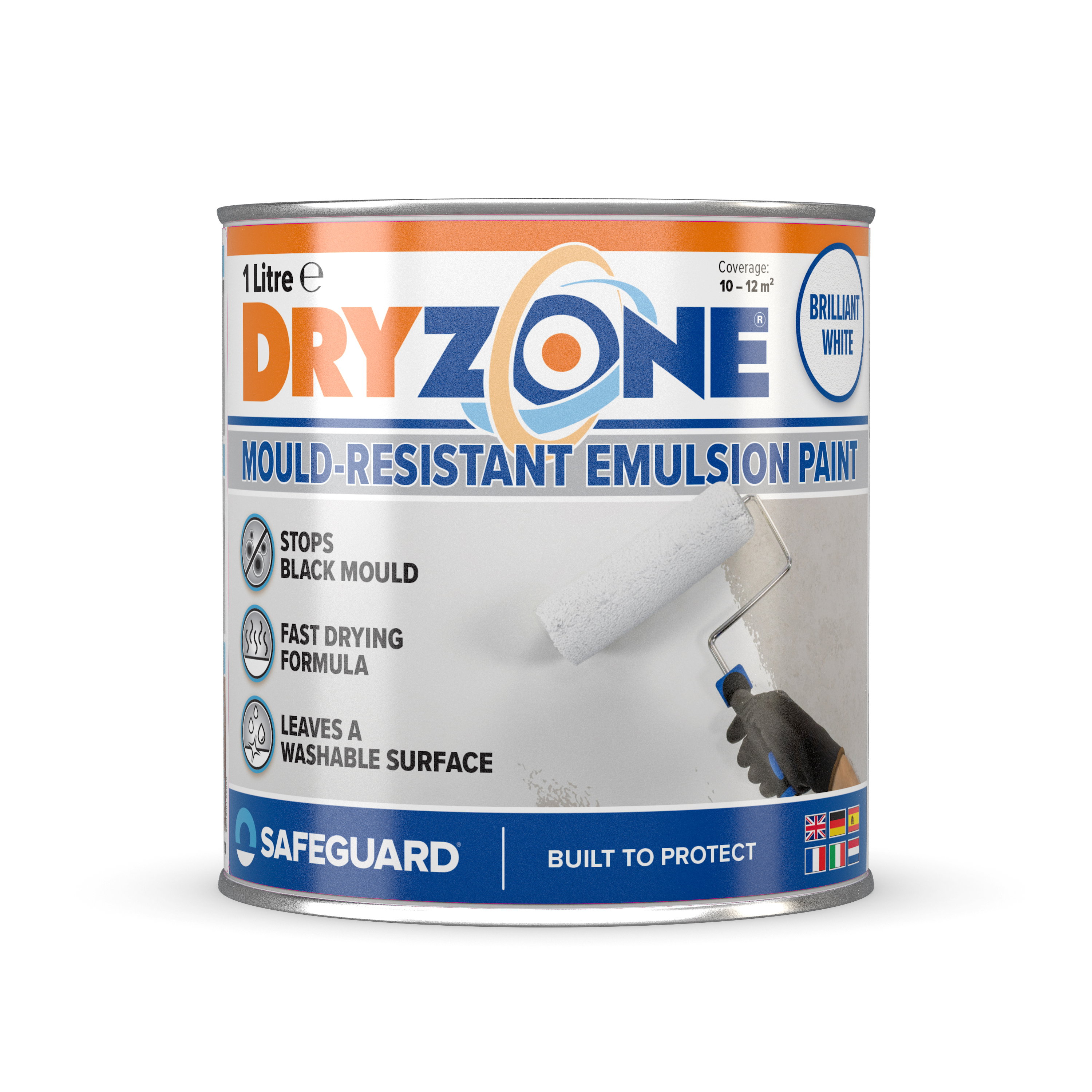
Best from a manufacturer that also sells the actual fix — sold honestly as a finish, not a cure
Safeguard Europe make the Dryzone damp-proofing system — injection damp courses, tanking membranes, the products that actually address rising and penetrating damp — and this is their cosmetic mould-resistant topcoat, sold alongside rather than instead of the real fix. That context is worth something: a company whose main business is diagnosing and treating damp has less incentive to oversell what a tin of paint can do.
On the wall itself it behaves like the other mould-resistant emulsions here — a soft-sheen finish in white or magnolia, rated for around five years of mould resistance in persistently humid rooms once applied over a sound, prepared surface.
For
- From a specialist damp-proofing manufacturer, not just a paint brand
- Available in white or magnolia, useful for a finished room
- Sits alongside the same maker’s actual damp treatments
Against
- Costs more per litre than the high-street default
- Same limits as any finish coat — cosmetic, not curative
Typically £22–£28 (1L)
Check price on AmazonDryzone Damp and Stain Seal Paint 500ml
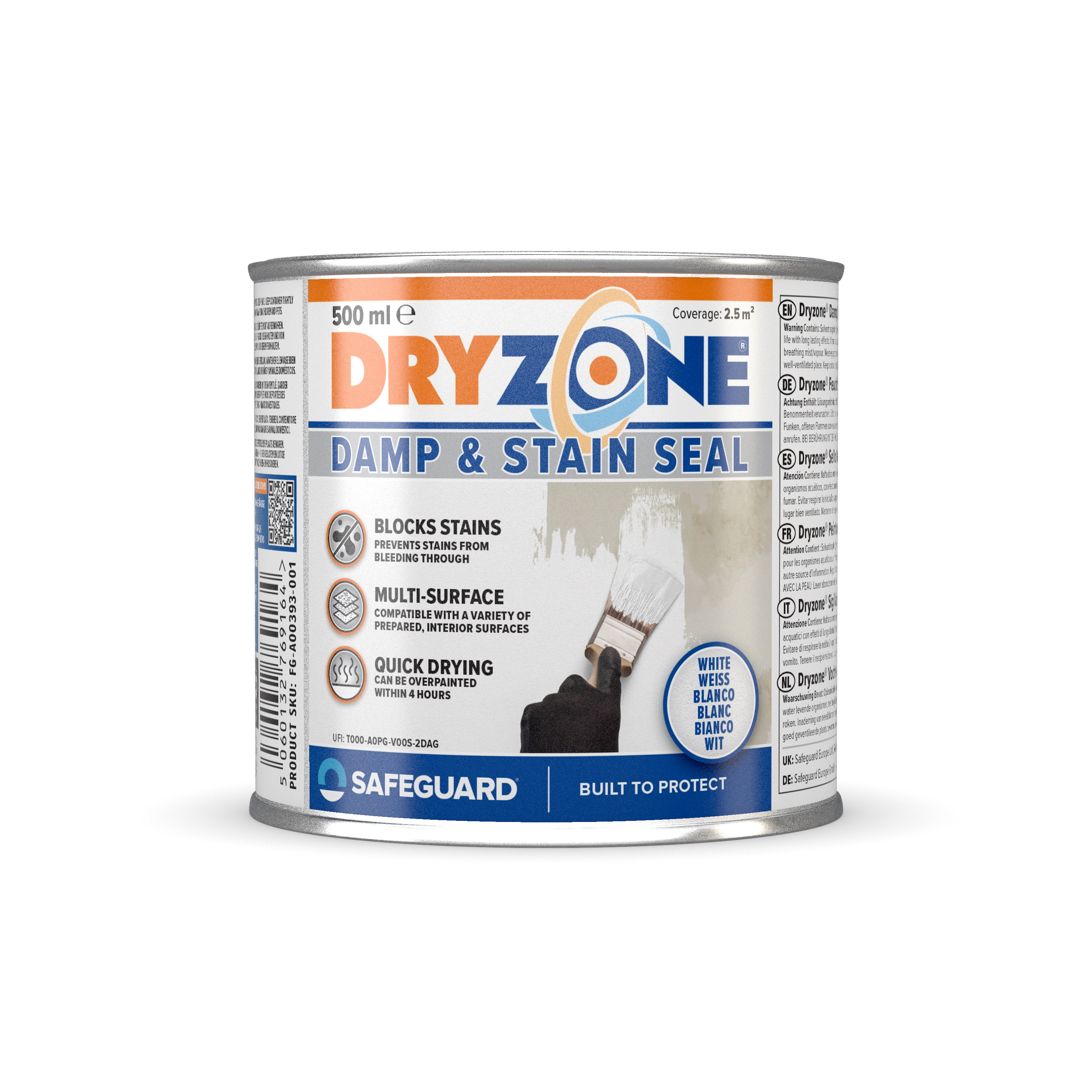
Best for hiding an old stain before redecorating — and the clearest example of this category's limits
This is a stain-block undercoat, not a mould-resistant topcoat, and it's worth understanding the difference precisely because so many buyers assume they're the same thing. It stops an old tide mark, or mould scarring left after a clean, from bleeding back through fresh paint or wallpaper — a genuinely useful job once whatever caused the mark has actually been dealt with. It carries no claim about resisting future mould once painted over with an ordinary topcoat.
Used on a wall that's still damp, it does exactly what you'd expect: the same stain works its way back through, on schedule, regardless of how many coats went on. This is the product for the week after a leak's been fixed, never the substitute for fixing it.
For
- Does the one narrow job it claims, reliably
- Quick drying, overpaintable or paperable within hours
- Can go over a surface that isn't fully dry yet
Against
- No mould-resistant claim of its own once overpainted
- Blocks a stain, doesn't touch the damp causing it
Typically £15–£20 (500ml)
Check price on AmazonRonseal 6 Year Anti Mould Paint 750ml
Best on the high street — the name most people already have in the shed
Ronseal doesn't pitch itself as a specialist damp brand and doesn't need to: this is the straightforward, widely stocked version of the same core promise as the products above, in matt or silk, with a stated six-year mould-resistance claim. For a small bathroom or kitchen job, it's the one most people will already recognise on a shelf at a local trade counter or DIY shed, which counts for something when you just want to get on with it.
The protection depends on staying the exposed surface, same as any of these — painting over it later with an ordinary emulsion, which is an easy mistake for a tenant or a new owner to make without reading the tin, removes the benefit entirely.
For
- Familiar, widely stocked high-street brand
- Matt or silk finish, six-year mould-resistance claim
- Straightforward for a small, single-room job
Against
- Protection is lost if painted over with ordinary emulsion later
- Cosmetic finish, same limits as the rest of this category
Typically £14–£20 (750ml)
Check price on AmazonPolar Anti Mould Paint 2.5L
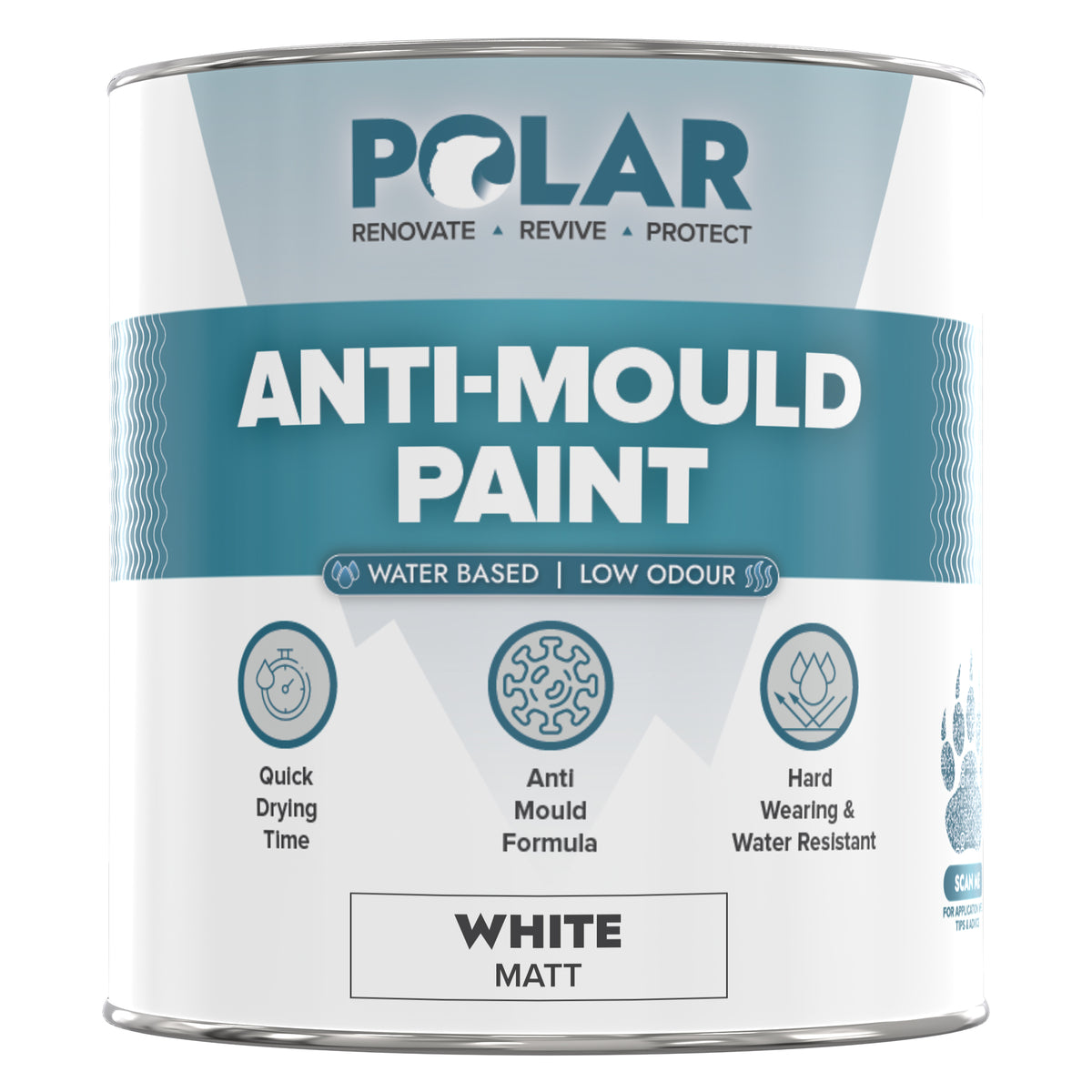
Best value for a bigger area — the cheapest way to cover a whole wall or ceiling
Polar Specialist Coatings is a newer entrant positioning itself as a direct, cheaper alternative to the established names for the same basic job: a matt white mould-resistant emulsion, rated for around five years of protection, available in a 2.5L tin that covers considerably more than the smaller 500ml and 1L sizes most competitors sell at a similar price point.
For one small patch, the smaller sizes from Ronseal or Dryzone are the more sensible buy. For a whole bathroom ceiling or a badly affected chimney breast, the larger tin does more of the job for not much more money.
For
- Best coverage per pound of the products here
- Matt white or magnolia, five-year mould-resistance claim
- Sensible for a whole wall or ceiling rather than a patch
Against
- Newer brand, less of a track record than Zinsser or Ronseal
- Same cosmetic-only limits as every finish paint here
Typically £25–£35 (2.5L)
Check price on AmazonWhat actually matters — and what doesn’t
The paint film only protects itself, not what's under it. Paint an ordinary emulsion over a mould-resistant or stain-blocking product later, whether that's a decorator freshening up a rental or a new owner redecorating, and the protection stops at that layer. It's an easy, invisible mistake, and one reason a “mould-free for six years” guarantee often doesn't survive contact with the next tenant.
“Damp proof paint” has nothing to do with a damp proof course. The name invites the assumption that it works like a chemical injection DPC or a physical membrane. It doesn't — at best it's decorative sealing over a surface. Genuine rising or penetrating damp needs proper diagnosis and treatment; see rising damp treatment costs and damp-proofing costs for what that actually involves.
A cellar or basement wall needs a system, not a coat. Even a genuine tanking-grade product like Watertite is one part of a considered waterproofing scheme — correct preparation, sometimes a full tanking slurry or membrane, proper falls and drainage where water's actively present. A DIY coat on a wet cellar wall without addressing the water table or external drainage tends to fail, or simply pushes the damp sideways to whatever's left untreated.
Condensation-driven mould needs ventilation fixed first, or it comes straight back. Anti-mould paint on a bathroom ceiling with an extractor fan that's broken, or never switched on, delays the regrowth by months rather than years. A dehumidifier and working extraction address the humidity; the paint is what goes on afterwards, not instead.
What salesmen push that you can skip. Multi-tin “systems” bundling a primer, an additive and a topcoat for a straightforward domestic bathroom ceiling are usually paying for marketing rather than performance. A longer stated guarantee — five years versus six — is a smaller factor in whether mould actually stays away than whether the room gets ventilated; that's worth more attention than the number on the tin.
Questions I get asked
Will damp proof paint stop rising damp? No. Rising damp is moisture moving up through a wall from the ground, usually because a damp-proof course has failed or was never installed, and it needs a proper diagnosis and, where confirmed, a chemical injection course or equivalent physical treatment. A tin of paint sits on the surface and does nothing to that mechanism; see rising damp treatment costs for what the actual fix involves.
What's the difference between anti-mould paint and damp-seal or stain-block paint? Anti-mould paint is a finish coat containing a biocide that discourages mould from colonising its own surface for a stated number of years. Damp-seal or stain-block paint is an undercoat that stops an old mark bleeding through fresh decoration — it carries no claim about resisting new mould once something else is painted over it. They solve different, narrower problems than either name suggests.
Can I use anti-mould paint in a cellar? As a cosmetic finish, once genuine waterproofing or tanking has already been done, yes. On an untreated, actively wet cellar wall, no — that needs a tanking-grade product like Watertite applied as part of a proper waterproofing system, ideally specified and fitted by someone who's assessed where the water's actually coming from.
Does a “5 year” or “6 year” mould-resistance guarantee mean anything? It's a genuine manufacturer performance claim under stated test conditions, not a warranty against your particular damp problem returning. It typically assumes correct surface preparation and that the paint stays the exposed, uncoated surface throughout. It says nothing about what happens if the humidity or leak behind the mould was never addressed.
I don’t sell or apply any of these myself, but if a stain or a patch of mould is what's prompted the search, the diagnosis matters more than the tin. For rising or penetrating damp, see rising damp treatment costs and damp-proofing costs; if it's condensation, a dehumidifier and proper ventilation will do more than any paint on the shelf. Where the diagnosis needs a second pair of eyes, the practice carries out building surveys with proper damp investigation as standard — get in touch. There are more field-kit guides covering the rest of the kit worth having.
Small print. This guide is general information, not a diagnosis of damp or mould in your own property; a paint's mould-resistance or stain-blocking claim does not address the underlying cause, which should be identified before any redecoration. Prices are indicative, move constantly and are checked at the time of writing; the linked page always shows the current price. As an Amazon Associate I earn from qualifying purchases.