A block of masonry paint over a hairline crack, a render finish that’s clearly newer than the wall behind it, a mortar joint packed with hard cement pointing where the wall was built with lime — a fair share of the harder questions on a survey can’t be answered by looking at the surface. They need a small, controlled opening into the wall itself: a section of render chased back to check for wall ties, a mortar bed chipped out to look for a DPC that isn’t there, a path cleared to a lintel or flue the drawings alone won’t confirm. A bolster chisel, worked with a club hammer, is what gets you that opening without turning a five-minute look into an afternoon of making good.
It earns its place for a narrower job than the name suggests. Most bolster work on an inspection isn’t demolition — it’s a controlled cut along a line you’ve already chosen: an existing mortar joint, the edge of a crack, the perimeter of a small test opening. A properly forged, hardened edge splits cleanly along that line; a soft or badly ground import glances off, crumbles the masonry wider than intended, or simply won’t bite without three times the effort.
The list below runs from a genuine trade-forged, guarded bolster through to an unguarded traditional pattern for finer work, priced from a few pounds to proper trade money. It sits naturally alongside a crowbar in the same section of the bag — one gets a floor or skirting up, the other gets you into the wall behind it.
The one I’d buy

Roughneck 31-992/SFDI Guarded Brick Bolster 4in x 8½in
Roughneck’s bolster is built the way a trade tool should be: drop-forged carbon steel, heat-treated and hardened, with a hexagonal shaft that sits in the hand and on a sill without rolling off. The 100mm blade is wide enough to face off a brick or cut a clean line through render in one or two passes, and the moulded safety guard stays put rather than sliding down the shaft mid-swing. At just under £12 it costs barely more than the budget options below and does a genuinely better job.
Typically £10–£15
Check price on AmazonHow I judge a bolster chisel
Forged, not cast or stamped. Forging works steel under pressure into a dense, consistent piece; a cheaper stamped or cast blade can carry soft spots invisible until the edge rolls or chips on the first proper strike. A listing naming “drop-forged” or “forged and tempered” is telling you something real; one that just says “steel” usually isn’t.
Blade width matched to the job. A 100mm (4in) blade is the general-purpose size. A narrower 50–75mm blade suits a single mortar joint or a delicate opening where a wide blade would take out more wall than you need to see.
A guard that actually stays put. Most survey-related bolster work is a one-handed swing in an awkward position — low in a crawl space, reaching into a loft, braced against a ladder. A moulded guard bonded to the shaft protects the supporting hand from a mis-hit; a loose sliding disc is worth less than it looks in the photo.
An octagonal or hexagonal shaft, not round. A flat-faced shaft sits still on a sill or board rather than rolling away, and grips better through a gloved hand than a round bar does.
Edge geometry over headline steel grade. A chrome vanadium or carbon-steel label matters less than the bevel itself: a properly ground, moderately acute edge bites and splits along a line, while a blunt or over-steep grind bounces off the masonry rather than cutting it.
The comparison
| Model | Construction | Width | Typical price | Best for | |
|---|---|---|---|---|---|
| Roughneck 31-992/SFDI | Drop-forged, hex shaft, moulded guard | 100mm (4in) | ~£12 | General-purpose opening-up work | View |
| OX Tools OX-P092303 Pro | Chrome vanadium, dual soft-grip guard | 76mm (3in) | ~£17 | A guard built for a full day’s swinging | View |
| Faithfull FAIBB4PG | British Standard, hardened edge, grip | 100mm (4in) | ~£13 | A trade-brand alternative to the top pick | View |
| Draper 63730 | Hand-forged, octagonal shank, BS3066 | 75mm (3in) | ~£12 | A widely stocked DIY/trade middle ground | View |
| Marshalltown M658B14 | Forged & tempered tool steel, no guard | 75mm (3in) | ~£26 | Traditional pattern, finer control | View |
| Silverline PC40 | Forged single-piece steel, octagonal | 100mm (4in) | ~£8 | A genuine budget pick | View |
| AB Tools TE757 | Black-coated high-carbon steel | 100mm (4in) | ~£11 | A cheap spare to leave in the van | View |
The picks in detail
Roughneck 31-992/SFDI Guarded Brick Bolster 4in x 8½in
Best overall — trade-forged, guarded, and priced like a budget tool
This bolster does the general-purpose jobs without compromise: drop-forged carbon steel, heat-treated and hardened at the edge, on a hexagonal shaft that won’t roll off a sill or scaffold board. The 100mm blade covers most opening-up work — render, brick, a mortar bed — without taking out more wall than intended, and the moulded guard is bonded on rather than a loose slip-fit. It isn’t the narrowest tool here for a fine mortar-joint cut, and the guard is single-sided rather than the OX Tools pick’s dual design below, but for the range of opening-up work an inspection calls for, it’s difficult to find better value.
For
- Drop-forged and heat-treated, not cast or stamped
- Hexagonal shaft sits still on a sill or board
- Bonded guard at a budget price
Against
- Not the tool for a narrow mortar-joint cut
- Single-sided rather than a dual hand guard
Typically £10–£15
Check price on AmazonOX Tools OX-P092303 Pro Brick Bolster Chisel 3in x 8½in

Best built — a dual guard that survives a full day of one-handed swinging
OX Tools’ Pro range is aimed at trades who use a bolster daily: chrome vanadium steel for a wear-resistant edge, and a soft-grip handle guarded on both sides of the strike zone rather than just one — genuinely useful insurance for a surveyor working one-handed in an awkward reach, low in a void or braced on a ladder. At 76mm it’s narrower than the Roughneck above, giving more control but needing more passes on a wide render patch, and it sits at the top of the price range here for what remains a hand tool — worth it if the bolster earns its keep regularly.
For
- Dual hand guard, not single-sided
- Chrome vanadium steel for a durable edge
- Soft-grip handle through repeated strikes
Against
- Narrower blade means more passes on a wide opening
- Priced at the top of this list
Typically £15–£20
Check price on AmazonFaithfull FAIBB4PG Brick Bolster 100mm (4in) with Grip
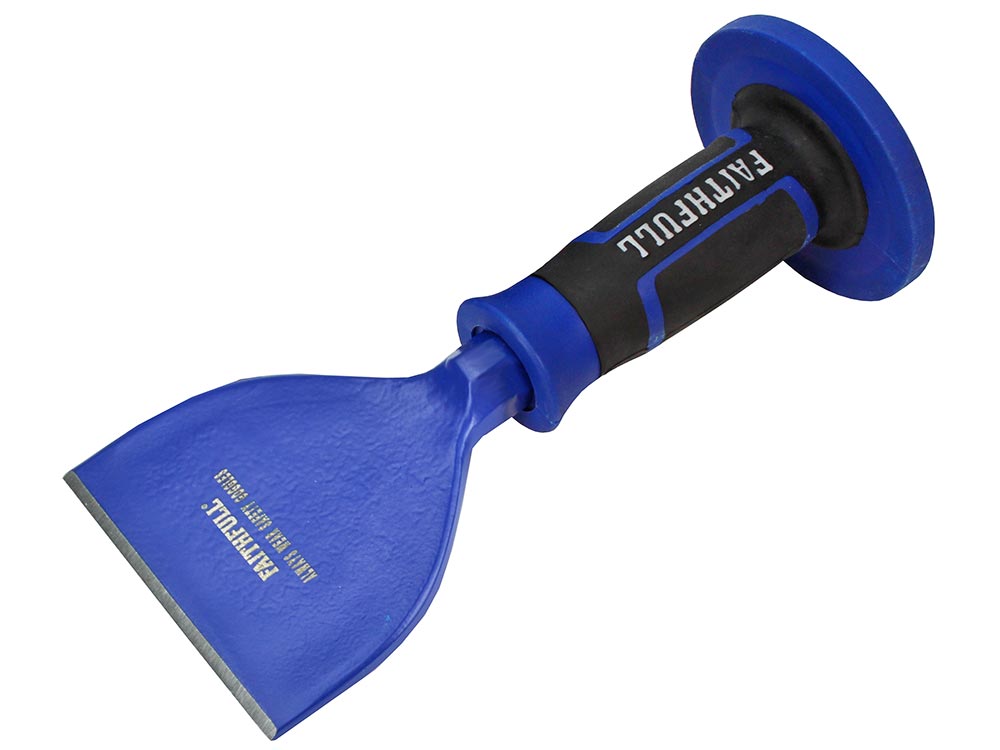
Best trade-brand alternative — a properly hardened edge to British Standard
Faithfull is a long-standing UK trade brand, and this bolster is manufactured to British Standard with a cutting edge hardened before grinding rather than ground first and hoped for. The 100mm blade on a 225mm (9in) length gives solid leverage without being unwieldy, and the moulded grip with integral guard feels comparable to the Roughneck pick above. There’s little to separate it functionally from the top pick at a similar price — a sensible choice if Faithfull is already stocked in the bag, or as a second bolster so two openings can be worked at once.
For
- British Standard with a hardened edge
- Comfortable moulded grip with integral guard
- Recognised UK trade brand
Against
- No advantage over the Roughneck top pick
- Only the one blade width in this line
Typically £12–£17
Check price on AmazonDraper 63730 Brick Bolster with Hand Guard 225 x 75mm

Best widely stocked middle ground — a name found in almost every merchant
Draper is the brand most likely sitting on the shelf of whichever merchant is nearest to a job, which counts for something when a bolster goes missing or gets lent out. This one is hand-forged with an octagonal shank ground to British Standard BS3066:1995, with an impact-absorbing grip moulded around the striking end. At 75mm it’s narrower than the Roughneck and Faithfull picks, closer to the OX Tools bolster for control on a smaller opening, without that pick’s dual guard or price — a sound, unremarkable choice from a brand that’s never hard to replace.
For
- Ground to British Standard BS3066:1995
- Widely stocked — easy to replace
- Impact-absorbing grip moulded around the guard
Against
- No standout feature over other trade-brand picks
- Narrower than the Roughneck or Faithfull picks
Typically £11–£16
Check price on AmazonMarshalltown M658B14 3in Brick Chisel

Best traditional pattern — no plastic guard, just tempered American steel
Marshalltown has made masonry hand tools in the US for decades, and this bolster reflects the older, unguarded pattern bricklayers used before moulded polymer guards became standard: forged, hardened and tempered tool steel on an octagonal shank, nothing between the striking end and the hand except a work glove. Owner feedback consistently rates the edge retention highly. The missing guard is a genuine trade-off, not an oversight — suited to someone confident with a club hammer, rather than a bolster handed to whoever’s nearest. For fine, controlled work kept separate from general opening-up duty, it earns its place.
For
- Forged and tempered with strong edge retention
- Traditional pattern for controlled, precise cuts
- US-made with a genuine trade pedigree
Against
- No hand guard — more exposure on a mis-hit
- Priced well above the guarded picks above
Typically £24–£30
Check price on AmazonSilverline PC40 Bolster Chisel with Guard 100 x 220mm

Best on a budget — forged single-piece steel for the price of a coffee round
Silverline turns up in nearly every field-kit guide on this site for the same reason it’s here: a forged tool at a price that removes any hesitation about buying it. The PC40 is single-piece solid steel, with an octagonal shaft, a powder-coated finish, and a hand guard fitted as standard rather than an upsell. It won’t match the edge retention of the trade-forged picks above over years of heavy use, and the guard is a simpler moulded disc than the OX Tools dual design. As a genuine spare, it’s hard to argue with the price.
For
- Forged single-piece steel, not bonded
- Guard included as standard, not an extra
- Cheapest guarded bolster on this list
Against
- Edge retention won’t match the trade-forged picks
- Availability varies — sometimes out of stock
Typically £6–£11
Check price on AmazonAB Tools TE757 100mm Brick Bolster Chisel with Guard
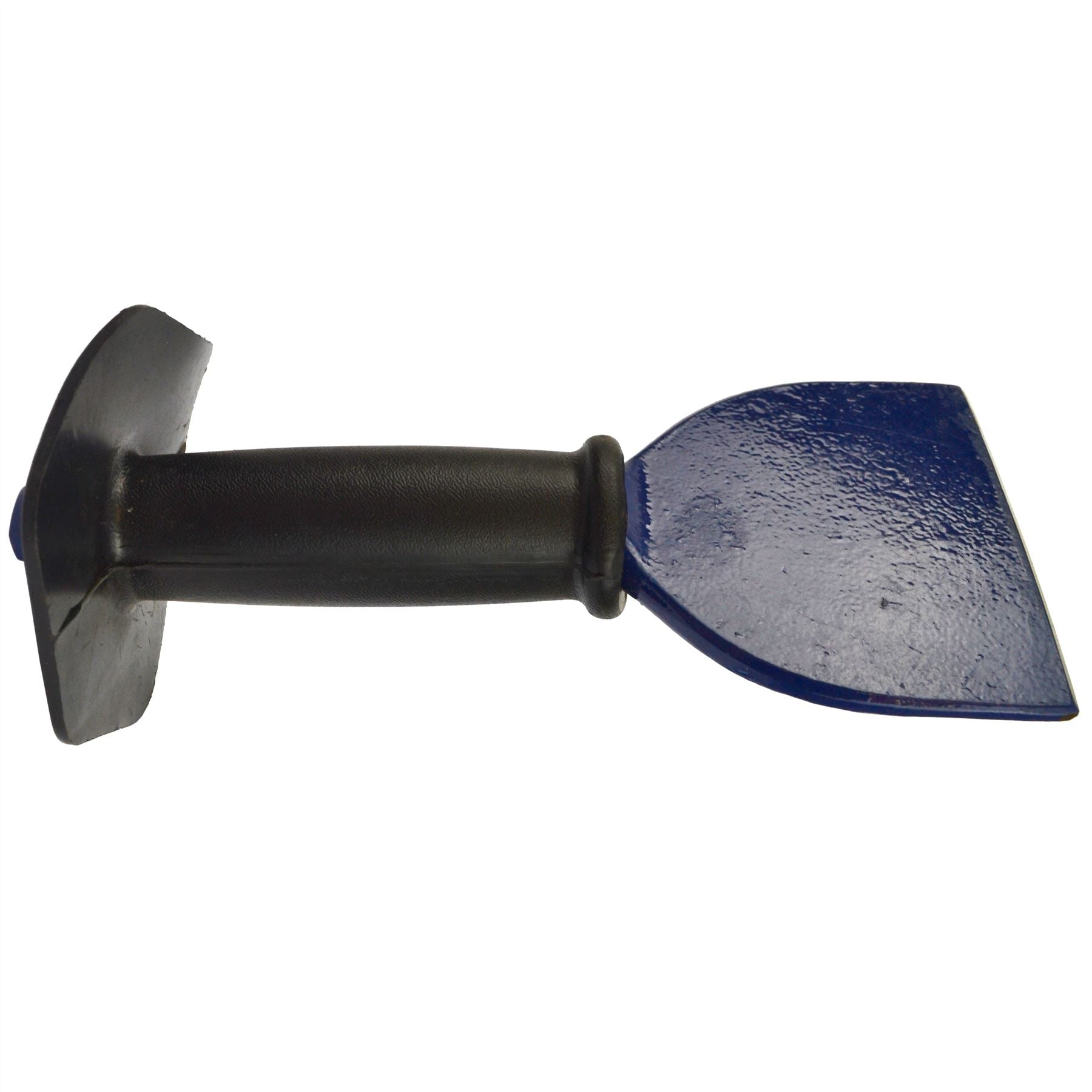
Best cheap spare — a no-frills bolster for the bottom of the toolbox
AB Tools sells direct on Amazon rather than through the trade-merchant network the other brands here use, and this bolster is priced accordingly: black-coated high-carbon steel with an extra-long handle for a more secure grip, and a guard at the base of the blade, comparable in size to the Roughneck and Silverline picks above. It doesn’t carry the same trade pedigree or edge-retention feedback as the branded picks above, so treat it as a genuine backup — a sensible, inexpensive second one to leave in the van so a job never stalls waiting for the main bolster to be found.
For
- Cheapest 100mm guarded bolster here
- Extra-long handle for a secure grip
- Sensible as a genuine backup tool
Against
- Less trade pedigree than the branded picks
- Black coating is cosmetic, not a hardness indicator
Typically £9–£13
Check price on AmazonWhat actually matters — and what doesn’t
“Forged” and “tempered” are claims worth checking, not assuming. A forged, heat-treated edge holds its bevel and resists chipping under repeated strikes; a soft or poorly hardened one rolls or mushrooms after surprisingly little use. If a listing doesn’t name the process, price the tool as the budget option, whatever the steel grade printed on the packaging.
Chrome vanadium versus plain carbon steel is a smaller factor than the grind. Both make serviceable bolsters. What determines a clean cut is the bevel angle and how well it’s finished — a blunt edge on premium steel still glances off masonry rather than biting.
Blade width chosen for the job, not the biggest one in the shop. A 100mm bolster is the sensible general-purpose size; a narrower 75mm blade gives finer control for a single mortar joint.
Permission and reinstatement, not the tool itself. What actually protects a report and a client relationship is asking before opening up anything structural or decorative, and being clear who makes good the opening afterwards. A line in the report — “small opening made with the owner’s consent to confirm wall construction” — covers far more than any spend on the bolster that made it.
What the marketing pushes that you can skip. Bright handle paint, “unbreakable” warranty claims and chrome plating on a blade that will be chipped within a week are all decoration. None of it changes whether the edge bites cleanly or rolls first time you lean into it.
Questions I get asked
What’s the difference between a bolster chisel and a cold chisel? A bolster has a wide, flat blade suited to splitting or facing brick and cutting a clean line through masonry or render. A cold chisel is typically narrower, intended more for general metalwork and demolition. Manufacturers use the terms loosely, so buy on blade shape and width rather than the name alone.
What size bolster chisel do I need for opening up masonry? A 100mm (4in) blade covers most general opening-up work — facing a brick, clearing render, chipping out a mortar bed. For a single mortar joint or a smaller opening, a narrower 50–75mm blade gives more control and disturbs less of the surrounding wall.
Do I need a guarded bolster chisel? For occasional use in an awkward, one-handed position — low in a void, braced on a ladder — yes. A bricklayer using one daily may prefer the unguarded traditional pattern for the feedback it gives, but that comes with practiced technique most surveyors won’t have built up. A guarded bolster like the Roughneck or OX Tools picks above is the sensible default.
Will a bolster chisel damage brickwork or render? Any opening into masonry leaves a mark, but a controlled cut along an existing mortar joint or crack edge does far less damage than random hammering into a solid face. Where the opening will be visible afterwards, agree with the owner beforehand whether you’re making good yourself or flagging it in the report.
A bolster rarely gets its own line in a report, but the small opening it makes often turns “wall construction could not be confirmed” into an actual answer about ties, cavities or a missing DPC. If that points towards a bigger question about a building survey or wall construction as part of a PAS 2035 retrofit assessment, get in touch. And if you’re building out the rest of the bag, there are more field-kit guides.
Small print. This guide is general information, not a recommendation to open up masonry, render or finishes without the owner’s consent or appropriate care. Prices are indicative, move constantly and are checked at the time of writing; the linked page always shows the current price. As an Amazon Associate I earn from qualifying purchases.