A single pane of glass loses heat far faster than the wall around it, which is exactly why a heavy curtain or a cellular blind in front of it feels like it's doing something — it is. Trapping a layer of still air between the room and a cold pane cuts the draught you feel sat near the window and slows how fast that heat escapes overnight. On genuine single glazing, or an old, poorly sealed double-glazed unit, that's a real, measurable difference for the cost of a curtain rather than a glazier.
What it doesn't do is make the glass itself any warmer. The pane behind a closed thermal curtain sits at roughly outside temperature all night, while the room side of that same curtain traps warm, moist air from breathing, cooking and drying washing against it. That warm air meets cold glass and gives up its moisture right there, on the sill and the inside face of the window, often for hours before anyone opens the curtains to find it. It's the same physics as a fogged-up car window, just slower and less obvious, and it's the single biggest thing missing from most "keep your house warmer" articles that push thermal curtains without qualification.
None of that means skip the curtains. It means treat them as one part of a room's moisture balance, not a free win, and know when the honest answer is a better window rather than a heavier curtain. Below is how I'd judge what's on the shelf, and six products worth considering — thermal curtains, honeycomb blinds and blackout lining for curtains you already own.
The one I’d buy
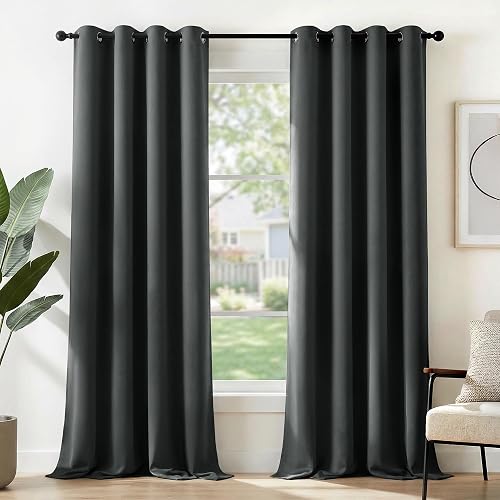
Deconovo Thermal Blackout Eyelet Curtains, Super Soft, Dark Grey, 2 Panels
Triple-weave construction rather than a single sheet of fabric, which is what actually does the insulating — the trapped layers between the weaves, not just the thickness of the outer face. Blocks a genuine 95–99 percent of light on the manufacturer's own figures, comes in a wide run of widths and drops including a floor-length 108-inch option that matters more for sealing the bottom edge than most buyers realise, and is priced well under the premium brands for a fabric that does the same basic job.
Typically £18–£24 for a pair, size-dependent
Check price on AmazonHow I judge thermal curtains and blinds
Layers and weight, not just the word "thermal" on the label. A triple-weave curtain or a genuine multi-pass lining traps air between its layers, which is where the insulating effect actually comes from. A single-layer fabric with a light coating printed on to make it opaque can block light just as well while doing far less for heat — blackout and thermal are marketed as the same thing and often aren't.
Fit against the frame. Gaps at the top, sides and floor let cold air circulate behind the curtain regardless of how good the fabric is — a curtain track that runs wall-to-wall and a drop that reaches the sill or floor does more for the insulating effect than upgrading the fabric alone. The same logic applies to a cellular blind: an inside-mounted recess fit with tight side channels traps air properly; a loose surface-mounted one barely does.
For honeycomb blinds — single cell against double cell. A double-cell (two honeycomb layers stacked with a gap between them) traps two pockets of still air instead of one, which is a genuine step up in insulating value over a single-cell blind of the same fabric — at extra bulk and cost. Worth it on a large or particularly cold window, unnecessary on a small one.
Cordless and child-safe mechanisms on blinds. Loose or looped cords are a strangulation risk around young children and pets, which is why cordless push-pull and spring-lift mechanisms have largely replaced them on new blinds — check this explicitly rather than assuming, especially on older stock still being sold through.
Whether it needs sewing, or genuinely doesn't. Thermal lining fabric sold by the metre is the cheapest way to add real insulating value to curtains you already own, but most of it needs hemming or hand-sewing onto the back of the existing curtain — iron-on and clip-on options exist but are fiddlier to fit well than the packaging suggests.
The comparison
| Product | Type | Blackout | Typical price | Best for | |
|---|---|---|---|---|---|
| Deconovo Thermal Blackout Eyelet | Curtain, triple-weave | 95–99% | ~£18–£24/pair | Best all-round pick | View |
| H.Versailtex 100% Blackout + Liner | Curtain, woven + separate liner | 100% | ~£24–£30/pair | Premium, full blackout & thermal | View |
| NICETOWN Thermal Insulated Blackout | Curtain, grommet top | 85–99% | ~£10–£14/pair | Budget pick, small windows | View |
| UrMoon No-Drill Cordless Cellular Blind | Blind, single-cell honeycomb | 100% | ~£30–£40 | No-drill fit, rented rooms | View |
| Grandekor Cordless Cellular Shades | Blind, foil-backed honeycomb | 100% | ~£45–£55 | Premium, larger windows | View |
| Discount Fabrics Thermal Lining, per metre | Sew-in lining fabric | Opaque (3-pass) | ~£7/metre | Adding thermal to existing curtains | View |
The picks in detail
Deconovo Thermal Blackout Eyelet Curtains, Super Soft, Dark Grey, 2 Panels
Best all-round — genuine triple-weave at an ordinary price
Three woven layers rather than a coated single sheet, which is the actual mechanism behind both the near-total blackout figure and the insulating effect — the trapped air between the weaves slows heat loss, not just the fabric's thickness. Sold across a wide run of widths and drops, including a 108-inch floor-length option that matters for sealing the bottom edge against cold air pooling on the sill. Machine washable on a gentle cycle, which matters more on kitchen or bathroom windows than the spec sheet ever mentions.
For
- Genuine multi-layer weave, not a coated single sheet
- Wide size range including a floor-length drop
- Priced well under the premium brands for a comparable fabric
Against
- Eyelet header only — no pencil-pleat or tape-top option in this line
Typically £18–£24 for a pair
Check price on AmazonH.Versailtex 100% Blackout Curtains with Black Liner, Eyelet, Natural Sand

Premium pick — a genuinely separate liner, not just a heavier front fabric
The decorative front fabric is backed by a distinct black liner layer rather than relying on the face fabric's own density for blackout and thermal performance — effectively curtain and lining combined in one product, which is the honest way to get both a pale, room-matching colourway on the front and full blackout performance without adding a separate lining step. High-density triple-woven construction and anti-rust grommets aimed at longer-term daily use.
For
- Separate black liner gives full blackout without a dark front colour
- High-density weave, built for daily opening and closing
- Anti-rust grommet hardware
Against
- Priced above the equivalent size in the Deconovo or NICETOWN ranges
Typically £24–£30 for a pair
Check price on AmazonNICETOWN Thermal Insulated Blackout Curtains, Grommet Top, Teal Blue, 2 Panels
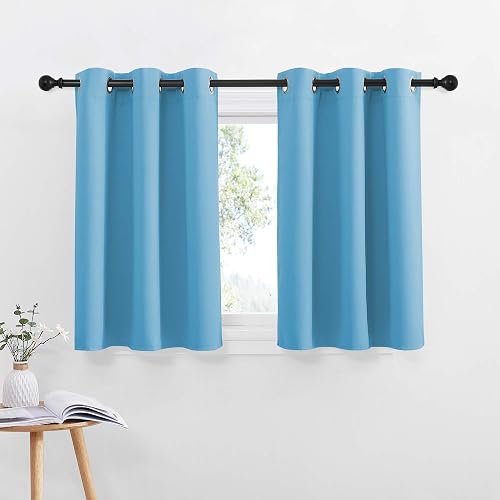
Budget pick — cafe-length sizing suited to small windows
A shorter drop than most of the curtains here, which makes it the cheaper, practical choice for a small bedroom or bathroom window rather than a full living-room set. Twelve grommets across the pair with a 1.6-inch inner diameter fit most standard poles, and it blocks 85–99 percent of light depending on colourway. One of the widest-reviewed lines in this category, which is worth something on its own for a product bought largely on trust.
For
- Cheapest genuine thermal curtain in this guide
- Well-reviewed, long track record on Amazon UK
- Machine and hand washable
Against
- Shorter drop — check it actually suits a floor-length window before buying
- Thinner weave than the Deconovo or H.Versailtex picks
Typically £10–£14 for a pair
Check price on AmazonUrMoon No Drill Cordless Honeycomb Cellular Blind, Blackout White

The no-drill pick — fits a rented room without touching the frame
A tension/spring fixing rather than screws, which is the main reason this one's worth flagging over an ordinary cellular blind — it goes up and comes down without marking a rented window frame. Cordless push-pull operation removes the strangulation risk of a looped cord, and the single-cell honeycomb structure traps a genuine layer of still air against the glass. Needs at least 1.6 inches of window recess depth for the tension fit to actually hold, worth measuring before ordering a custom size.
For
- No drilling or screws — suits a rented property
- Cordless, child- and pet-safe operation
- Custom widths and heights available
Against
- Needs a genuine recess of at least 1.6in depth to fit securely
- Made-to-order, so expect a longer dispatch time than a stock item
Typically £30–£40, size-dependent
Check price on AmazonGrandekor Cordless Blackout Cellular Honeycomb Shades

Premium blind pick — foil-backed, fixings included
Built-in aluminium foil backing behind the honeycomb structure adds a genuine reflective layer to the blackout and thermal performance, on top of the trapped-air effect every cellular blind relies on. Sold with brackets, screws and a handle included, and suited to either inside or outside frame mounting rather than the recess-only fit of a tension-mounted product — the better choice for a larger window or an outside-mount job.
For
- Foil-backed honeycomb, a step up in blackout and thermal performance
- Fixings included, suits inside or outside mount
- Dual-colour construction — patterned face, white reverse
Against
- The most expensive product in this guide
- Requires drilling, unlike the UrMoon tension-fit pick
Typically £45–£55, size-dependent
Check price on AmazonDiscount Fabrics LTD Thermal Blackout Curtain Lining, Black, 260GSM, per metre

For adding thermal performance to curtains you already own
A three-pass construction — a foam core sandwiched between outer layers — sold by the metre for sewing onto the back of existing curtains rather than replacing them outright, which is the cheapest way in this guide to add real thermal and blackout performance to a set that's otherwise fine. OEKO-TEX certified, 260GSM, sold in black or a lighter white/cream colourway; black gives the most complete room-darkening result, the paler option shows through less on light-coloured front fabric. It needs hemming or sewing to the existing curtain rather than clipping on, so budget the time as well as the fabric cost.
For
- Cheapest way to add genuine thermal performance to curtains already owned
- OEKO-TEX certified, machine washable at 30°C
- Sold by the metre — buy exactly what the curtain needs
Against
- Needs sewing or hemming on — not a clip-on or iron-on product
- Only useful if the existing curtain fabric itself is worth keeping
Typically £7 per metre
Check price on AmazonWhat actually matters — and what doesn’t
The condensation trade-off is real, and it's worth managing rather than ignoring. A closed thermal curtain or a tightly fitted cellular blind holds warm, moist room air against a cold pane all night, and that moisture has to go somewhere — onto the glass, the sill, and eventually into the curtain hem or the window reveal if it's not dealt with. On a genuinely cold, single-glazed window in a bedroom, leaving a small gap at the top of the curtain, cracking a trickle vent, or simply wiping the glass down in the morning costs nothing and heads off the mould that otherwise builds up on the sill and the curtain itself over a winter.
Thermal curtains don't move an EPC rating. RdSAP, the methodology behind a domestic EPC, doesn't assess soft furnishings — a curtain, however good, isn't a recognised measure the way loft or wall insulation is. Worth knowing before assuming better curtains will show up as an improvement on a certificate; the benefit here is comfort and a heating bill, not a rating.
"Blackout" and "thermal" aren't automatically the same thing. A single-layer fabric with a light-blocking coating printed on the back can hit 99 percent blackout while doing far less for heat retention than a genuine multi-layer weave of the same thickness. Where thermal performance is the actual goal, check for multiple woven layers or a separate lining, not just the blackout percentage on the listing.
Fit beats fabric. A wall-to-wall track, a floor-length drop and a pelmet or box header do more for the insulating effect than upgrading from a cheap to an expensive thermal curtain of the same size — gaps at the top, sides and floor let cold air simply flow around the barrier regardless of how many layers are in it.
None of this is a substitute for a window that's actually failing. If a "double-glazed" window mists up between the panes rather than on the room-side face, the seal's gone and no curtain fixes that — that's a glazing unit replacement, not a soft-furnishing upgrade. My guide to double glazing costs is the next read if that's what's actually going on.
Questions I get asked
Will thermal curtains stop my windows misting up in the morning? No — if anything, a tightly closed thermal curtain over a cold single-glazed window can make morning condensation worse, because it traps humid room air against the glass overnight with nowhere to go. Leaving a small gap, or airing the room and wiping the glass in the morning, matters more than the curtain's thermal rating for this specific problem.
Do thermal curtains actually reduce heating bills? On genuine single glazing or an old, draughty double-glazed unit, yes, in a small but real way — less heat escaping through the window overnight is less heat the boiler has to replace. On modern, well-sealed double glazing the effect is much more marginal; the window's already doing most of the work.
Are honeycomb blinds better than curtains for condensation? Not automatically. A cellular blind sits closer to the glass with less bulk than a floor-length curtain, but if it's fitted with a tight seal on all sides it traps room air against the pane in much the same way. Either works better paired with basic ventilation — a trickle vent, an extractor, or just opening the room up in the morning — than left to do the job alone.
Can I add thermal lining to curtains I already own? Yes — blackout thermal lining sold by the metre is the cheapest option here, though most of it needs sewing or hemming to the back of the existing curtain rather than clipping on. It's worth doing on a curtain that's otherwise in good condition rather than buying a whole new pair.
Where a room's condensation problem is really about ventilation rather than the curtains hanging in front of the window, that's the more useful fix — my ventilation service page covers what I'd actually check on a visit. And where the honest diagnosis is the glazing itself, not what's hung in front of it, my guide to double glazing costs is worth reading alongside this one. Get in touch for a second opinion, and there are more field-kit guides to work through.
Small print. This guide is general information, not a specification for a particular property — where condensation or mould is already established, treat the underlying ventilation and moisture balance as the priority, not the curtains alone. Prices are indicative, move constantly and are checked at the time of writing; the linked page always shows the current price. As an Amazon Associate I earn from qualifying purchases.