I get called to more damp cellars and semi-converted basements than most people would guess for a practice based in East Sussex, where the water table sits close to the surface on a lot of the Weald clay. The conversation is almost always the same: somewhere in the room is a sump pit with a pump in it, the pump is doing its job, and the homeowner wants to know why the room still smells of damp and why the skirting is stained. The honest answer is usually that the pump was never the whole system — it’s the mechanical bit that empties a chamber the water was directed into on purpose, and the rest of the job (the membrane, the perimeter channel, the render, the ventilation) either was never done properly or has failed quietly in the background.
That matters because it changes what you’re buying. A sump pump doesn’t stop water getting into a basement; it moves water that has already been deliberately collected somewhere convenient, as the last stage of a BS 8102 Type C (“drained cavity”) waterproofing system, or as the stopgap in an older house with a wet cellar and no waterproofing design at all. If the room is dry between rain events and the pump only cycles occasionally, it’s doing exactly the job it was designed for. If it runs constantly, or the sump overtops before the float catches up, the pump usually isn’t the problem — the ingress rate or the system it sits in is.
It’s also worth saying plainly: the UK doesn’t really have the dedicated “sump pump” category American hardware stores sell, with pedestal pumps and battery-backup systems built specifically around a plastic basin. What UK basements actually use, almost without exception, is a general-purpose submersible dirty-water pump with a float switch, dropped into a purpose-built sump chamber. That’s not a compromise — it’s the same pump technology, sized correctly and installed properly, and it’s what every product below actually is.
The one I’d buy

Clarke PSV5A Submersible Pump with Integrated Float Switch
The trade-standard general submersible — 750W, 217 litres a minute, 8m of head, built to shift clean or dirty water and switch itself off automatically as the level drops. It’s the pump I see referenced most often by contractors fitting cavity-drain sump systems in the South East, not because it’s exotic but because it’s a known, serviceable quantity at a fair price. For a single-pump domestic sump handling groundwater rather than sewage or heavy grit, it’s the sensible default.
Typically £65–£80
Check price on AmazonHow I judge a sump pump
Flow rate against the actual ingress, not the box. Manufacturers quote maximum flow with no head and nothing in the way; real performance drops the moment water has to travel up and along a discharge pipe. The number that matters is the pump’s flow at the head your installation actually needs, and whether that comfortably beats the rate the sump fills during the worst rain you’ve seen. A domestic groundwater sump rarely needs the biggest pump on the page — it needs one sized to the pit and the inflow, with headroom, not a headline litres-per-hour figure.
Float switch type and the clearance it needs. Most of these pumps use a tethered float that swings on a cable — simple and cheap, but it needs real clearance to travel freely, which a narrow or cluttered sump chamber often doesn’t give it. A jammed float is the single most common reason a “working” pump doesn’t switch on when it should. A vertical or height-adjustable float (the Einhell GC-DP 9035N below has one) swings through a much smaller arc and suits a tight pit better.
Solids handling. A sump pit collects silt, grit and the odd bit of building debris along with the water. A pump rated for only a few millimetres of particle size will clog; the dirty-water pumps here handle 25–30mm particles, which is the difference between a pump that keeps working unattended and one that needs fishing out and clearing every few weeks.
Duty cycle and thermal protection. A sump pump runs unattended, sometimes for hours during a storm, and the worst failure mode is running dry after the water level drops below the intake — which is exactly when a badly positioned float switch lets it happen. Thermal overload protection, which most of the pumps below have, cuts the motor before that becomes a burnt-out pump rather than a warranty claim.
What it’s made of. A sump pit is permanently damp and sometimes acidic groundwater sits in it for years. Stainless steel bodies (the Einhell GC-DP 9035N, the Sealey) shrug that off better than painted or plain polypropylene housings, which is worth the premium on a pump that’s expected to sit there for a decade, not the one used twice a year to empty a water butt.
The comparison
| Model | Power | Max flow / head | Typical price | Best for | |
|---|---|---|---|---|---|
| Clarke PSV5A | 750W | 217L/min · 8m | ~£74 | The all-round sump default | View |
| Einhell GC-DP 9035N | 900W | 300L/min · 9m | ~£69 | Premium — stainless, height-adjustable float | View |
| Einhell GC-DP 3325 | 330W | 158L/min · 6m | ~£37 | Best on a budget | View |
| Sealey WPD235A | 750W | 217L/min · 8m | ~£82 | Corrosion-resistant alternative to the Clarke | View |
| Draper 61621 | 550W | 166L/min · 8.5m | ~£74 | Mid-range dirty water, 30mm solids | View |
| Draper 98917 | 400W | 150L/min · 8m | ~£79 | Cleaner water, lighter sediment | View |
| Einhell GE-DP 7035 LL | 700W | 267L/min · 8m | ~£79 | Finishes a pit down to 1mm residual | View |
| Draper 61668 | 350W | 108L/min · 7m | ~£41 | Smallest pit, lightest ingress | View |
The picks in detail
Clarke PSV5A Submersible Pump with Integrated Float Switch
Best overall — my top pick above
Clarke is a familiar name in trade merchants and hire shops, and the PSV5A is the pump their range is built around: 750W, 217 litres a minute, 8m of head, rated for clean or dirty water with the float switch built into the body rather than bolted on as an afterthought. In auto mode it starts and stops itself as the sump fills and empties; the switch can also be locked on for continuous pumping if you’re draining a flooded pit rather than running it unattended. It’s the pump specification I’d default to for a single-pump domestic sump handling groundwater rather than heavy silt or sewage.
For
- Integrated float switch, auto or continuous operation
- Handles clean and dirty water to 8m head
- Familiar trade brand with wide spares and support availability
Against
- Tethered float needs a sump chamber wide enough for it to swing freely
- Plastic body, not stainless — fine for most pits, less so for a permanently acidic one
Typically £65–£80
Check price on AmazonEinhell GC-DP 9035N Stainless Steel Dirty Water Pump

Best premium pick — stainless body, highest flow and head here
The step up, and it earns it: 900W, 300 litres a minute, 9m of head, in a stainless steel body rather than plastic, with a height-adjustable float switch that swings through a much smaller arc than a tethered one. That combination — corrosion resistance plus a compact float — is exactly what a permanent installation in a tight, purpose-built sump chamber wants, and the extra head matters if the discharge run to daylight is long or has to climb out of a genuinely deep pit. It costs less than the Sealey below despite the higher spec, which is the main reason it’s the one I’d call premium rather than merely bigger.
For
- Stainless steel body resists a permanently wet, sometimes acidic pit
- Height-adjustable float suits a narrow sump chamber
- Highest flow and head of the pumps here
Against
- Overkill for a small, occasional-use sump
- Heavier than the plastic-bodied pumps to lift out for servicing
Typically £60–£75
Check price on AmazonEinhell GC-DP 3325 Dirty Water Pump

Best on a budget — enough pump for a small, occasional sump
Einhell’s entry dirty-water pump: 330W, 9,500 litres an hour (158L/min), 6m head, handling particles to 25mm. That’s a real drop from the pumps above it, but for a small cellar sump that fills slowly between rain events rather than a basement taking on serious groundwater, it’s genuinely enough — and it’s the cheapest pump here by a clear margin. Worth having as a spare on a shelf even where a bigger pump does the daily job, since a sump with no pump in it for the days a duty pump is being serviced is a sump that floods.
For
- Lowest price here for a proper dirty-water pump with a float switch
- 25mm particle handling — copes with sump-pit silt
- Cheap enough to keep as a standby pump
Against
- Lowest flow and head of the group — check it beats your actual ingress rate
- Plastic body, not built for a decade in a permanently wet pit
Typically £33–£42
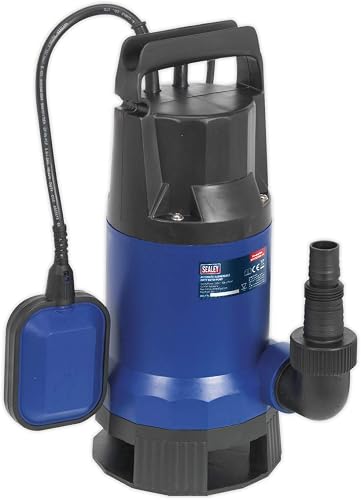
Check price on AmazonSealey WPD235A Submersible Dirty Water Pump
The other trade name — heavier-duty solids handling
Sealey’s equivalent to the Clarke: 750W, around 217–225 litres a minute, 8m head, in a steel motor case with a corrosion-resistant polypropylene base, and rated for particles up to 30mm — a notch above the Clarke’s dirty-water tolerance. It’s a straightforward alternative where Sealey is the brand your local trade counter stocks rather than Clarke, and the marginally higher solids handling is worth having if the sump collects builder’s sand or grit as well as groundwater.
For
- 30mm particle handling, ahead of the Clarke on grit tolerance
- Steel motor case with corrosion-resistant base
- Automatic float, same 750W/8m class as the Clarke
Against
- Costs more than the Clarke for a broadly similar spec
- Tethered float has the same clearance requirement
Typically £75–£90
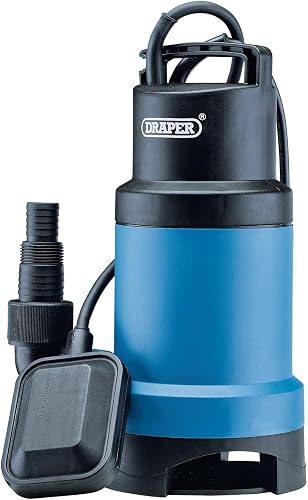
Check price on AmazonDraper 61621 Submersible Dirty Water Pump
Solid mid-range choice, good head for its size
550W, 166 litres a minute, and a genuinely useful 8.5m maximum head — more than the pricier Clarke and Sealey manage — with thermal overload protection and 30mm particle tolerance. Draper’s own figures put maximum immersion depth at 5m, which is more than any domestic sump pit will ever need, but the head figure is the one that matters if the discharge pipe has to run some distance and climb before it reaches daylight. A sensible middle ground between the small Draper below and the 750W pumps above it.
For
- 8.5m head — the best in this group for long or climbing discharge runs
- 30mm particle handling and thermal overload protection
- Established brand, wide UK spares availability
Against
- Lower flow than the 750W-class pumps at the same price point
- Tethered float, same clearance caveat as the Clarke and Sealey
Typically £65–£80
Check price on AmazonDraper 98917 Submersible Water Pump with Integral Float Switch

Cleaner-water sump, lighter sediment load
400W, 150 litres a minute, 8m head, but rated for only 5mm particles — a genuinely clean-water pump rather than a dirty-water one, despite looking similar to the others in this line-up. That narrower solids tolerance matters: it’s the right choice for a sump that mostly collects clear groundwater with little silt, and the wrong choice for one that picks up sand or debris, where it will clog faster than the 25–30mm-rated pumps above. Thermal overload protection and an integral float switch are both present, and Draper’s spares network is as good as any brand here.
For
- Integral float switch, thermal overload protection, 10m cable
- 8m head on a compact, lighter unit
- Well suited to a genuinely clean-water sump
Against
- 5mm particle rating — will clog on anything gritty
- Costs close to the Sealey and Clarke without their solids tolerance
Typically £70–£85
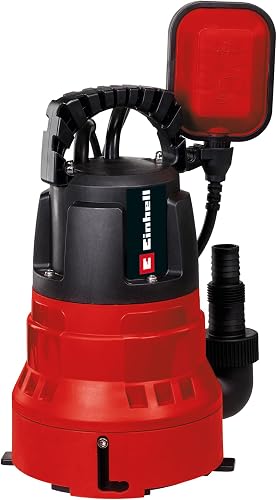
Check price on AmazonEinhell GE-DP 7035 LL 2-in-1 Water Pump
The finishing pump — empties a pit almost dry
700W, 267 litres a minute, 8m head, and the feature that sets it apart: a flat-suction capability down to 1mm of residual water, well below what a normal float-switch pump leaves behind. On its own it’s a capable general dirty-water pump; paired as a second unit alongside a duty pump handling the bulk of the flow, it’s the one that takes a sump from “mostly empty” to properly dry, which matters if standing water at the bottom of the pit is what’s feeding the damp smell rather than the volume passing through.
For
- Flat suction to 1mm — genuinely empties a pit, not just lowers it
- 267L/min is a strong flow rate for the price
- Doubles as a general-purpose flood pump elsewhere on site
Against
- Not a natural single duty pump — best used alongside another for volume
- No stainless option in this line
Typically £70–£85
Check price on AmazonDraper 61668 Submersible Water Pump with Float Switch

The smallest job — a light, occasional-use sump
350W, 108 litres a minute, 7m head, 3mm particle tolerance — the smallest and cheapest genuine option here. It’s not a pump I’d specify for an actual basement waterproofing installation, but for a shallow sump under a suspended floor, a French drain outfall that only ever sees a trickle, or as a genuinely cheap standby, it does the job the bigger pumps would be wasted on. Thermal overload protection is included, which is the one feature I wouldn’t want to see missing at any price point on a pump that runs unattended.
For
- Cheapest pump here with a proper float switch and overload protection
- Right-sized for a light, occasional-use sump
Against
- 3mm particle rating — the lowest solids tolerance in this group
- Lowest flow and head — will not cope with a genuine groundwater sump
Typically £35–£48
Check price on AmazonWhat actually matters — and what doesn’t
One pump is a single point of failure. Every pump above will eventually fail, jam, or lose power at the worst possible moment — usually during the storm that generated the water in the first place. A proper Type C system specifies a duty and a standby pump on alternating or simultaneous operation, or at minimum a high-level alarm that tells you the primary pump has stopped before the room floods rather than after. The UK market doesn’t offer the plug-and-play battery-backup systems sold in the US; the practical equivalent is a second pump on a separate circuit, or an alarm wired to a leisure battery, specified by whoever designs the drainage.
Where the water actually goes. A sump pump moves water from inside the building to outside it — onto a surface water drain, a soakaway, or a ditch, with the landowner’s and water company’s agreement as relevant. It must never discharge to a foul sewer without proper consent, and the discharge point must be far enough from the foundation that the pump isn’t just recirculating the same water back into the ground it came from. I see this got wrong more often than the pump itself is under-specified.
Float clearance is a fitting problem, not a pump problem. A tethered float needs room to swing; cram a 750W pump into an undersized off-the-shelf sump basin and the float will foul the wall or a cable and either run dry or run continuously. Measure the chamber before buying, and choose a height-adjustable or vertical float switch, like the Einhell GC-DP 9035N above, if the pit is tight.
What the listings push that doesn’t matter as much as they suggest. Peak litres-per-hour figures, quoted with zero head and an unobstructed outlet, which no real installation matches. A domestic sump handling groundwater ingress rarely needs the biggest number on the page; it needs a pump that comfortably beats the actual rate of rise at the head your pipework requires, with the solids tolerance and float clearance that fit the chamber it’s going into.
Questions I get asked
Do I need a sump pump for a damp cellar? Not automatically. A sump pump is the mechanical component of a Type C drained-cavity waterproofing system, and it’s only the right answer once the system around it — a membrane, a perimeter drainage channel feeding the sump — has been designed properly, usually by a specialist waterproofing contractor working to BS 8102. A pump dropped into a puddle in the corner of an unlined cellar without that design will keep the worst of the water off the floor, but it won’t fix rising or penetrating damp, and it won’t stop the smell. If you’re not sure which situation you’re in, that’s exactly what a building survey should establish before you spend money on either a pump or a full waterproofing scheme — and it feeds directly into the numbers in the basement conversion cost guide if a full conversion is what you’re actually weighing up.
What size sump pump do I need for a basement? Size to two things: the flow rate at the head your pipework actually needs (not the pump’s zero-head maximum), and the particle size your sump collects, not just the volume. For most domestic groundwater sumps a 400–750W pump moving 150–220 litres a minute comfortably outpaces the inflow; a bigger, 900W pump earns its place where the discharge run is long, climbs significantly, or the sump serves more than one collection point. Oversizing wastes money and cycles the pump harder than it needs to; undersizing means the sump overtops in the one storm that actually tests it.
What happens if a sump pump fails, and do I need a backup? The sump fills, then overtops into the room it was protecting — usually with no warning beyond whatever alarm was or wasn’t fitted. Power cuts during storms are the classic failure mode, since that’s exactly when the pump is needed most. A second pump, a high-level alarm, or both are the standard mitigations; a single pump with no monitoring is a reasonable risk for an occasional-use cellar and a poor one for a habitable basement room.
Can I install a sump pump myself? Dropping a replacement pump into an existing, correctly built sump chamber is straightforward DIY — check the float has clearance, the discharge pipe is secure, and the electrics are on an RCD-protected circuit, ideally with a dedicated fused spur rather than an extension lead into a damp cellar. Building the sump chamber, the perimeter drainage and the membrane system it sits within is specialist waterproofing contractor work, and getting it wrong is expensive to unpick once the room is finished. If you’re starting from a wet, unconverted cellar rather than replacing a pump in an existing system, that’s the point to bring in a survey and a waterproofing designer, not a bigger pump.
If a wet cellar or a basement conversion is the reason you’re reading this, that’s the day job. The practice carries out building surveys that diagnose whether water ingress is a drainage, damp-proofing or waterproofing-design problem before anyone reaches for a pump, and I’ll tell you plainly what a proper fix costs against what a pump alone will and won’t solve — get in touch. If you’re pricing a full conversion, the basement conversion cost guide covers what the wider job involves. And if you’re kitting out a survey bag, there are more field-kit guides.
Small print. This guide is general information, not a waterproofing design or an electrical safety assessment; sump pumps run on mains electricity in wet locations and should be installed on an RCD-protected circuit, and any doubt about a discharge point or a waterproofing system belongs with a qualified contractor. Prices are indicative, move constantly and were checked at the time of writing; the linked page always shows the current price. As an Amazon Associate I earn from qualifying purchases.