A vacant possession survey more often than not starts at a locked gate rather than a locked door — the agent’s key opens the porch but not the side gate, and half the empty properties on the books have accumulated a second and third padlock over successive lettings, each one rustier than the last. Getting past that is a delay, not a diagnosis. The other side of the job matters just as much: leaving a property properly secured on the way out, with a padlock that actually turns rather than one seized solid by the next visit, is part of doing vacant work professionally rather than just quickly.
The other reason a padlock earns a line in the kit bag is the van itself. A laser scanner, a drone case and a full instrument kit sitting in a vehicle parked on a residential street for the length of an inspection is worth more to an opportunist than most of what’s being surveyed, and a tool box or roof rack padlocked properly is a genuine deterrent — most casual theft is about time and noise, and a padlock that resists bolt croppers for thirty extra seconds is often enough to move the target elsewhere.
What separates a padlock worth buying from one that’s just heavy is mostly invisible on the shelf: a genuine CEN or Sold Secure rating rather than marketing copy, a shackle that’s actually hardened rather than just thick, and weatherproofing engineered in rather than bolted on as an afterthought — a padlock that lives outdoors for months only has to fail once, usually in the rain, usually at the worst moment. Six compared below, from the one I’d buy to the keyless option worth carrying for a property where handing out a key isn’t practical.
The one I’d buy
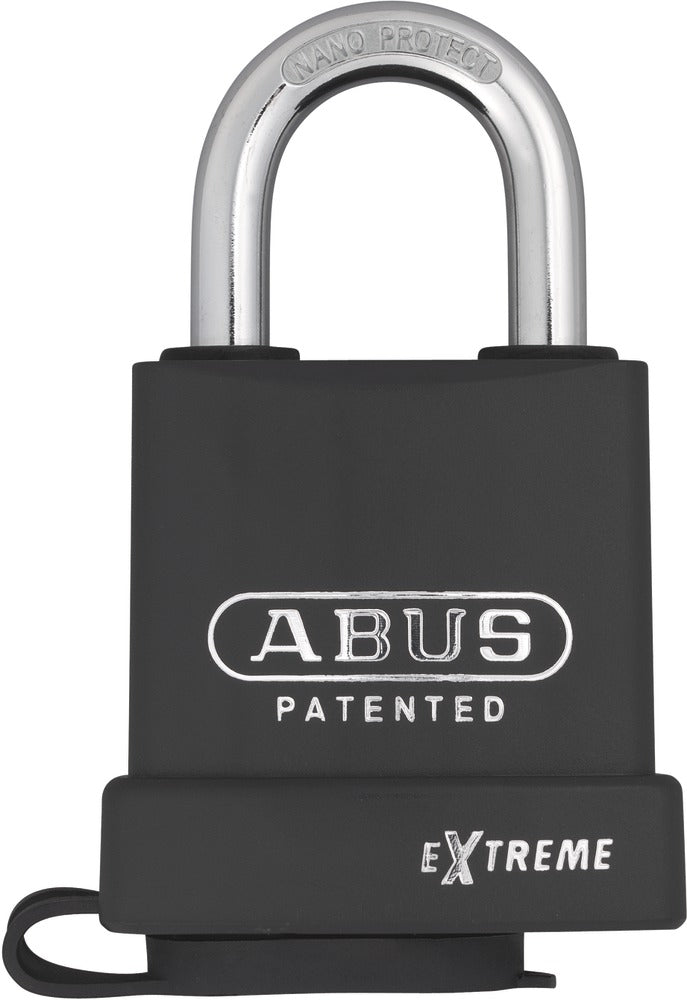
ABUS 83WP/53 Extreme Weatherproof Padlock
The 83 series is Abus’s own answer to a padlock left outdoors for months, and it shows in details that matter more than the headline rating: a full plastic jacket with drainage channels so water doesn’t sit against the cylinder, and a Nano Protect coating to stop the shackle rust-seizing by the second winter. ABUS Level 8 sits comfortably above what a site gate or a van roof rack actually needs, and an interchangeable shackle takes a longer length for a chain rather than buying a second lock.
Typically £60–£80
Check price on AmazonHow I judge a padlock
A genuine CEN or Sold Secure rating, not just “heavy duty” on the box. Marketing language on a padlock’s packaging is unregulated in a way the rating isn’t — a CEN grade or a Sold Secure mark means the padlock has actually been attacked with bolt croppers, a hacksaw and a hammer under test conditions.
Weatherproofing that’s engineered in, not bolted on. A padlock on a site gate or a van roof rack lives outdoors for months, and a rubber shroud over an ordinary cylinder is a different thing entirely from drainage channels and a sealed keyway designed in from the start. The first sign of the wrong choice is usually a key that won’t turn on the one cold, wet morning it’s needed.
Closed shackle where bolt croppers are the real risk, open or long shackle where a chain needs threading through. A closed-shackle padlock shields almost the entire shackle inside the body, leaving croppers almost nothing to bite on; a chain, a gate hasp or a ground anchor usually needs the extra clearance of an open or long shackle instead, a genuine trade-off rather than one design simply being better.
Keyed-alike availability, so one key does the gate, the tool box and the van. Carrying four padlocks and four separate keys defeats a fair amount of the point — most ranges below are available keyed alike, worth the small premium once more than one lock is involved.
Shackle material, not just shackle thickness. A boron-alloy or properly hardened shackle resists a hacksaw and bolt croppers in a way an untreated but thicker-looking one doesn’t — two padlocks can look the same size on a listing page and behave completely differently under attack.
The comparison
| Model | Rating | Shackle | Typical price | Best for | |
|---|---|---|---|---|---|
| ABUS 83WP/53 | ABUS Level 8 | Open, interchangeable | ~£70 | Best overall | View |
| Squire SS65CS Stronghold | CEN Grade 6 | Closed, boron | ~£90 | Highest security | View |
| Master Lock Excell M1EURDLH | Level 8/10 | Long, laminated | ~£25 | Best value weatherproof | View |
| Squire WS75 Container | CEN Grade 4 | Fixed, block body | ~£60 | Best for chains & gates | View |
| Squire Warrior Combi 65CS | CEN Grade 4 | Closed, combination | ~£50 | Best keyless | View |
| ABUS 64TI/40, Pack of 2 | ABUS Level 5 | Open, keyed alike | ~£22 | Best lightweight/budget | View |
The picks in detail
ABUS 83WP/53 Extreme Weatherproof Padlock
Best overall — weatherproof, versatile, sensibly priced
This is the top pick above, and the case for it holds up in the detail: drainage channels and a full plastic jacket keep water off the cylinder, not just off the outside of the lock, and the Nano Protect coating is built for the slow corrosion that kills most padlocks left on a gate year-round. ABUS Level 8 is well above what a routine site gate or van tool box needs, and the interchangeable shackle takes a longer length for a chain without buying a second unit.
For
- Genuinely engineered weatherproofing, not a rubber shroud bolted on
- Interchangeable shackle covers both a hasp and a chain
- ABUS Level 8 comfortably above routine site and van needs
Against
- Open shackle leaves more exposed than the SS65CS’s fully closed design
- Not the highest security rating in this comparison
Typically £60–£80
Check price on AmazonSquire SS65CS Stronghold Padlock

Best for the highest-value sites and compounds
Where the ABUS above is built around versatility, the SS65CS is built around one thing: resisting attack. A solid 65mm hardened steel body and a 12.7mm boron-alloy closed shackle earn it CEN Grade 6, the highest rating here and well beyond what most survey work calls for, which is why it suits a site compound or a property with a known break-in history rather than an everyday tool box. It’s the one to reach for when the consequence of a failed lock is genuinely serious.
For
- CEN Grade 6, the highest rating in this comparison
- Boron-alloy closed shackle resists cropping and sawing
- Established British lockmaker, keyed-alike options available
Against
- Most expensive padlock in this comparison
- Heavier and bulkier than routine day-to-day use needs
Typically £80–£100
Check price on AmazonMaster Lock Excell M1EURDLH Padlock
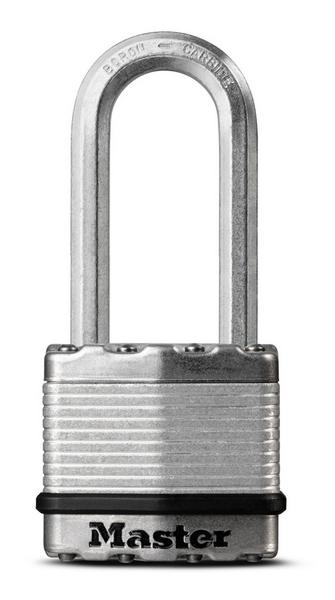
Best value weatherproof
Master Lock’s Excell range wraps a laminated steel body in stainless steel and zinc plates for weather resistance, at a price that undercuts every other genuinely weatherproof padlock here. The long-shackle M1EURDLH suits a thicker hasp than the standard version allows, and the boron-carbide shackle holds up to casual cutting even though the laminated body won’t match a solid-body lock under a determined attack. For a second or third padlock kept for routine, lower-value fittings, it’s hard to beat on price.
For
- Genuinely weatherproof at a fraction of the SS65CS’s price
- Long-shackle version fits thicker hasps and fittings
- Recognised brand with wide UK stockist availability
Against
- Laminated body is less resistant to a sustained attack than a solid one
- Lower security level than the ABUS or Squire picks above
Typically £20–£30
Check price on AmazonSquire WS75 Container Padlock

Best for chains and gates
None of the padlocks above are designed around a chain the way the WS75 is. An 80mm solid hardened steel block body carries a fixed, stubby shackle built to sit inside a chain link or a ground-anchor fitting rather than a standard hasp — the arrangement most site gates end up using once a simple hasp proves too easy to unscrew. CEN Grade 4 is a step down from the SS65CS, but the block-body design is the real deterrent: almost nothing for croppers or a saw to grip.
For
- Purpose-built for chains and ground anchors, not just hasps
- Solid block body leaves almost nothing exposed to attack
- Keyed-alike pairs available for matching gates
Against
- Fixed shackle won’t fit a standard thin hasp
- Bulky and overkill for a routine tool box
Typically £55–£70
Check price on AmazonSquire Warrior Combi 65CS

Best keyless option
A void property changing hands between an agent, a contractor and a surveyor over a few weeks is exactly the situation a keyed padlock handles badly — someone always ends up without the right key, or a key goes missing on handover. The Warrior Combi 65CS solves that with a fully recodeable five-wheel combination behind a closed shackle, so an access code can be given out and changed afterwards rather than a physical key needing to be tracked down again. It suits shared site kit for the same reason.
For
- No key to lose, copy or hand back at the end of a job
- Recodeable — the combination can be changed after handover
- Closed shackle design, same protection class as a keyed CEN 4 lock
Against
- The code has to actually be reset from any default and remembered
- More moving parts than a keyed lock to eventually wear or stiffen
Typically £45–£60
Check price on AmazonABUS 64TI/40 Titalium Padlock, Pack of 2

Best lightweight, budget keyed-alike pair
Titalium is Abus’s own lightweight aluminium alloy, roughly a third lighter than an equivalent brass-bodied padlock while keeping a hardened steel shackle underneath, sold here as a genuinely keyed-alike pair rather than two locks that just look similar. That makes it the sensible choice for a tool box and a van locker sharing one key. ABUS Level 5 is modest next to everything else here, the honest trade-off for something this light and cheap — fine for a tool box, not a genuinely valuable site compound.
For
- Roughly a third lighter than an equivalent brass padlock
- Sold as a genuine keyed-alike pair, not two separate keys
- Cheap enough to keep a spare in the van
Against
- ABUS Level 5 is the lowest rating in this comparison
- Not suited to anything genuinely valuable or a known-risk site
Typically £18–£25
Check price on AmazonWhat actually matters — and what doesn’t
“Military grade” and similar marketing copy isn’t a rating. None of the language on a padlock’s retail packaging is independently tested; a CEN grade or a Sold Secure mark is the only claim actually backed by an attack test, worth the ten seconds it takes to check before anything else on the listing.
Weight isn’t the same as security. A heavy padlock feels reassuring in the hand, but a lighter boron-alloy or Titalium-bodied lock can carry the same or a higher rating than something twice its weight built from ordinary steel.
Extra keys supplied is a convenience, not a security feature. Four keys in the box is handy for a shared van, but it says nothing about how the lock performs under a hacksaw or bolt croppers — check the rating first, treat the key count as a bonus.
A shrouded or closed shackle only matters if bolt croppers are the actual threat. A gate hasp or a length of chain often rules a closed-shackle padlock out on fit alone, so the choice is dictated by where the lock is actually going, not by which one looks more secure in a table.
Questions I get asked
What CEN rating do I actually need for a site gate or van tool box?
For most day-to-day site and van use, CEN Grade 4 is a sensible minimum and covers a tool box, a ladder rack or a routine site gate — it’s been tested against an actual bolt-cropper and hacksaw attack rather than just described as heavy duty. CEN Grade 5 or 6, like the Squire SS65CS above, is worth the extra cost for a genuinely high-value compound or a property with a known break-in history, but it isn’t necessary for a tripod case on a roof rack. Where a padlock protects an insured asset, such as a van full of survey equipment, it’s worth checking the policy for a minimum rating first, since some insurers specify Sold Secure Gold or a CEN grade as a condition of cover.
Closed shackle or open/long shackle — which do I need?
It comes down to what the padlock is actually going through, not which one looks tougher. A closed-shackle padlock like the SS65CS or the Warrior Combi shields almost the entire shackle inside the lock body, leaving bolt croppers almost nothing to bite on, but that only works where the fitting is thin enough to pass through the narrow closed-shackle gap. A gate hasp, a chain or a ground anchor usually needs the extra clearance of an open or long shackle instead — the WS75’s fixed shackle and the 83WP’s interchangeable length both solve that without giving up much resistance, since the body does most of the work either way.
Can padlocks be keyed alike across the van, tool boxes and site gates?
Yes, and it’s worth doing deliberately rather than accumulating whatever padlocks happen to be in a hardware store at the time. Most of the ranges above, including the Squire Stronghold and Abus Titalium lines, are available as keyed-alike pairs or sets on request, so one key opens the van locker, a tool box and a site gate rather than carrying a bunch for each. It costs a little more than buying separate padlocks off the shelf, but the time saved not working through a set of keys at a locked gate on a cold morning covers it.
How do I stop a padlock seizing up outdoors over winter?
Most seized padlocks are a moisture and grit problem rather than a mechanical fault — water gets into the cylinder, sits there, and either freezes or lets rust take hold on parts that never dry out between visits. A genuinely weatherproof design like the 83WP’s drainage channels and sealed keyway prevents most of that from the outset, worth paying for on anything living outdoors permanently rather than travelling in a dry tool box between jobs. Where a padlock already shows the first signs of stiffness, a dry lubricant — graphite or PTFE rather than an oil that just attracts dirt — worked into the keyway and shackle pivots a couple of times a year keeps it turning through the winter.
Getting past the gate is a solved problem next to working out what’s actually wrong with the property once you’re through it — which is what a building survey or Home Insight Survey is for. If you need one anywhere in Sussex, Kent or Surrey, get in touch — or browse the rest of the field-kit guides, including van security locks and tool storage for the van.
Disclaimer. This guide is general information, not a substitute for the manufacturer’s instructions or your own judgement for your circumstances. Prices are indicative, move constantly and were checked at the time of writing; the linked page always shows the current price. As an Amazon Associate I earn from qualifying purchases.