A survey produces a steady trickle of jobs too small to justify unpacking the proper tool for. Freeing a stiff meter cupboard catch, snipping the cable tie holding a loose alarm sensor, trimming a damp-meter probe cover, gripping a rounded brass stopcock nut that will not turn by hand, opening a sample bag sealed a little too well. None of these is a job for the SDS drill or the cordless screwdriver covered elsewhere on this site — it is a job for whatever is already in a pocket or clipped to a belt, and that is the gap a multitool fills.
The category splits more sharply than most kit on this site. At one end sit full-size, pliers-based tools built to trade standards — genuinely useful for anything involving grip, cutting or leverage. At the other sit keychain minis that are really a knife, a bottle opener and a pair of tweezers with delusions of grandeur. Both have a place in a surveyor’s pocket; the trick is knowing which jobs actually need which tool, rather than buying the one with the biggest number printed on the packet.
One thing sets this category apart from every other guide here: several of these tools carry a locking blade, and that is not just a spec — it is a legal question in England and Wales. More on that below, but it is worth reading before buying the biggest one on this list. First, the one I’d buy.
The one I’d buy
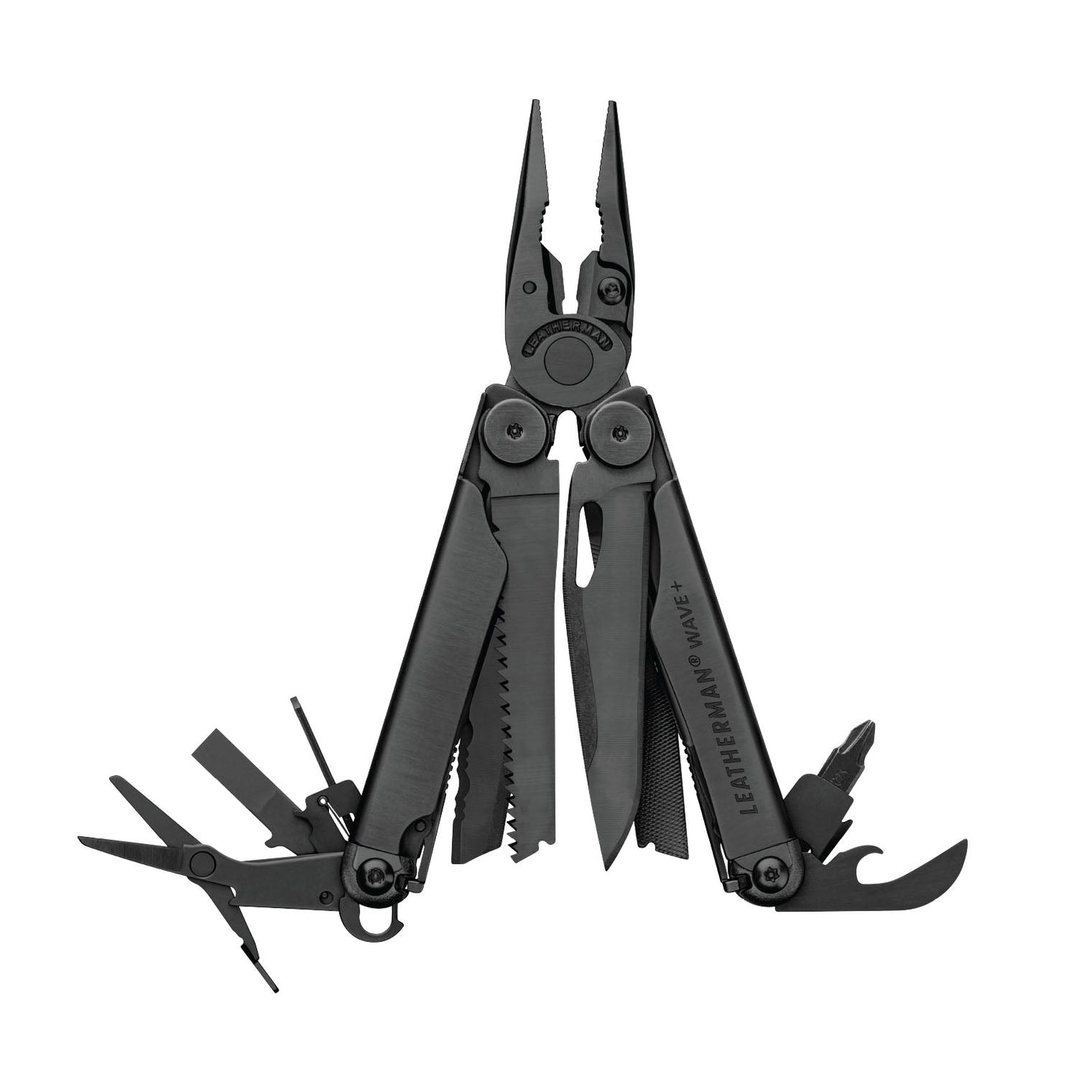
Leatherman Wave Plus
The Wave Plus is the tool most trade reviewers reach for first, and the reasons hold up on a survey: replaceable 154CM wire cutters that can be swapped rather than the whole tool retired when they dull, needle-nose pliers with jaws that meet cleanly for picking up small parts, and a spring-loaded design that opens the pliers with one hand while the other is holding a hatch cover. Eighteen tools in total — pliers, wire cutters, a saw, scissors, a full driver set and a package opener — cover the actual range of small jobs a survey throws up, without the padding of a fish scaler or a corkscrew.
Typically £110–£140
Check price on AmazonHow I judge a pocket multitool
Pliers quality first, because that is the tool actually reached for. The knife blade gets the marketing, but on a survey the pliers do the real work — gripping a rounded nut, bending a bent bracket back, pulling a splinter of lath out of a wall. Jaws that meet cleanly at the tip and a spring that opens one-handed matter more than anything else on the spec sheet.
One-hand access to the tool actually needed. A hatch cover, a torch, a stopcock — the other hand is rarely free. A tool with the blade or pliers accessible from the outside, without unfolding the whole handle first, is worth more in practice than a longer tool list buried behind a stiff frame.
Locking blade versus UK carrying law. Full-size multitools nearly always include a locking knife blade, and a locking blade is treated in law the same as a fixed blade — carrying one in public needs a good reason, work being the obvious one. It is a genuine factor in choosing between a full-size tool and a compact, non-locking one, not a technicality to skim past.
Replaceable wear parts over a headline warranty. A lifetime warranty sounds generous until the wire cutters dull and the whole tool has to go back. Leatherman and Victorinox both sell replacement cutter inserts for their full-size tools — a genuinely more useful guarantee of long service than the warranty term itself.
Carry method that matches how the rest of the kit is worn. A nylon belt sheath competes for space with a tool belt, knee pads and a phone holster already in use; a pocket clip does not. Neither is wrong, but it is worth matching the tool to how the rest of the day is dressed.
The comparison
| Model | Tools | Blade | Typical price | Best for | |
|---|---|---|---|---|---|
| Leatherman Wave Plus | 18 | Locking, replaceable cutters | ~£125 | Overall, trade-grade pliers | View |
| Victorinox SwissTool Spirit X | 24 | Locking | ~£145 | Swiss-made reliability, trade use | View |
| Gerber Suspension NXT | 15 | Locking | ~£40 | Value all-rounder, pocket clip | View |
| Leatherman Skeletool CX | 7 | Locking | ~£85 | Lightweight everyday carry | View |
| Leatherman Rebar | 17 | Locking | ~£75 | Budget full-size, no frills | View |
| Leatherman Wingman | 14 | Locking, one-hand opening | ~£65 | One-hand opening on a budget | View |
| Gerber Dime | 12 | Non-locking, sub-3″ | ~£20 | Keychain carry, no legal question | View |
The picks in detail
Leatherman Wave Plus
Best overall — trade-grade pliers, replaceable parts
This is the top pick above, and the case for it holds up in detail: the needle-nose and regular pliers jaws meet cleanly rather than gapping at the tip, the wire cutters are a separate replaceable insert rather than fixed to the frame, and the outside-accessible blade and cutters mean the tool does its most common jobs without unfolding the full handle. Eighteen tools is a genuinely useful spread — two blade types, a saw, scissors, a full driver set and a package opener — rather than a number inflated with tools nobody reaches for.
For
- Pliers jaws meet cleanly, genuinely useful for gripping and bending
- Wire cutters are replaceable rather than fixed
- Outside-accessible blade and cutters, no need to unfold fully
Against
- Locking blade means a genuine reason is needed to carry it in public
- Heaviest tool in this comparison
Typically £110–£140
Check price on AmazonVictorinox SwissTool Spirit X
Best for Swiss-made reliability
Victorinox’s reputation in this category is built on consistency rather than a longer feature list — owner feedback across long-term trade use is unusually consistent that these tools simply do not go back under warranty, in a category where that is not a given. The Spirit X packs 24 functions into a genuinely refined handle with narrower, needle-nose pliers than most rivals, and all the components fold flush with no play once closed. It is priced at the premium end of this comparison, which is the trade-off for that consistency.
For
- Reputation for exceptional long-term reliability
- Narrow needle-nose pliers suit fiddly work
- Components fold flush, no play when closed
Against
- Priciest tool in this comparison
- Locking blade carries the same legal consideration as the Leathermans
Typically £130–£160
Check price on AmazonGerber Suspension NXT

Best value all-rounder
Gerber’s update to the long-running Suspension trims 25 percent of the weight and thickness from the original while adding tools, taking the count to 15, and does it at well under half the price of the Leatherman and Victorinox tools above it in this list. The butterfly-opening pliers and pocket clip make it an easy tool to carry clipped to a pocket rather than on a belt, and outboard tools are accessible without unfolding the full frame — the same one-hand logic as the pricier picks, at a fraction of the cost.
For
- 15 tools at a genuinely budget price
- 25% lighter and thinner than the original Suspension
- Pocket clip suits carry without a belt sheath
Against
- Build quality a step below the trade-grade picks
- Still a locking blade for the legal question below
Typically £35–£50
Check price on AmazonLeatherman Skeletool CX
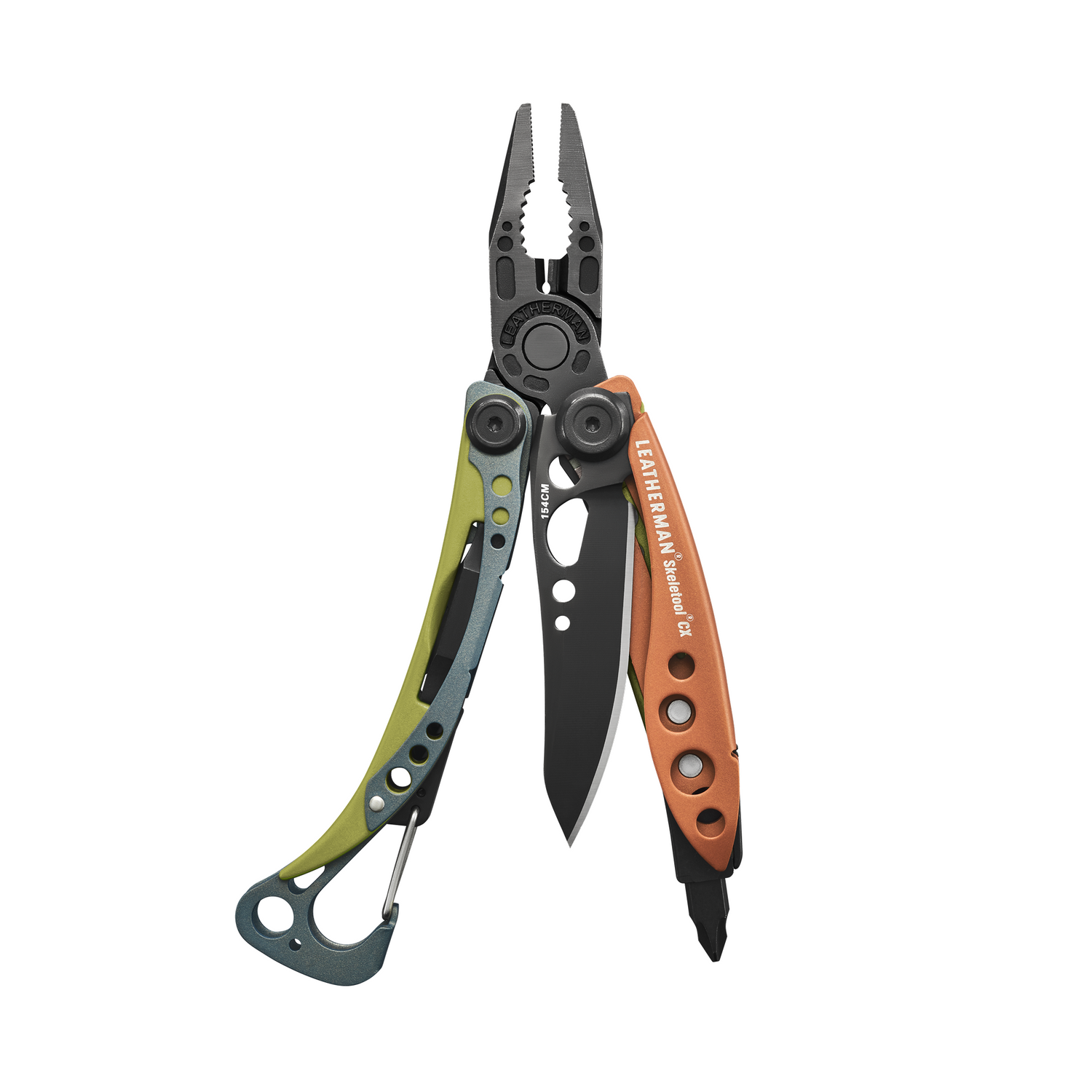
Best lightweight everyday carry
The Skeletool strips the tool count right back — seven tools instead of the near-20 of the full-size picks — and the case for that is a genuine one: pliers, wire cutters, a knife, a bottle opener, a package opener and two screwdrivers cover almost everything a quick pocket job actually needs, in a frame roughly half the weight of the Wave Plus. A carabiner-style pocket clip and a skeletonised handle keep it light enough to forget it is there until it is needed.
For
- Roughly half the weight of the full-size picks
- Covers the tools actually reached for daily
- Carabiner clip suits pocket or belt loop carry
Against
- No saw, scissors or dedicated file
- Fewer screwdriver options than the full-size tools
Typically £75–£95
Check price on AmazonLeatherman Rebar

Best budget full-size, no frills
The Rebar is Leatherman’s entry-level full-size tool, and it does not feel cut down where it matters: 17 tools including replaceable wire cutters, needle-nose pliers and a genuinely useful package opener, in a slim four-inch closed frame at a clear discount to the Wave Plus. What it drops is largely cosmetic — a plainer finish, a simpler sheath — rather than functional, which makes it the more sensible buy for anyone who wants full-size capability without paying for the refinements.
For
- 17 tools including replaceable wire cutters
- Notably cheaper than the Wave Plus for similar core function
- Slim four-inch closed length
Against
- Plainer finish and simpler sheath than the pricier Leathermans
- No one-hand opening on the blade
Typically £65–£85
Check price on AmazonLeatherman Wingman
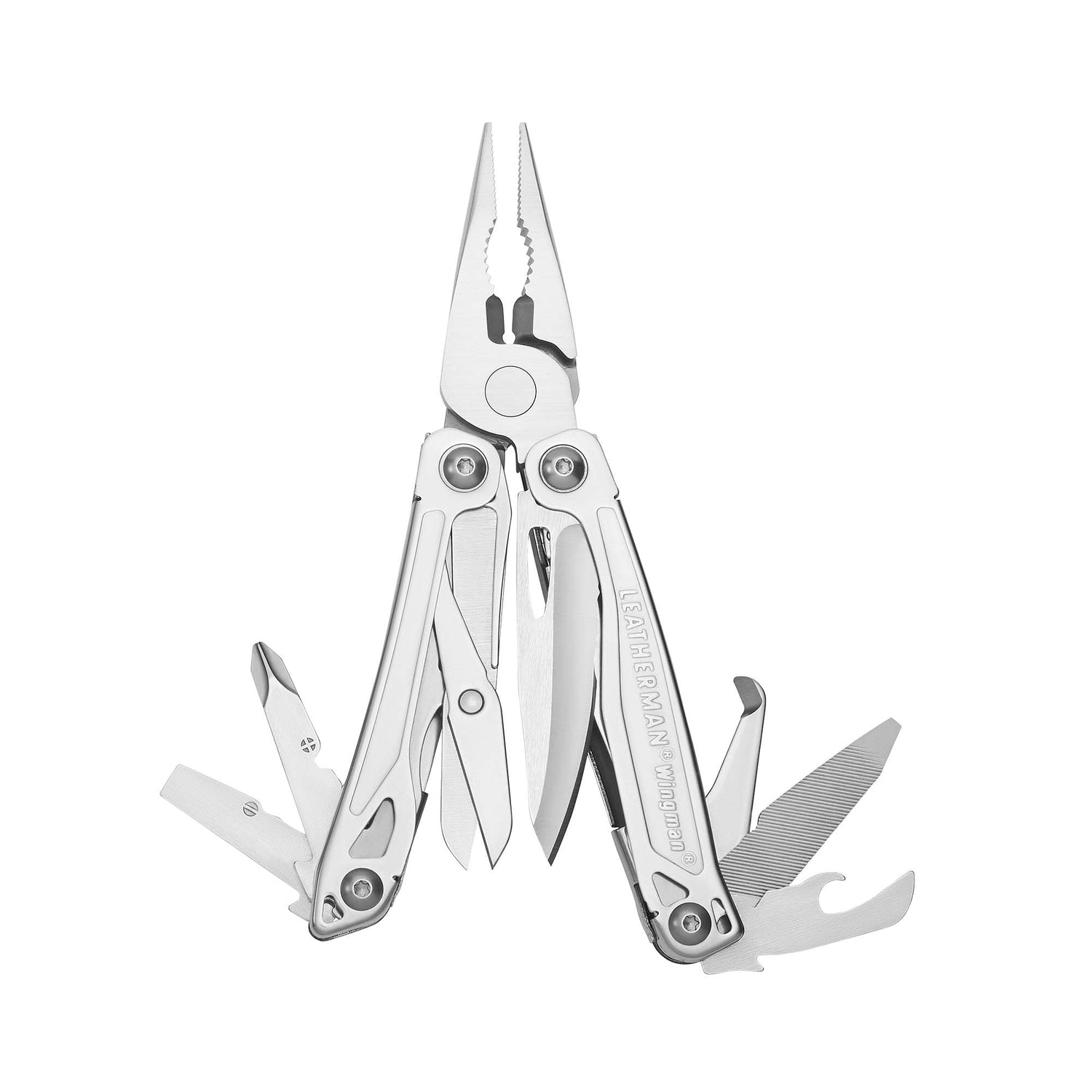
Best one-hand opening on a budget
Where the Rebar keeps things basic, the Wingman spends its similar price point on convenience instead: spring-action pliers that open with one hand, and a one-hand-opening locking blade sat on the outside of the frame where it can be deployed without unfolding anything else. Fourteen tools cover the same core ground as the pricier picks — pliers, cutters, scissors, a driver set and a package opener — in a package built for speed when the other hand is already occupied.
For
- One-hand blade deployment and spring-loaded pliers
- 14 tools cover the core jobs at a budget price
- Outside-accessible blade needs no unfolding
Against
- Wire cutters are not user-replaceable like the pricier Leathermans
- Still a locking blade for the legal question below
Typically £55–£75
Check price on AmazonGerber Dime

Best for keychain carry, no legal question attached
The Dime is a different category of tool from everything else on this list — a genuine keychain multitool rather than a shrunk-down trade tool — and its non-locking, roughly one-inch folding blade is short of the three-inch threshold that triggers the locking-blade question covered below. Twelve tools include pliers, wire cutters, scissors, a package-opening blade, a bottle opener and tweezers, small enough to disappear onto a keyring and be there for the everyday jobs a full-size tool is overkill for.
For
- Non-locking, sub-three-inch blade sidesteps the legal question
- Small enough to live on a keyring permanently
- Cheapest tool in this comparison by a distance
Against
- Pliers are too small for anything needing real grip or leverage
- Not a substitute for a full-size tool on jobs that need one
Typically £15–£25
Check price on AmazonWhat actually matters — and what doesn’t
Tool count is marketing, not usefulness. An “18-in-1” or “24-in-1” badge counts every blade, file face and screwdriver bit separately, and several of those functions never get used on a survey. What is worth paying for is pliers that grip cleanly, cutters that stay sharp, and a driver set that covers Pozidriv and Phillips — not a bigger number on the box.
A locking blade is a legal question, not just a safety feature. Under Section 139 of the Criminal Justice Act 1988, a locking folding knife is treated in law the same as a fixed blade, and carrying one in public requires a good reason — work being the standard one, provided it can actually be explained if asked. Every full-size tool in this comparison carries a locking blade; only the Gerber Dime’s short, non-locking blade falls outside that rule entirely.
Replaceable wear parts beat a headline warranty. Leatherman and Victorinox both sell replacement wire-cutter inserts for their full-size tools, which matters more day to day than a 25-year or lifetime warranty term — a dull cutter is a cheap part swap rather than a reason to send the whole tool back.
Blade steel grades matter less than whether the tool gets carried at all. 154CM versus 420HC is a real difference in edge retention, but it is a marginal one next to the basic question of whether a tool small and light enough to actually be in a pocket on the day it is needed, rather than left in a drawer because the trade-grade option felt like too much to carry.
Questions I get asked
Do I need a multitool if I already carry a screwdriver and voltage tester?
Yes, for a different set of jobs. A cordless screwdriver and a voltage tester cover driving fixings and checking for live conductors; neither grips a rounded nut, snips a cable tie or trims a probe cover. A pocket multitool fills the gap between those dedicated tools rather than replacing either of them — it is the thing reached for when the job is too small or too odd to justify the proper tool.
Is it legal to carry a locking-blade multitool for survey work in the UK?
Generally yes, provided it is genuinely for work and that can be explained if asked. English and Welsh law treats a locking folding blade the same as a fixed blade under the Criminal Justice Act 1988, meaning it needs a good reason to be carried in public — a working tool used for a specific job is the standard example, but the burden is on the carrier to justify it, and “it might be useful” is not enough. Carrying it only when it is actually needed for work, rather than as a general everyday item, is the safer practice.
What tool count do I actually need for survey work?
Far fewer than the marketing numbers suggest. Pliers, wire cutters, one flathead and one Pozidriv/Phillips driver, and a blade cover the great majority of jobs that come up — everything from the Gerber Dime’s 12 tools up to the Victorinox’s 24 delivers that core set; the extra functions above it are rarely the deciding factor.
Can the wire cutters be replaced when they dull?
On the full-size Leatherman and Victorinox tools, yes — both sell replacement cutter inserts rather than requiring the whole tool to be sent back or replaced. It is worth checking before buying a budget tool, since several of the cheaper options in this comparison do not offer the same replaceable-parts arrangement.
A pocket multitool handles the small, odd job that turns up between the proper checks; working out what is actually wrong with a property, and what it will cost to put right, is what a building survey is for. If you need one anywhere in Sussex, Kent or Surrey, get in touch — or browse the rest of the field-kit guides, including the cordless screwdrivers that cover the jobs a multitool driver bit can’t.
Disclaimer. This guide is general information, not a substitute for the manufacturer’s instructions, current UK law, or your own judgement for your circumstances. Prices are indicative, move constantly and were checked at the time of writing; the linked page always shows the current price. As an Amazon Associate I earn from qualifying purchases.