Blocked gutters come up on more surveys than almost any other rainwater goods defect — not because gutters fail often, but because nobody looks at them until water’s already tracking down a fascia board or finding its way into a wall that was fine last winter. The usual question that follows a defect like that isn’t just “how do I clear it”, it’s “how do I stop doing this every year” — and that’s where a gutter guard gets pitched as the answer.
The honest answer is that a guard changes the maintenance job rather than removing it. A brush guard stops leaves piling up in the channel, but fine debris, moss spores and roof grit still get through and pack into the bristles over a few seasons — sometimes badly enough to grow a sapling. A mesh guard sheds rain better and lets less fine material through, but only if it’s fitted properly, and a loose edge in a gale does more harm than an open gutter would. Neither of those is the same product as a downpipe guard, which protects the outlet at the bottom of the system rather than the channel itself — a distinct job that’s worth thinking about separately rather than assuming one guard covers both.
None of the six below has been fitted and left to weather three winters under my own supervision — this is drawn from manufacturers’ specifications and published trade and owner feedback, filtered through what actually determines whether a guard makes the annual clean easier or turns it into a bigger job than an open gutter ever was. First, the one I’d buy.
The one I’d buy

Hedgehog Gutter Brush Guard 100mm x 4m Black
The Hedgehog is the product most homeowners mean when they say “gutter brush” — a stainless-steel-cored bristle roll that’s cut to length and pushed into the channel with no clips, screws or adhesive, and flexes to fit round corners and outlets that a rigid product can’t. It won’t stop fine grit, moss spores or pine needles working their way into the bristles over a few seasons, and it does need pulling out and rinsing about once a year to stay effective — but that’s a lighter job than clearing a genuinely blocked open gutter, and it’s the cheapest way to cover a whole run of any shape.
Typically £14–£18
Check price on AmazonHow I judge a gutter guard
What it actually excludes, not what the packaging implies. Most guards are good at stopping one kind of debris and only fair at another. A brush or standard mesh handles broadleaf leaf litter well; conifer needles and roof grit go straight through both and need a genuinely fine micro-mesh or a foam insert to catch them.
How much channel capacity it takes up while it’s working. A brush occupies roughly two-thirds of the gutter’s cross-section even when it’s clean, which matters in a genuine downpour on a property with a large roof area. Mesh and foam inserts sit closer to the top of the channel and interfere with flow less.
What “self-cleaning” actually means in practice. None of these are maintenance-free, whatever the box says. The honest measure is how easily a guard comes out, gets rinsed and goes back in for the once-a-year check every gutter still needs — not whether that check is ever needed at all.
How it’s fixed in place. Push-fit brushes flex into almost any profile; mesh needs clips, screws or overlap done properly at joints and corners or it lifts in wind and dumps leaves straight back into the gutter it was meant to protect.
Whether it’s solving the channel problem or the downpipe problem. A balloon guard or strainer at the outlet stops the downpipe itself clogging; it does nothing for leaves sitting in the gutter above it. Buying one expecting it to fix an overflowing gutter is solving the wrong half of the system.
The comparison
| Model | Type | Fits | Typical price | Best for | |
|---|---|---|---|---|---|
| Hedgehog Gutter Brush 100mm x 4m | Brush | Most standard gutters | ~£14–£18 | Best overall | View |
| Aluminium Gutter Guard Mesh 12.7cm x 6m | Mesh | Gutters up to ~127mm wide | ~£13–£16 | Best in heavy rain | View |
| Hedgehog Gutter Brush 150mm x 4m | Brush | Box gutters and wide channels | ~£30–£36 | Best for wide/box gutters | View |
| GutterStuff K-Style Foam Insert (32ft) | Foam insert | 4in K-style gutters | ~£85–£95 | Premium/professional pick | View |
| HISAMGO Stainless Downpipe Guard 67–83mm | Downpipe strainer | 67–83mm downpipes | ~£8–£10 | Best downpipe guard | View |
| Merriway Gutter Balloon Guard 68mm (Pack of 2) | Downpipe balloon | 68mm downpipes | ~£5–£7 | Cheapest, downpipe only | View |
The picks in detail
Hedgehog Gutter Brush Guard 100mm x 4m Black
Best overall — cheapest whole-run coverage, fits almost anything
The stainless-steel wire core lets this brush flex round internal and external corners and past outlets that a rigid mesh or insert would need cutting and fitting around individually, and it goes in by hand with no clips or fixings. Over a few seasons, fine moss and grit still work their way into the bristles and it needs pulling out and rinsing to stay effective — the market-leading brand doesn’t change that physics, whatever the ten-year guarantee implies about being fit and forgotten.
For
- Cheapest way to cover a whole run of gutter
- Flexes round corners and outlets, no cutting to a rigid shape
- No clips, screws or adhesive needed to fit
Against
- Fine debris and moss still pack into the bristles over time
- Occupies a large share of the channel even when clean
Typically £14–£18
Check price on AmazonAluminium Gutter Guard Mesh 12.7cm x 6m
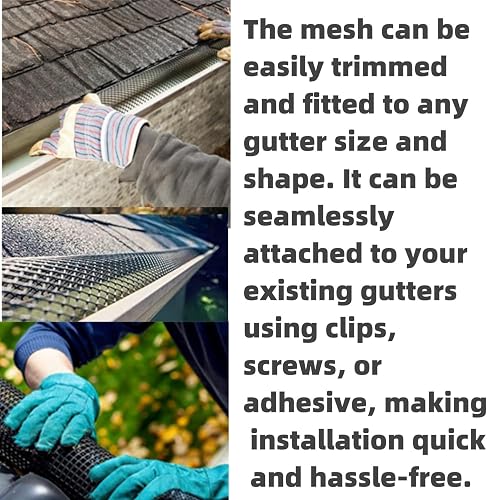
Best in heavy rain — sheds water better than a brush, if it’s fitted properly
Sitting flat across the top of the channel rather than filling it, an aluminium mesh interferes with flow far less than a brush during a genuine downpour, and aluminium holds its shape better over years outdoors than the cheaper plastic mesh rolls sold alongside it. The trade-off is installation: it needs clipping or screwing down properly at every joint and corner, and a section left loose will lift in wind and drop leaves straight back into the run it was meant to protect. Fine silt and roof grit still pass through a standard weave.
For
- Sheds heavy rain better than a brush fills less of the channel
- Aluminium holds shape better outdoors than plastic mesh
- Cut-to-size roll works on gutters up to ~127mm wide
Against
- Needs proper clipping at joints or it lifts in wind
- Standard weave still lets fine grit and silt through
Typically £13–£16
Check price on AmazonHedgehog Gutter Brush Leaf Guard 150mm x 4m Black

Best for box gutters and wide channels
The same wire-core brush as the top pick, wound to a larger 150mm diameter for box gutters, older cast-iron channels and other wide profiles where the standard 100mm brush would sit loose and let debris past either side. It carries the same honest caveats as the smaller version — fine debris still collects in the bristles over time and it needs an annual pull-and-rinse — at roughly double the price for the extra bristle and wire.
For
- Fills wide and box-profile gutters properly
- Same easy push-fit installation as the standard size
Against
- Meaningfully more expensive than the 100mm version
- Same fine-debris and moss build-up over time
Typically £30–£36
Check price on AmazonGutterStuff Original Gutter Guard 4-Inch K-Style Foam Insert
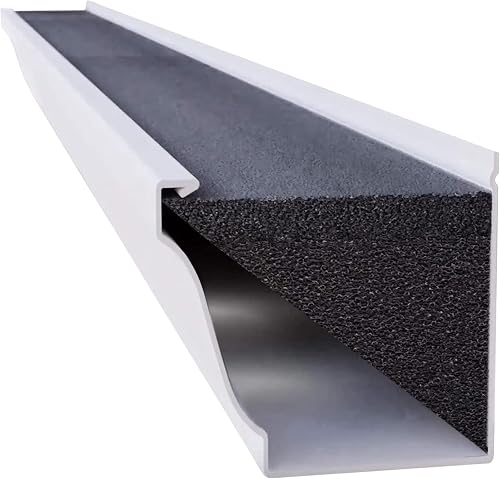
Premium/professional pick — sits inside the gutter, invisible from the ground
A block of UV-treated open-cell foam that wedges inside a 4-inch K-style channel rather than sitting on top of it, so from the ground the gutter looks unguarded — a genuine advantage on a period property where a visible mesh or brush would look wrong. The 32ft run covers a decent length of frontage under one purchase, and the 5-year warranty is longer than anything else in this guide. It’s the most expensive option here by a wide margin, and pine needles and small debris can still lodge on the exposed top surface rather than being excluded entirely.
For
- Invisible from the ground, no change to the gutter’s appearance
- Longest warranty of anything in this guide
- 32ft covers a substantial length of frontage
Against
- By far the most expensive option here
- Only fits standard 4in K-style profiles
- Needles and debris can still lodge on the exposed surface
Typically £85–£95
Check price on AmazonHISAMGO Stainless Steel Downpipe Leaf Guard 67–83mm

Best downpipe guard — a different job to everything above it
None of the gutter-run guards above do anything for a downpipe that’s clogged at the swan-neck or the underground gully — that’s a separate failure with its own separate product. This perforated stainless strainer fits over the standard 67–83mm UK downpipe range and sits at the outlet, catching debris before it drops into the pipe itself. Metal outlasts the plastic balloon-style guards below in UV exposure, and it’s cheap enough that fitting one to every downpipe on the house isn’t a meaningful cost.
For
- Protects the downpipe itself, not just the gutter above it
- Metal construction outlasts plastic in UV exposure
- Fits the common 67–83mm UK downpipe range
Against
- Does nothing for debris sitting in the gutter channel
- Needs periodic clearing itself once it starts trapping leaves
Typically £8–£10
Check price on AmazonMerriway Gutter Balloon Leaf Guard 68mm, Pack of 2
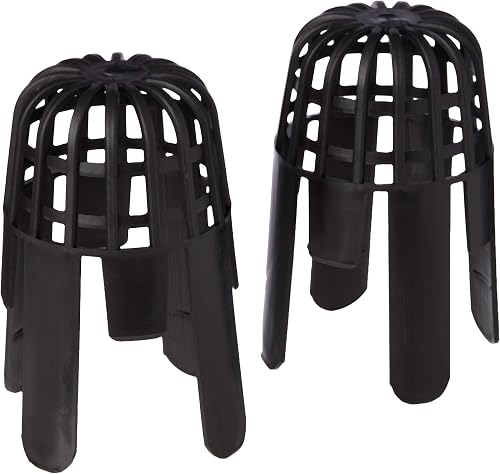
Cheapest — downpipe only, and honest about it
The cheapest entry in this guide by a wide margin, and it does one narrow job adequately — a moulded plastic cage that push-fits into a standard 68mm round downpipe and stops leaves and moss dropping straight down into the pipe. It’s a downpipe guard only, does nothing for the gutter above it, and plastic left outdoors on a south-facing downpipe will go brittle and need replacing every few years in a way the stainless option above doesn’t.
For
- Cheapest guard in this entire guide
- Quick push-fit installation, no tools
- Pack of two covers front and back downpipes
Against
- Downpipe only, no protection for the gutter itself
- Plastic degrades in UV faster than the stainless alternative
Typically £5–£7
Check price on AmazonWhat actually matters — and what doesn’t
“Never clean your gutters again” is marketing, not a specification. Every guard in this guide still needs an annual look — pulling a brush out to rinse it, brushing debris off a mesh, checking a downpipe strainer hasn’t clogged itself. The honest benefit is a lighter, less frequent job, not no job.
Match the guard to what’s actually falling on the roof, not the biggest marketing claim. A brush or standard mesh copes fine with broadleaf leaf litter from an oak or a sycamore. Conifer needles and fine roof grit go straight through both and need a genuinely fine micro-mesh or a foam insert that seals the surface, not just spans it.
A guard doesn’t fix a gutter that’s already the wrong size, badly pitched, or pulling away from its brackets. Those are survey findings that exist independently of whatever’s sitting inside the channel, and fitting a guard over a failing gutter just makes the underlying problem harder to see from the ground.
Channel guards and downpipe guards are two different products solving two different failures. A brush, mesh or foam insert stops debris collecting in the gutter run. A balloon or strainer stops the downpipe itself clogging at the outlet. Most properties benefit from thinking about both rather than assuming one covers the job of the other.
A badly fitted guard can make the annual clean worse than no guard at all. A mesh that’s not clipped down properly lifts in wind and has to be prised off before the gutter underneath can even be reached. Fit it properly the first time, or the guard itself becomes the obstacle.
Questions I get asked
Do gutter guards really mean I never have to clean my gutters again?
No. Every guard in this guide still needs checking roughly once a year — pulling a brush out and rinsing it, sweeping debris off a mesh surface, or clearing a downpipe strainer that’s done its job and filled up. What a decent guard buys is a lighter, less urgent version of that job, not the removal of it.
Brush or mesh — which is actually better?
It depends more on the trees overhead than on the product. A brush is the easier DIY fit and copes well with broadleaf leaf litter, but fine debris and moss build up inside the bristles over a few seasons. A properly fitted mesh sheds heavy rain better and interferes less with flow, but needs more careful installation at joints and corners to stop it lifting in wind. Neither is the clear winner against fine conifer needles — that needs a genuinely fine micro-mesh or a foam insert.
Will a gutter guard stop birds nesting or roosting in the gutter?
A properly fitted mesh or a foam insert will generally stop a bird building a nest inside the channel itself, since there’s nowhere left to sit. A brush guard is a much weaker deterrent — the bristles don’t stop a bird perching on top or working material into gaps at the ends. None of these products are a substitute for dedicated bird-proofing where that’s the actual problem being solved.
Can I fit a gutter guard myself, or does it need a professional?
Every product in this guide is designed for DIY fitting — push-fit brushes and downpipe guards need no tools at all, and mesh needs basic clips or self-tapping screws. The part that actually needs care is the access: fitting or checking a guard means getting safely to gutter height, which for most houses means a proper ladder set up correctly rather than balancing on the top rungs of one that’s too short for the job.
Blocked or overflowing gutters show up often enough in a building survey that it’s worth knowing what a guard can and can’t fix before spending on one — where the gutter itself is undersized, sagging or pulling away from the fascia, that’s a repair job first and a guard question second; see the guttering replacement cost guide for what that job typically runs to. Get in touch if a survey’s overdue. Or browse the rest of the field-kit guides, including the gutter vacuums that clear a run from ground level once a guard’s done its job and needs its annual rinse.
Small print. This guide is general information, not a substitute for a proper inspection of a specific property’s gutters and rainwater goods. Prices are indicative, move constantly and were checked at the time of writing; the linked page always shows the current price. As an Amazon Associate I earn from qualifying purchases.